REVIEW · MALAGA
Ronda private walking tour by Tours in Malaga
Book on Viator →Operated by Tours in Malaga · Bookable on Viator
Ronda feels split in two—and you get the story fast. On this private walking tour you’ll tackle the big sights in about 2 hours, with a guide who ties the viewpoints to real local legends and history. I especially like the personal attention you get on a tour built for one group, not a herd.
You’ll also spend focused time in the bullfighting quarter, including the Tauromachy Museum, and that adds extra context beyond just looking at buildings. One thing to plan for: entry for some stops isn’t included, so you should expect extra costs on top of the tour price.
In This Review
- Key highlights to look for
- A fast way to understand Ronda (without feeling rushed)
- Ronda splits in two: starting at the New Bridge
- The cliffside walk to Santa Maria la Mayor and the Arabic quarter streets
- Collegiate Church and Town Hall: where the stories land
- Plaza de Toros de Ronda: bullfighting’s birthplace, plus museum context
- Why private guide attention matters in Ronda
- Price and value: what $295.87 per group actually buys
- Practical tips: how to dress and what to plan for
- Who should book this Ronda private walking tour?
- Should you book? My straight answer
- FAQ
- Is this tour private?
- How long is the Ronda private walking tour?
- What’s included in the price?
- Are entrance fees included for the church and bullring?
- Where does the tour start and end?
- What language is the tour offered in?
- What’s the cancellation policy?
Key highlights to look for
- New Bridge first: a quick start that frames Ronda’s dramatic gorge and the town’s old/new split
- Santa Maria la Mayor area: cliff-edge views plus time through the Arabic quarter’s streets
- Stories with a local guide: legends, facts, and local context at each stop
- Plaza de Toros de Ronda: bullfighting landmarks tied to the birthplace of the sport
- Tauromachy Museum time: bullring history explained in a more museum-style way
- Private-group pace: you stay together as one group, with room for questions
A fast way to understand Ronda (without feeling rushed)
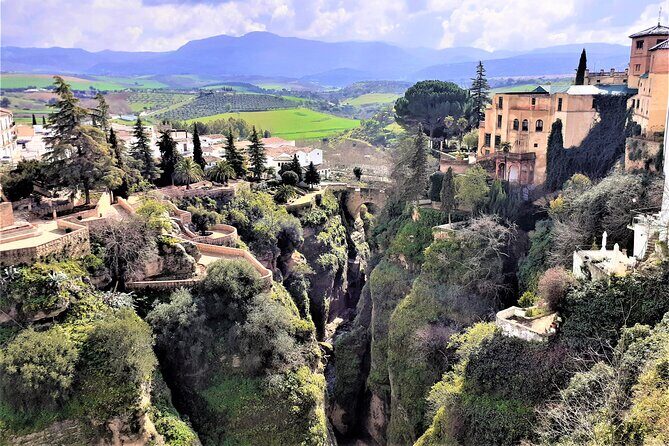
If you only have a short window in the region, this 2-hour private walk is one of the smarter ways to “get” Ronda. It doesn’t try to cover everything. Instead, it chooses the places that explain the town’s shape, its cultural layers, and the bullfighting legacy that put it on the map.
You’ll also get a practical format: a guided route with a clear start and end back at the meeting point. That matters in Ronda, where getting oriented can be half the battle. With a guide, you’re not guessing which street to take or why a viewpoint matters.
And yes, it’s offered in English with a mobile ticket, which makes the whole thing feel smoother right from the start. The tour runs in all weather too, so you won’t lose the day to light drizzle—just come prepared.
You can also read our reviews of more walking tours in Malaga
Ronda splits in two: starting at the New Bridge
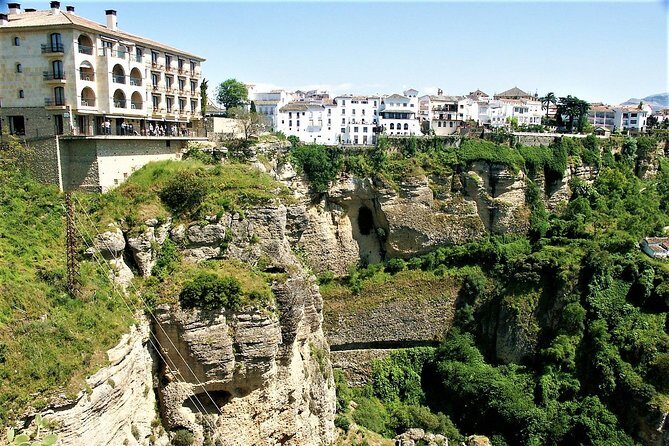
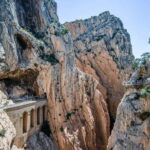
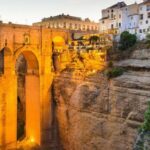
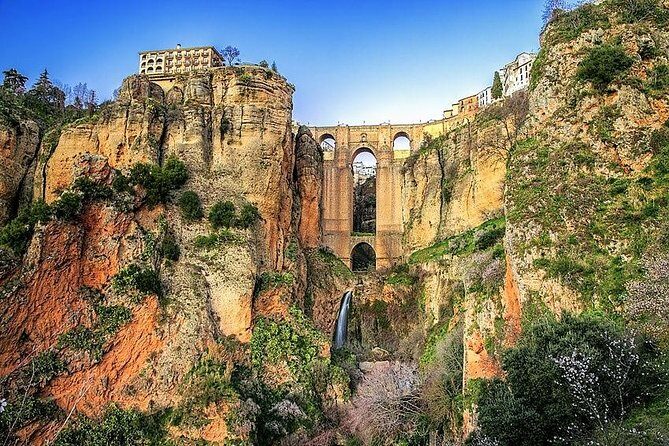
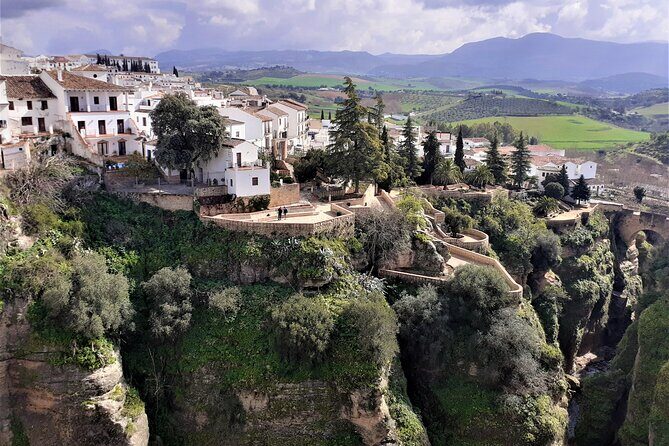
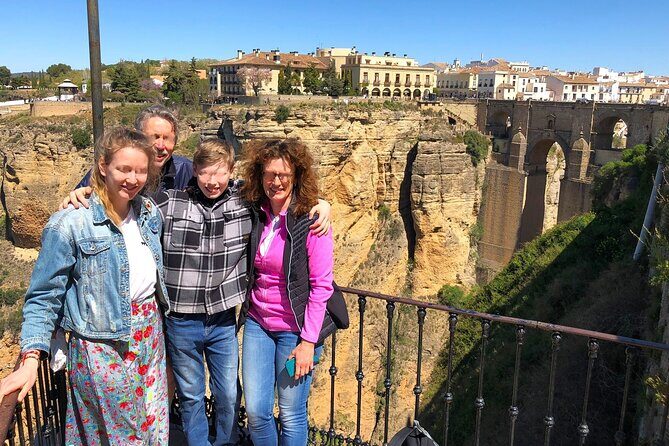
The tour kicks off in the new town area, starting by walking toward the New Bridge, built at the end of the 18th century. Even if you’ve never been to Ronda, you’ll understand the “split” idea quickly. The bridge spans the deep gorge and connects the two sides of the town.
I like this first stop because it sets the stage. You’re not walking into random streets. You’re seeing the engine that shaped the town: cliffs, drops, and the ways people built around the gorge.
Timing is short and efficient—about 30 minutes—and it notes that the admission ticket here is free. So you get the big visual payoff early without waiting around for paid entry. If you like photos, this is also your easiest win of the day: stand where the bridge frames the valley and you’ll immediately see why Ronda earned its dramatic reputation.
The cliffside walk to Santa Maria la Mayor and the Arabic quarter streets
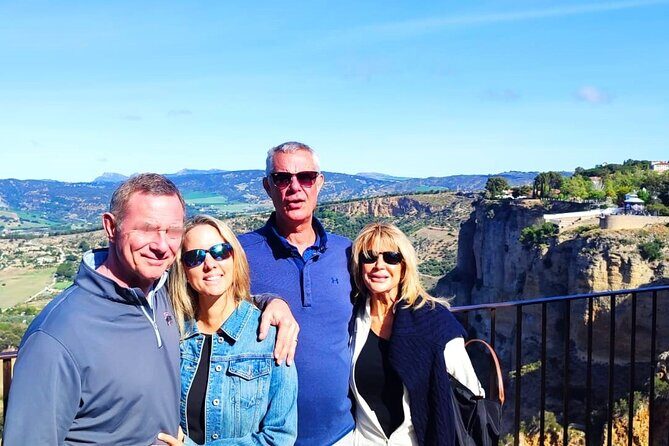
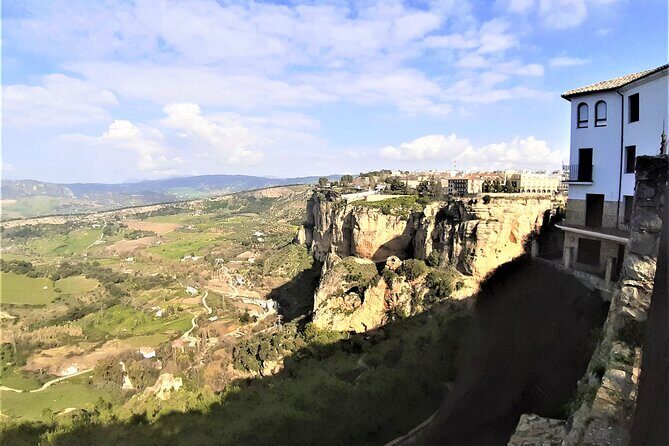
Next comes a longer 1-hour stretch that shifts from the gorge edge to the historical center. You’ll move along high cliffs with views out toward the fertile countryside, then head into the Arabic quarter area through cobblestone streets.
This is a great section for two reasons. First, you’re getting a mix of perspective—open views when you’re near the cliffs, then close-up street-level walking when you’re in the old quarters. Second, the guide isn’t just reciting dates. You’ll hear stories, legends, and important facts, the kind of context that turns stone walls into something human.
The centerpiece here is Iglesia de Santa Maria la Mayor, and the route also takes you into the surrounding sights like the Collegiate Church and the Town Hall area. Admission for this part is not included, so if you plan to go inside at this stop, factor that into your budget.
A practical note: cobblestones and cliff-adjacent paths mean your footwear matters. In wet conditions, take your time. This is exactly the kind of route where you’ll appreciate that the tour operates in all weather—because your guide will keep you moving safely rather than you having to guess.
Collegiate Church and Town Hall: where the stories land
As you continue through the historic center, the tour keeps weaving in the town’s political and cultural identity, not just sightseeing. The Collegiate Church and the Town Hall are part of that. They help you connect what you’re seeing to how Ronda functioned—who had power, how religious life shaped the city, and why the streets and squares developed the way they did.
I find these “in-between” stops are often what make a walking tour worth paying for. You’re not sprinting from one photo to the next. You’re pausing enough times to understand the meaning behind the view.
Also, since the tour includes the storytelling element, you’ll likely notice you’re looking at details differently by the time you reach the church and civic buildings. Instead of just noticing architecture, you’ll start understanding the town’s layers—Christian sites sitting in the middle of a wider Moorish-influenced city story.
Plaza de Toros de Ronda: bullfighting’s birthplace, plus museum context
The final stop lands at the Plaza de Toros de Ronda, in the area described as the birthplace of bullfighting. This part is designed to give you more than a quick glance at an arena.
The tour also highlights the Tauromachy Museum as a feature, which is a smart way to add context. Even if you’re not trying to take a stance on bullfighting, you’ll still walk away understanding why Ronda and the bullring are treated as cultural anchors here. The museum angle helps turn a controversial topic into something you can study historically and understand in local terms.
This last segment takes about 30 minutes, and it notes that admission ticket costs here are not included. So if you want to go in fully, plan for those extra tickets. It’s also a good idea to treat this stop as “choose your entry level”: you can enjoy the area from the outside and still get value from the guide’s explanations, or you can decide you want the full museum/bullring entry experience.
The big win at the end is closure. You started with the New Bridge and Ronda’s physical split; you finish with Ronda’s social identity tied to the bullring. That arc makes the whole walk feel purposeful.
You can also read our reviews of more private tours in Malaga


Why private guide attention matters in Ronda
Ronda can be tricky. Even when routes are clear, the town’s geography pushes you into choices: steep streets, narrow lanes, and viewpoints that are easy to miss without a plan.
On a private tour, you don’t just follow a group line. You can ask questions, and the guide can adjust the pace. That matters on a 2-hour tour, where too much standing around can eat your time—and too much walking without pauses can make you feel like you’re rushing through the highlights.
The feedback also highlights smooth on-the-day coordination and good pacing. One group of eight called out that the arrangements and communication were clear and easy, and they also specifically mentioned guide Vanessa being easy to find. They reported the tour was well paced with a lot to see and interesting information. That’s exactly what you want in Ronda: movement plus meaning.
If you’re the kind of traveler who likes to stop for questions—what you’re looking at, why it’s important, how the town connects—this format fits you well.
Price and value: what $295.87 per group actually buys
The tour price is $295.87 per group for up to 15 people, for about 2 hours, in English. On the surface, that can sound steep if you’re thinking per person. But the value changes when you look at the structure: it’s private, guided, and built around multiple major stops that otherwise take planning and navigation.
Here’s how to think about value:
- If you’re traveling with a small group or family, the per-person cost drops fast compared to booking separate guide time.
- You’re paying for time with a professional guide, including the main viewpoints and the bullfighting context.
- You’re also getting a tight route that’s designed to work inside a short stay.
The main “watch-outs” are the obvious ones: entrance fees aren’t included for at least the church and the bullring area. So your all-in total may be higher once you decide how many paid entries you want to take on.
Still, for a curated walk that hits the big emotional and architectural beats of Ronda, I think the price makes sense—especially if you can split it among your group.
Practical tips: how to dress and what to plan for
Because the tour runs in all weather, don’t treat it like a fair-weather stroll. Ronda’s stones and paths can get slippery, and the cliffside walking makes it feel cooler and windier than you might expect.
Bring:
- Shoes with grip for cobblestones
- A layer for wind near the cliffs
- A rain layer if the forecast looks messy
It’s also helpful to know you’ll have a mobile ticket, and the activity is near public transportation. The start location is Busto de Antonio Ríos Rosas, Pl. España, 6, 4, 29400 Ronda, Málaga, Spain, and the tour ends back at the meeting point.
If you’re traveling with kids, they must be accompanied by an adult. Service animals are allowed too. Most people can participate, and since it’s a walking tour with a set route, you’ll feel good about it if you’re comfortable walking for around 2 hours.
Who should book this Ronda private walking tour?
This is a great fit if:
- You want a private guide and faster orientation than self-guided wandering
- You care about context, not just photos—especially around the Moorish quarter and bullfighting legacy
- You’re short on time and want a route that hits the main “Ronda identity” points
- You’re traveling with a group where splitting the tour cost makes sense
It may be less ideal if you want a slow, long, sit-down museum day with lots of independent exploration. This tour is built for pacing and guided structure. You’ll get a strong overview, but it’s not designed to linger for hours at ticketed attractions.
Should you book? My straight answer
I’d book this Ronda private walking tour if you want an efficient, guide-led way to understand why Ronda looks the way it does and why the town became famous. The route makes a clean arc: New Bridge for the gorge and split, Santa Maria la Mayor and the Arabic quarter streets for the historic layers, then Plaza de Toros de Ronda for bullfighting culture plus time connected to the Tauromachy Museum.
Just go in with two smart expectations:
1) Budget extra for entrances you choose to use at church/bullring stops.
2) Wear grippy shoes, because cobblestones and cliffside paths won’t forgive poor footwear.
If those points work for you, this is a high-value way to spend your time in Ronda.
FAQ
Is this tour private?
Yes. This is a private tour/activity, and only your group participates.
How long is the Ronda private walking tour?
It runs for about 2 hours.
What’s included in the price?
The tour includes a professional guide and the fact that it’s private.
Are entrance fees included for the church and bullring?
No. Entrance tickets are listed as not included for the Iglesia de Santa Maria la Mayor area and for the Plaza de Toros de Ronda (bullring).
Where does the tour start and end?
It starts at Busto de Antonio Ríos Rosas, Pl. España, 6, 4, 29400 Ronda, Málaga, Spain and ends back at the same meeting point.
What language is the tour offered in?
The tour is offered in English.
What’s the cancellation policy?
You can cancel for a full refund if you cancel up to 24 hours in advance of the experience start time.