REVIEW · MALAGA
Malaga Expert Tour with Local Guide in Eco Tuk Tuk Private
Book on Viator →Operated by Eco Tuk Tuk - Spain · Bookable on Viator
Malaga in a quiet electric tuk tuk is perfect. This private ride strings together the city’s biggest highlights fast, with an expert driver-guide in English and set photo stops so you spend less time hunting and more time seeing. If you get guides like Alberto or Carlos, you’ll get clear stories as you glide through the Centro.
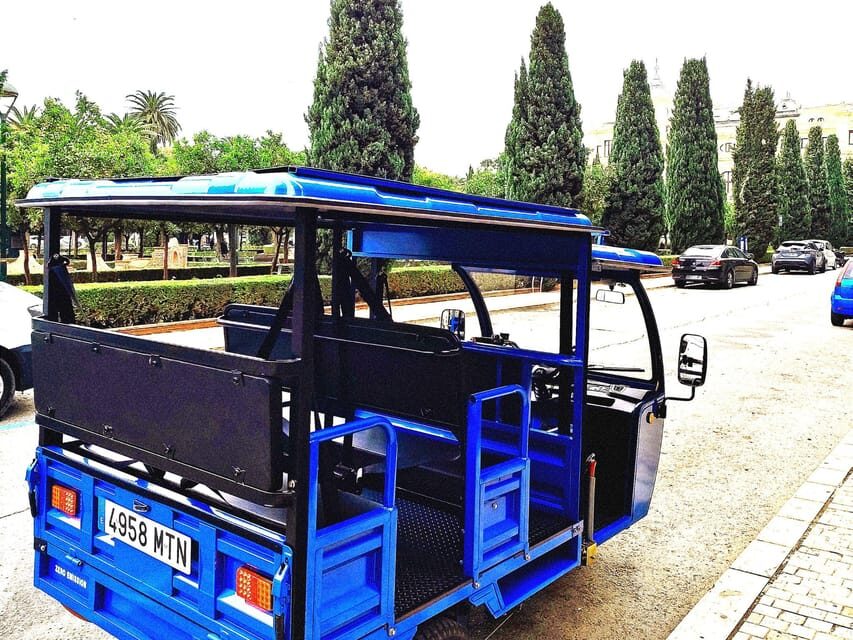
I especially like the 100% electric tuk tuk. It keeps the experience comfortable and modern, and in winter the vehicle comes with protective layers and blankets so you’re not freezing. Second, I like how the route is built around key moments—especially the photo-friendly views at Mirador del Gibralfaro (and, on the longer option, the coast-side Baños del Carmen pause).
One drawback to plan for: parts of Malaga feel bumpy because of old streets and cobblestones, so if you have back issues, you’ll want to take it slow and consider padding or choosing the shorter duration.
In This Review
- Key highlights at a glance
- A quiet, electric ride that saves your legs in the Centro
- Plaza de la Marina: where the city’s main axes cross
- Malaga Cathedral: Renaissance-Baroque power built over a mosque
- The University of Malaga and Malaga’s civic core
- Port of Malaga: commercial, passenger, cruise, and sports
- Centro Pompidou Málaga and El Cubo: modern culture by the harbor
- La Farola lighthouse and La Malagueta Beach
- Baños del Carmen: the seafood-and-sea pause on the 2-hour tour
- Mirador del Gibralfaro: the views that close the loop
- 1 hour vs 2 hours: picking the route that matches your day
- What’s actually included: driver-guide, comfort gear, and set photo stops
- Ride comfort and small gotchas (cobblestones, pets, and timing)
- Price and value: what $28.66 buys in real sightseeing time
- Who should book this Malaga Eco Tuk Tuk tour
- Should you book this Malaga Tuk Tuk tour?
- FAQ
- How long is the Malaga Eco Tuk Tuk tour?
- What’s included in the price?
- Is the tour offered in English?
- Where does the tour start and end?
- Do I need to print tickets?
- Are hotel pickup and drop-off included?
- Can I bring a pet?
- FAQ
- Does the tour operate in rain or extreme weather?
- What are the age and weight limits?
- Is there a limit to how many people fit in each tuk tuk?
- What happens if I’m late to the meeting point?
Key highlights at a glance
- Electric, private tuk tuk that moves you efficiently through central Malaga
- Expert driver-guide in English with real local context as you pass each landmark
- Photo stops that are actually worth getting out for, including Gibralfaro views
- Major sights in a short window—cathedral to port to lighthouse and beach
- Season-friendly warmth with blankets and rain wind protection in cooler weather
- No queue, no waiting energy: you start your sightseeing smoothly
A quiet, electric ride that saves your legs in the Centro
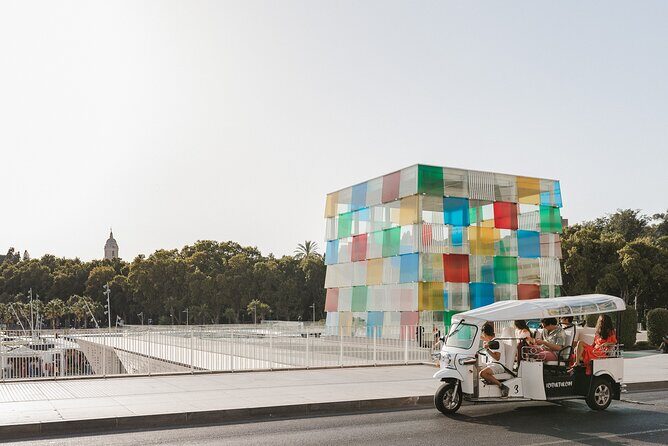
This is one of those tours that makes sense on day one—or on a tight day when you still want the big-ticket Malaga hits. You’re not just “seeing from the street.” You’re moving in a private tuk tuk that drops you at the right places, with pre-set stops designed for photos and quick viewing.
The vehicle matters more than you might think. A classic car tour can feel stressful in dense streets. Here, the electric tuk tuk keeps things calmer while you cover ground efficiently. And because the stops are planned, you’re not stuck in that awkward part of travel where everyone is negotiating where to go next.
Also, the driver isn’t only a driver. You’re with an expert companion guide driver, which is why the experience feels more like “learning Malaga” than “being transported.”
You can also read our reviews of more guided tours in Malaga

Plaza de la Marina: where the city’s main axes cross
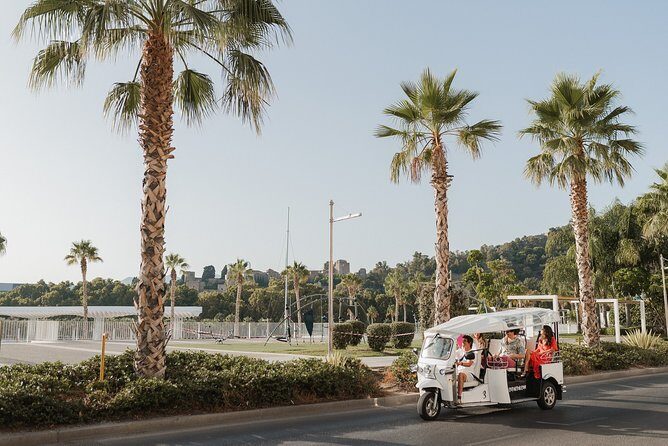
Your first stop is Plaza de la Marina, a busy nerve point in Malaga’s Centro district. It’s where two important paths intersect, and you can feel why this area matters: it links major streets inside the historic center and gives a main access route toward the port.
What I like about starting here is the grounding. In just a moment, you get a spatial sense of Malaga—how the city’s walking world connects to the waterfront. Even if you later explore on foot, this stop helps you understand where you are in the bigger map.
If you’re the type who likes getting oriented fast, this is a good early win.
Malaga Cathedral: Renaissance-Baroque power built over a mosque

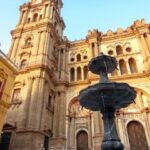
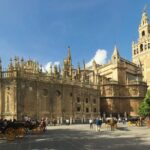
Next comes one of the most dramatic sights in the city: the Holy Cathedral Church Basilica of the Incarnation of Malaga. From the outside it’s already impressive, but the real magic is in the story of how it formed.
This cathedral was built on the site of an earlier Greater Mosque. As the construction happened in different stages, the building picked up styles that create a unique mix—Renaissance-Baroque with a Gothic vocation. In plain terms: you get a building that reads like history written in stone.
Inside, the highlights are the kinds of details that make you slow down even if you’re short on time. You’ll have the chance to notice the cathedral’s distinctive “siloesca” structure and the way the space holds art and faith together. The Capilla Mayor is a must-see, and you’ll also want to look for the magnificent canvas of the Virgen del Rosario by Alonso Cano. Other notable pieces include the popular Virgen de los Reyes and an older Gothic altarpiece of Santa Bárbara. If you have even a small interest in Spanish religious art, this stop delivers.
One practical note: cathedral interiors can be visually dense. If you tend to rush through museums, it may help to pick one or two focal points (like the Capilla Mayor and one major artwork) rather than trying to see everything at once.
The University of Malaga and Malaga’s civic core
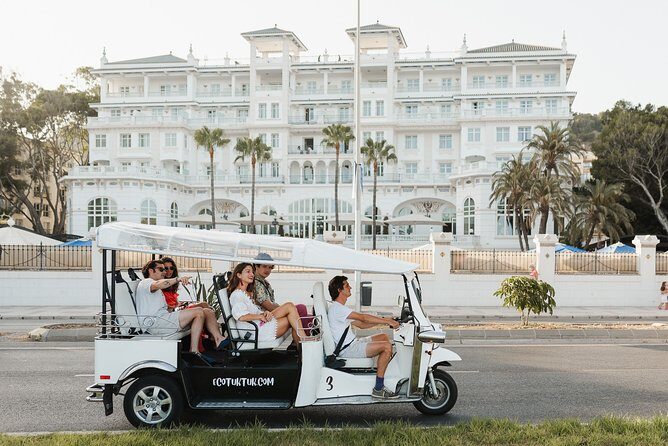
After the cathedral’s grand interior, the tour keeps moving through areas that show another side of the city—public institutions and daily life.
You’ll pass the University of Malaga (UMA), a publicly owned higher education institution founded in 1972. The scale is big: nearly 40,000 students and about 2,450 teachers. Even if you don’t tour a campus building in the way you would at a traditional university visit, it’s still useful context. It’s Malaga showing you what keeps the city active beyond tourism.
Then you’ll also stop near:
- a Bank of Spain branch in Malaga
- Malaga’s town hall
These may sound less romantic than cathedrals, but they matter. They’re part of the city’s official “center of gravity,” where administration and finance shape daily life. A driver-guide usually makes these moments feel relevant rather than random—linking where the city holds power to how it developed around the older core.
Port of Malaga: commercial, passenger, cruise, and sports

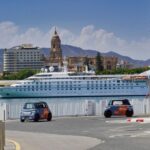
The tour’s heart shifts once you reach the Port of Malaga. It’s not just a harbor for photos—it’s a working port with commercial operations, passenger travel, cruise traffic, sports boating, and fishing. It’s managed by the Malaga Port Authority, and it sits in the Bay of Malaga in the western Mediterranean.
One detail you can use when you’re planning your own time: the average annual temperature is around 19°C, which helps explain why Malaga feels comfortable for visitors much of the year. Even on a cooler day, the water area tends to feel like it belongs to the city rather than being an afterthought.
You’re also likely to notice how quickly the tour ties together “old Malaga” and “new Malaga” by threading from historic architecture to the cultural layer along the waterfront.
You can also read our reviews of more private tours in Malaga






Centro Pompidou Málaga and El Cubo: modern culture by the harbor
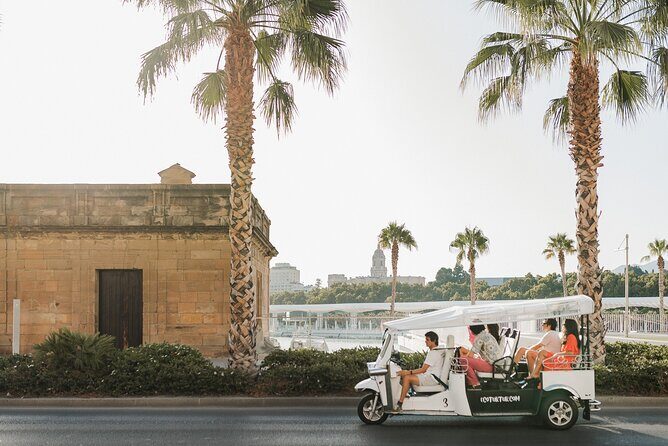
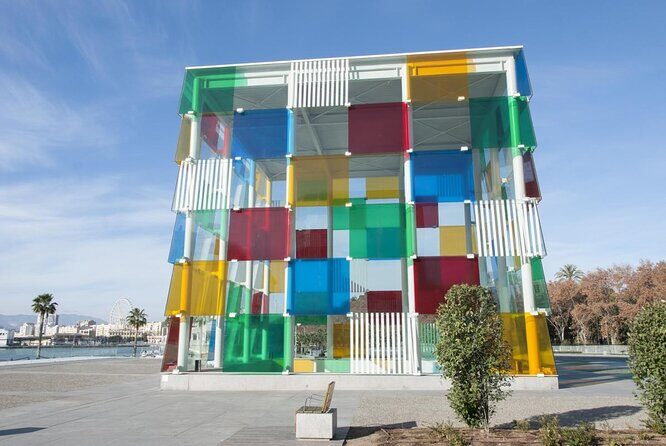
At the port area, you’ll also stop by the Center Pompidou Málaga, located in El Cubo. This is the first international headquarters of the Center Pompidou Paris, housed in that distinctive space.
This is a smart pairing on a short tour. Cathedral time can feel like pure past; Pompidou Málaga gives you the present-day cultural energy of Malaga. You get a sense that the city keeps layering new meaning onto older ground.
If you’re an art traveler, you might feel tempted to return later for a full museum visit. On this tour, you’re seeing the landmark and getting the “why it matters” context, not replacing a gallery afternoon.
La Farola lighthouse and La Malagueta Beach

As you continue toward the coast, you’ll reach La Farola, the lighthouse located at the entrance to the Port of Malaga. It was completed in 1817 by engineer Joaquín María Pery y Guzmán. It’s a classic Malaga “point and shoot” moment because it anchors the whole maritime theme.
Then you’ll head to La Malagueta Beach, the urban beach on the eastern side between the port and La Caleta. It’s about 1,200 meters long and roughly 45 meters wide on average, and it has dark sand.
Why this stop is worth it: even if you’re not planning a beach day, you get a real sense of how close the city is to the sea. Malaga isn’t one of those places where the ocean is a distant postcard. It’s part of the daily rhythm.
If the weather is good, this is also the moment to take in sea air and watch the light shift. If it’s windy or cold, you’ll appreciate the tour’s winter comfort gear more than you’d expect.
Baños del Carmen: the seafood-and-sea pause on the 2-hour tour

On the longer (about 120-minute) option, you’ll include a stop near Baños del Carmen. This is a seafood-focused restaurant serving fish, seafood, wines, and typical local cuisine by the sea.
Important detail: the stop itself is described as having free admission, which usually means it’s a viewing/photo opportunity rather than a ticketed entry. Even so, it’s useful. You see the setting and you get a practical reference point for later, when you want to eat near the water without guessing.
If you’re a “let’s add one strong food moment” traveler, this extra stop can be the difference between a sightseeing-only day and a day that feels like a full Malaga experience.
Mirador del Gibralfaro: the views that close the loop
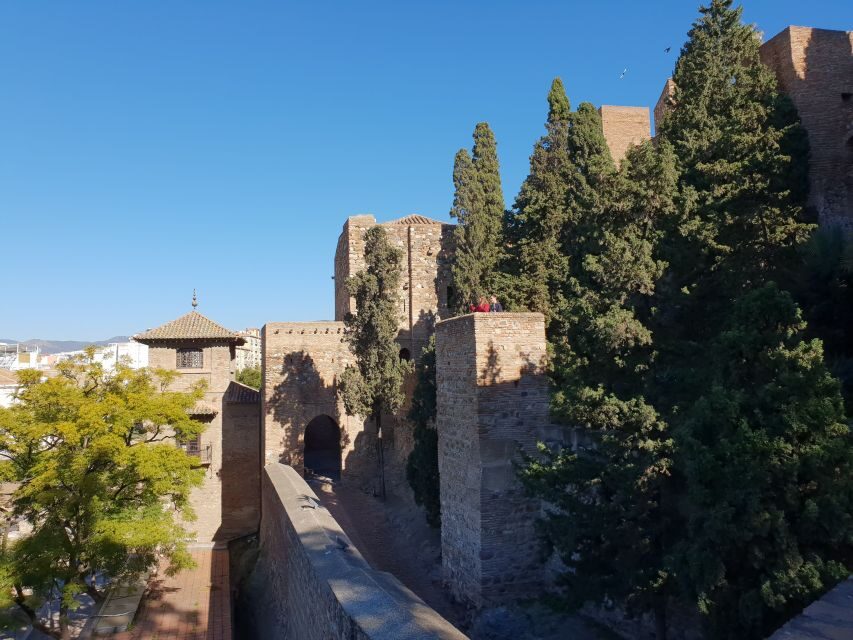
The payoff stop is Mirador del Gibralfaro (also linked to Gibralfaro Castle). Even if you only do the 60-minute version, this is the key photo and viewpoint moment.
Here’s why it matters: the castle was built in the 14th century to house troops and protect the Alcazaba. Today, it’s one of the most visited spots because you can walk along the walls and see Malaga from above. There’s also an interpretation center that helps connect what you’re seeing to its past.
The area’s name ties to a lighthouse on top—Jabal-Faruk (the mount of the lighthouse). Even earlier than the medieval fortification, Phoenicians and Romans used the settlement. In the Nasrid period, the king Yusuf I made it a fortress in 1340. Later, during the reconquest, it saw the siege of the Catholic Monarchs in 1487, and Fernando del Católico even used the site as temporary residence after the victory. After that, it became tied to the city’s coat of arms.
In other words, you’re not only looking at views—you’re standing in a place that has guarded the city for centuries.
Practical tip: plan for short walks and stairs on top viewpoints. You don’t need hiking legs, but you should be ready for uneven ground and the kinds of steps that make a viewpoint feel real.
1 hour vs 2 hours: picking the route that matches your day
Here’s the simple way to choose:
- About 60 minutes: you stop at Mirador del Gibralfaro for the main viewpoint payoff. This is ideal if you’re sightseeing with limited time, or you want a quick orientation + one standout view.
- About 120 minutes: you get everything from the shorter route plus a stop at Baños del Carmen. Choose this when you want one extra anchor point toward food and the waterfront.
Think of the first hour as “high impact,” and the two-hour option as “high impact plus a later-eating reference.”
What’s actually included: driver-guide, comfort gear, and set photo stops
The included package is what makes this tour work as a time-saver.
You get:
- an expert companion guide driver
- a start that avoids queues and waiting
- a private vehicle for your group only
- a 100% electric and sustainable tuk tuk
- pre-selected stops for photographing
- blankets and protective layers against rain and wind in winter
That comfort gear isn’t a luxury detail if you’re touring in cooler months. It also signals that the company expects people to use the tour outdoors even when the weather isn’t perfect.
There’s also a big emphasis on staying focused. The tour is designed to make its set stops, including photo pauses. Stops can’t be modified, so you won’t waste time negotiating the day away.
Ride comfort and small gotchas (cobblestones, pets, and timing)
This is a practical city-riding experience, which means a few “know before you go” points help.
- Cobblestones can make it bumpy. One clear note from real-world experience: if you have back pain, the ride can feel less comfortable.
- Pets and companion animals are not allowed for security reasons.
- If you’re delayed, the tour can be reduced based on lost time. If delay is greater than 15 minutes, the activity may be canceled and you wouldn’t get a refund.
Also, the tour can vary a bit due to street closures or demonstrations. That’s city life, not something you should blame on the operator.
On the comfort side, it’s designed to work even for older travelers: the vehicles are suitable for them, and drivers can help get on if needed.
Price and value: what $28.66 buys in real sightseeing time
The price is listed at about $28.66 per person, with private eco tuk tuk service for your group. For many people, the real value isn’t the vehicle—it’s what the vehicle buys you: efficiency.
In 1–2 hours, you’re covering:
- a major cathedral
- key civic and university areas
- the port zone
- cultural landmark territory (Pompidou Málaga / El Cubo)
- lighthouse and beach areas
- and then the best viewpoint payoff at Mirador del Gibralfaro
If you’ve ever tried to stitch those together on public transport, you know how much time gets chewed up. This tour compresses that, and because the stops are set, you spend less time planning during the day.
You can also book with confidence that this is offered in English and uses a mobile ticket, which keeps your day simple.
And if you’re traveling with a group, the private setup can spread the cost well, since the company notes group discounts.
Who should book this Malaga Eco Tuk Tuk tour
This works especially well if you:
- want a first-day orientation without feeling overwhelmed
- prefer a light walk with good viewpoints over all-day trekking
- like history, but don’t want to spend your vacation reading every sign yourself
- want a private setup (only your group) so you can move at a comfortable pace
It’s also a strong choice for families who want to see a lot without constantly coordinating “meet back here” logistics.
If you have strong mobility limits, you’ll want to consider that some parts involve short walking and stairs at viewpoints. The driver can help, but the experience still happens on uneven, historic-city terrain.
Should you book this Malaga Tuk Tuk tour?
My take: yes, if your goal is fast, meaningful highlights with less stress. The cathedral stop plus the port-and-culture stretch plus the Mirador views give you a high concentration of what people come to Malaga for. The electric tuk tuk and the winter comfort gear make it a smoother ride than you’d expect for an outdoor tour.
You might skip it—or choose the shorter version—if your back is sensitive to cobblestone rides or if you hate the idea of fixed photo stops you can’t swap out. Otherwise, this is one of the better ways to get your bearings and feel the city’s mix of old and new without losing your whole day.
FAQ
How long is the Malaga Eco Tuk Tuk tour?
It runs for about 1 to 2 hours. The 60-minute option focuses on the Mirador del Gibralfaro stop, while the 120-minute option also includes Baños del Carmen.
What’s included in the price?
Included are an expert companion guide driver, a start without queues or waiting, a private vehicle for your group, a 100% electric and sustainable tuk tuk, pre-selected photo stops, and blankets/protective layers in winter.
Is the tour offered in English?
Yes, it’s offered in English.
Where does the tour start and end?
It starts at C. Guillén Sotelo, 11, Distrito Centro, 29016 Málaga, Spain, and ends back at the meeting point.
Do I need to print tickets?
No. It uses a mobile ticket.
Are hotel pickup and drop-off included?
No. Hotel pickup and drop-off are not included.
Can I bring a pet?
No. Pets and companion animals are not allowed.
FAQ
Does the tour operate in rain or extreme weather?
Tours take place in rain or heat, and they can only be canceled under extreme conditions.
What are the age and weight limits?
Minimum age is two years (babies are not allowed). A minimum weight of 9 kg is required.
Is there a limit to how many people fit in each tuk tuk?
Yes. Tuk-tuks are booked privately, and the legal maximum is 4 passengers per tuk tuk. Larger groups use additional tuk-tuks.
What happens if I’m late to the meeting point?
If you’re delayed, the activity will be reduced based on the time lost, and the route may change. If the delay is greater than 15 minutes, the tour may be canceled and the amount paid will not be refunded.