REVIEW · MALAGA
Ronda group walking Tour
Book on Viator →Operated by Tours in Malaga · Bookable on Viator
Ronda is split in two, and that alone makes walking here interesting. This group tour pairs the New Bridge crossing with cliff-edge viewpoints, then strings it together with neighborhood stories. You’ll get your bearings fast and see why locals talk about this city like it has two personalities.
I especially like the mix of old town alleys and newer Ronda in one loop, so you understand the geography instead of just checking boxes. The guide-led talk adds context as you move—from the Arabic quarter up toward major church-and-town-center stops.
One planning note: the bullring entrance fee isn’t included, so if you want to go inside Plaza de Toros de Ronda you should budget extra.
Key things that make this tour worth your time
- New Bridge timing and views: you cross at the start of the walk, before crowds thicken
- Gorge cliff walk: you get the best views without trying to navigate stairs solo
- Arabic quarter streets: cobblestones plus guide stories that connect the dots
- Iglesia de Santa Maria la Mayor stop: a clear “center of gravity” moment during the uphill wander
- Plaza de Toros de Ronda focus: you end at bullfighting’s birthplace area, without rushing
- Max group size of 30: large enough to feel social, small enough to stay guided
In This Review
- Meeting at Spain Square: where the tour actually starts
- New Town to El Tajo de Ronda: the New Bridge moment
- Arabic quarter to the historic core: why the guide’s stories matter
- Up toward Iglesia de Santa Maria la Mayor and the town center stops
- Plaza de Toros de Ronda: ending at bullfighting’s birthplace area
- Family-friendly, low-stress, and good for first-timers
- Price and value: what you’re paying for (and what you’re not)
- English on the mic: what to expect from the guiding style
- Walking tips: how to avoid getting routed into trouble
- Timing and weather: plan for real walking conditions
- Should you book this Ronda group walking tour?
- FAQ
- How long is the Ronda group walking tour?
- Where do I meet the guide?
- Is the tour offered in English?
- What’s included in the price?
- Are bullring entrance fees included?
- Is it family-friendly?
- Does the tour run in bad weather?
Meeting at Spain Square: where the tour actually starts
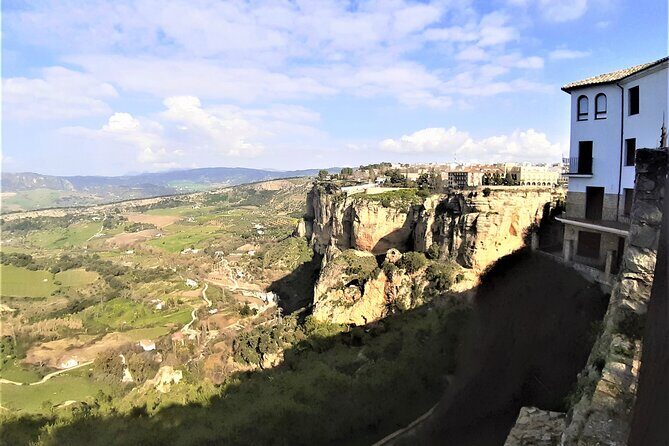
This is a straightforward, meet-and-go walking format. You’re asked to be at the starting area at 10:15 at Spain Square near the Ronda Parador, and the tour operates as a guided group that returns to the same meeting point around 12:30.
Why I like this setup: it removes the “what do I do first?” problem. Ronda is hilly, and the streets can be confusing if you’re arriving from a bus or train. Having a set start time also means you’re usually walking while the light is still decent for the views.
Two more small but helpful details:
- You get a mobile ticket, so you’re not hunting for paperwork.
- The tour is in English, and it’s designed as a group experience rather than a private one.
Practical tip: if you’re using navigation to get there, don’t just trust the fastest route to the old town. One common mistake is getting directed through access-controlled ways that aren’t meant for non-residents.
New Town to El Tajo de Ronda: the New Bridge moment
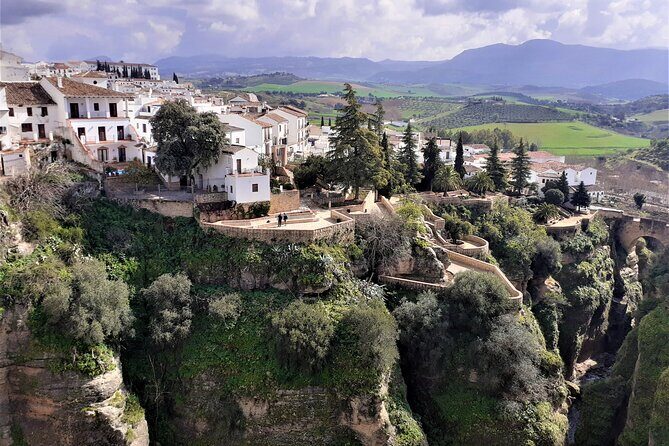
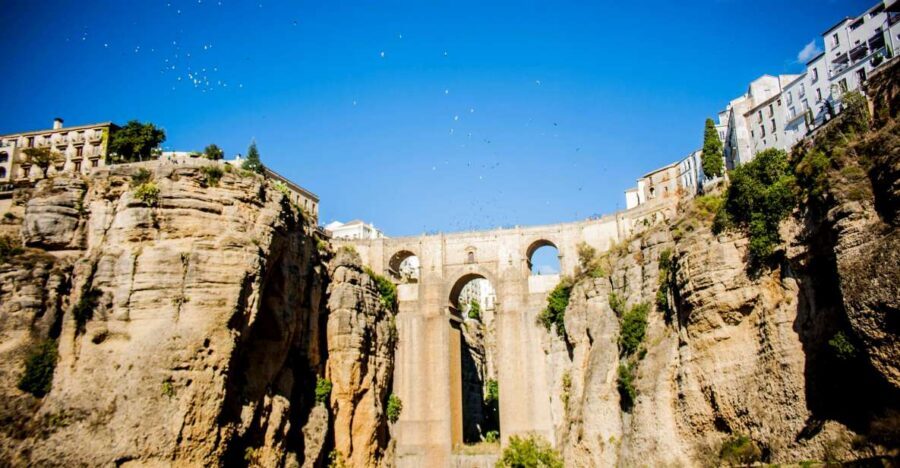
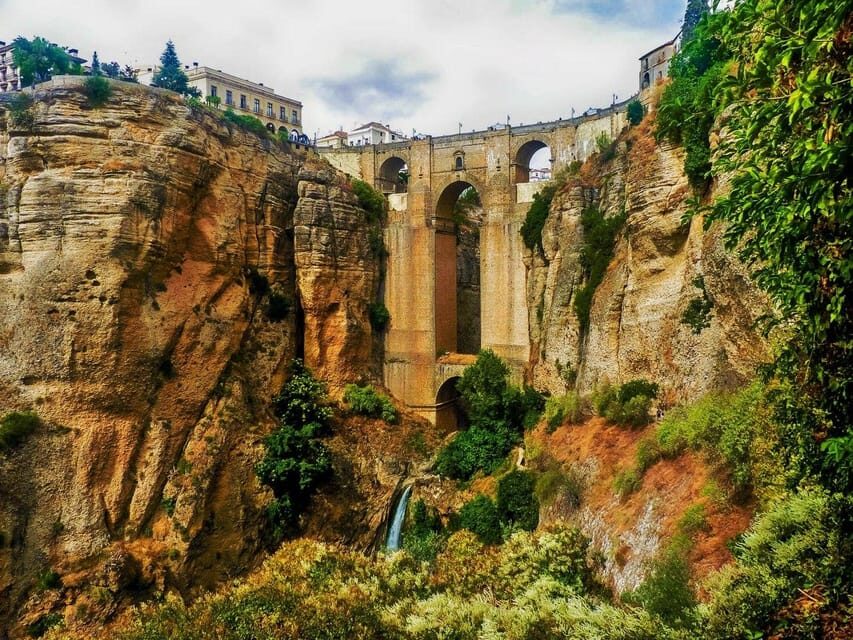
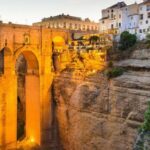
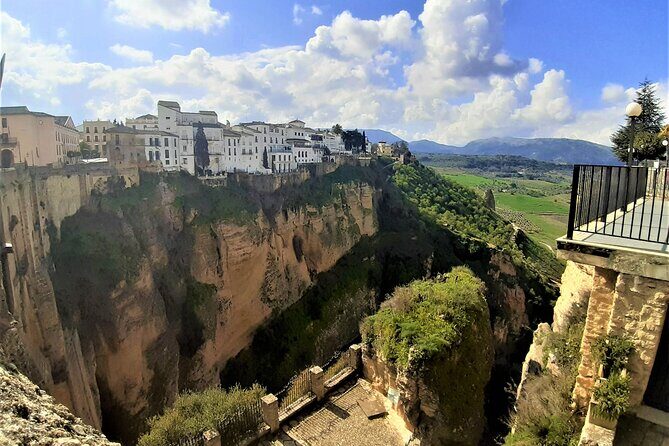
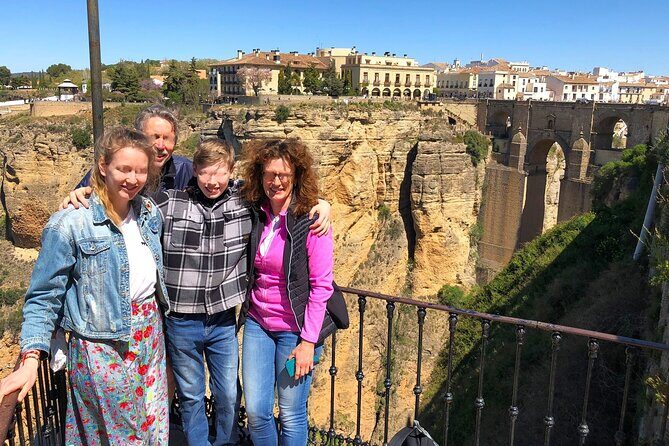
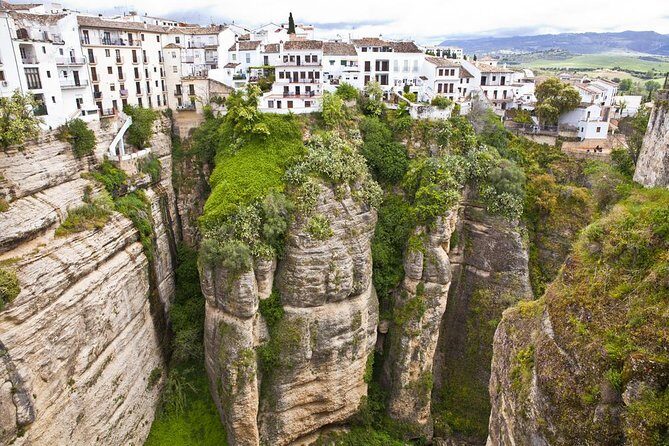
The walk begins in the newer part of Ronda, crossing the New Bridge (built at the end of the 18th century). That bridge matters because Ronda sits over a deep gorge, and the city essentially functions as two towns: the older, more romantic side and the wider, newer side.
From a traveler’s point of view, this first segment is where the tour earns its keep:
- You see the gorge quickly, instead of guessing where “the famous views” are.
- You learn how the bridge network splits the city, not just that there’s one landmark.
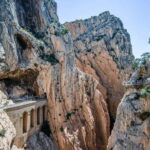
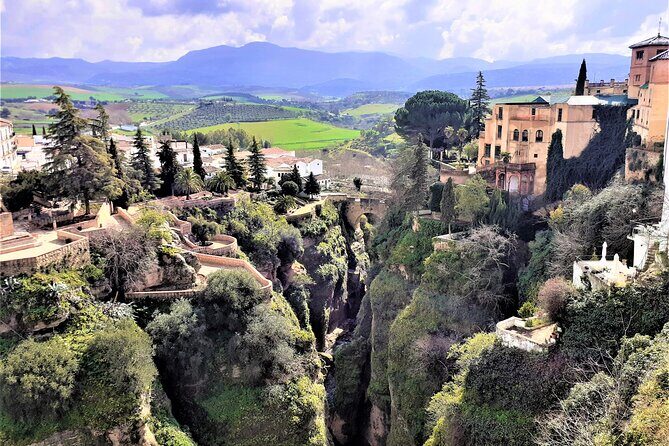
After crossing, the route follows along the edge of the cliffs with outlooks over the surrounding countryside. You’re not just looking at buildings—you’re looking at the physical reason Ronda developed this way in the first place. Then you transition toward the historic core.
This portion also sets your pace for the day. It’s about steady walking, not sprinting between photos. If you’ve got comfortable shoes and you’re okay with cobblestones later, this is a good first Ronda activity.
You can also read our reviews of more walking tours in Malaga
Arabic quarter to the historic core: why the guide’s stories matter
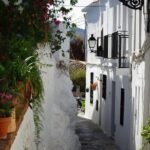
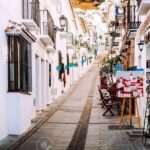
Once you start moving from the cliff views toward the center, the tour turns into the kind of sightseeing that sticks. You wander along the Arabic quarter of the historical city center, and the guide shares stories, legends, and key facts as you go.
That “as you go” timing is important. If you try to read about Ronda alone, you tend to hit one problem: you don’t know what you’re looking at or why a street feels the way it does. Here, the narration happens while you’re actually standing on the ground where the history played out—so the details don’t float around in your head.
This segment also gives you a real sense of Ronda’s layers. It’s not only one era, one ruler, or one architectural style. You start to see how neighborhoods shifted, how the city connected to its surroundings, and why locals still talk about these areas with pride.
One thing I’d watch: this part involves uphill movement and cobblestone streets. It’s manageable for most people, but it’s still walking. Bring good grip shoes, especially if rain makes the stones slick.
Up toward Iglesia de Santa Maria la Mayor and the town center stops
The tour continues up the cobblestone lanes into the area of Iglesia de Santa Maria la Mayor. This isn’t positioned as a “speed pass.” It’s set up as a meaningful pause in the itinerary—one where the guide’s context helps you notice what you might otherwise miss.
From there, you keep moving toward the town hall area and the wider historic center zone. The structure of the route is smart: it uses the city’s steep geography as a kind of guided timeline. You start at dramatic views, then step into the civic and religious center, and you keep climbing until you reach the next anchor.
Why you might like this segment:
- It helps you connect “great views” with “what those views protected and powered.”
- It’s a chance to look closely at how the old city is built and how streets funnel you toward major landmarks.
If you’re the type who hates waiting in lines, this tour design is a plus. The walking pace gives you plenty to watch, and the guided stops are built into the route rather than tacked on at random.
Plaza de Toros de Ronda: ending at bullfighting’s birthplace area
The final stop is at Plaza de Toros de Ronda, in the area described as the birthplace of bullfighting. The bullring is one of the biggest draws in town, and ending here is a neat way to close the loop: you’ve seen the gorge that shaped the city, and then you land at the landmark tied to Ronda’s cultural identity.
There’s a key planning point: admission tickets for the bullring are not included. The tour can take you to the bullring area, but if you want to go inside or attend anything that requires a paid ticket, you’ll need to handle that separately.
This is why I call this tour “orientation with culture,” not “a full museum ticket package.” It’s still valuable, because you get the narrative framing, but you should budget for entrances if you’re picky about seeing everything inside.
Family-friendly, low-stress, and good for first-timers
This is a family-friendly walking tour. Children do need to be accompanied by an adult, but the overall structure is easy to understand: meet, walk together, stop at landmarks, return.
It also works well as a first Ronda experience. You get:
- the geography (gorge + bridge),
- the historic neighborhoods (including the Arabic quarter area),
- the major landmark zones (church/town-center),
- and the famous cultural end point (Plaza de Toros).
The group size—up to 30 travelers—keeps it from feeling like a stampede. You still get social energy, but you’re not totally lost inside a crowd. Plus, the tour returns to the starting point, so you don’t end up stranded across town.

Price and value: what you’re paying for (and what you’re not)
At $36.12 per person for about 1 hour 30 minutes, this isn’t a bargain in the “everything included” sense. The bullring admission is not included, and that can add cost depending on what you want to do at the end.
So where does the value come from?
- You’re paying for a professional guide who connects the city’s physical layout to the stories that explain it.
- You’re paying for route efficiency: a guided loop that reduces wrong turns and time wasted figuring out steep connections.
- You’re getting a structured introduction to both old and newer Ronda without needing to research dozens of stops.
Given the rating (4.6 from 10 reviews) and that most people recommend it, the price seems to match the experience you get: guided orientation plus landmark access at a good pace.
One more detail that matters: it’s commonly booked about 43 days in advance, which usually means you’ll want to reserve early in peak season.
English on the mic: what to expect from the guiding style
The tour is offered in English, and the guides are a big part of the experience quality. In the feedback, Antonio gets high praise for being engaging and funny, with a cheeky sense of humor. Another guide, Gemma, is described as easy to understand and strong on Ronda’s background.
Still, there’s one caution worth taking seriously: not every guide experience will match the same standard. One account flagged a guide with weaker English fluency and limited grasp of history. That doesn’t mean the tour is unreliable, but it does suggest that if language clarity matters most to you, you should go with a flexible mindset and accept that guide styles can vary.
Walking tips: how to avoid getting routed into trouble
This is the kind of walking where navigation errors can turn into headaches. A real issue that’s worth knowing: sometimes mapping apps route people toward the old town across an area that may be restricted for non-residents, and there can be cameras and fines.
My practical advice:
- Before you start walking, confirm your route doesn’t send you across the gorge into restricted old-town access.
- If you’re already there and you notice you’re on the wrong side, don’t assume there’s a quick detour around it. The geography of Ronda can trap you until you backtrack.
The good news: even with a navigation mistake, the tour itself starts from a clear meeting point, so you can focus on getting to the start area cleanly and then enjoy the guided route.
Timing and weather: plan for real walking conditions
The tour runs in a typical morning slot: meet at 10:15, start around 10:30, and finish back at the starting point by 12:30.
It operates in all weather conditions, but the experience also notes it requires good weather. Translation: if weather turns unsafe or unpleasant, you may be offered another date or a refund. Either way, you should dress for walking and for changing light. If it’s wet, take extra care on cobblestones.
If you’re bringing kids, the same rule applies: pack snacks and water, and plan for the uphill bits. Since it’s a group walk, the route moves along whether you’re eager or tired—so bring the right energy.
Should you book this Ronda group walking tour?
Book it if:
- you’re visiting Ronda for the first time and want an organized route,
- you want the gorge and bridge views with context,
- you like landmarks explained through stories instead of reading alone,
- you’re okay with a guided walking pace through cobblestone streets.
Skip or think twice if:
- you want the bullring fully included with no extra ticket costs,
- you strongly need a certain level of spoken English and don’t want any variation between guides,
- you dislike walking hills or you’re expecting fully flat routes.
For most visitors, this is a smart “get your bearings” choice. You’ll leave understanding why Ronda is famous for the gorge, why the old and new sides feel so different, and why the bullring sits at the center of local identity—even if you never step inside.
FAQ
How long is the Ronda group walking tour?
It lasts about 1 hour 30 minutes.
Where do I meet the guide?
You meet at Spain Square by Ronda Parador at 10:15, with the starting point listed as the Oficina Municipal de Turismo de Ronda on P.º Blas Infante, s/n.
Is the tour offered in English?
Yes, it’s offered in English.
What’s included in the price?
The price includes a professional guide and a group tour, and you’ll receive a mobile ticket.
Are bullring entrance fees included?
No. Entrance fees for Plaza de Toros de Ronda are not included.
Is it family-friendly?
Yes. It’s described as family-friendly, and children must be accompanied by an adult.
Does the tour run in bad weather?
The tour is described as operating in all weather conditions, but it also notes it requires good weather. If it’s canceled due to poor weather, you’ll be offered a different date or a full refund.