REVIEW · MARBELLA
Chefcooking Paella from our Andalusian Grandmother at a Family Farm
Book on Viator →Operated by Farm Las Marías · Bookable on Viator
Paella tastes better when it comes from a family farm. This 4-hour Andalusian grandmother-style cooking experience mixes a practical paella lesson with a real farm visit, Sangria made with fruit and citrus from their harvest, and a full lunch that ends with Estepona desserts and Colombian coffee. I especially like the focus on tradition you can actually see and follow, plus the fact that you eat what you help make, not just watch it happen.
One thing to plan for: private transportation isn’t included, so you’ll want your own ride to the meeting point in Estepona.
In This Review
- Key highlights before you go
- Why an Abuela-style paella lesson feels different
- Arriving at Las Marías Farm: Sangria first, views included
- Farm tour with the Mediterranean Sea and Sierra Bermeja as your frame
- The hands-on paella de la Abuela Andaluza cooking moment
- Paella options: seafood, meat, or vegetarian
- Using ingredients that come from different places
- Starters, mussels, cheeses, ham, olives, and how the meal flows
- One consideration: portions can feel tight if the group expands
- Sangria, wine, coffee, and the included drink setup
- Included drinks for adults
- Non-alcoholic options that still feel like part of the meal
- Colombian coffee and dessert to finish
- What you take home: a recipe book you’ll actually use
- Price and value: what $138.17 buys you in real time
- Who this is best for in Marbella
- Ideal matches
- People who might want to double-check expectations
- Should you book this farm paella experience?
- FAQ
- How long is the paella experience in Marbella?
- What time does the experience start, and where does it end?
- Is the experience offered in English?
- Can I choose a vegetarian option or request dietary accommodations?
- What drinks are included, and is there an age limit for alcohol?
- What happens if the weather is poor or the minimum number of people isn’t met?
Key highlights before you go
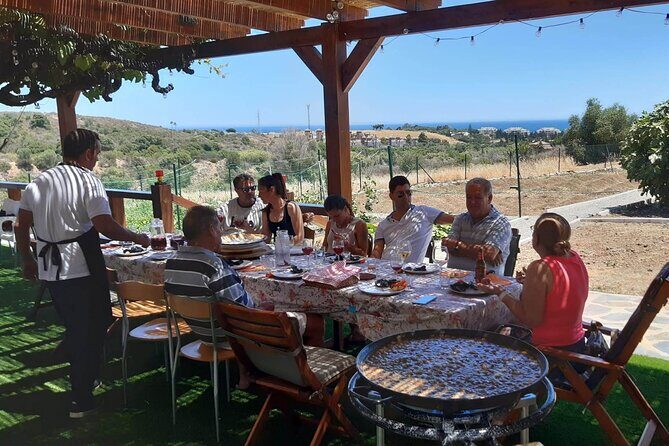
- Small group (max 4 people), which makes the cooking part feel personal rather than rushed
- Sangria on arrival with local wine and citrus from the orchard
- Hands-on paella de la Abuela Andaluza using fresh products from sea, mountains, and their garden
- Farm tour with big-view backdrops: Mediterranean Sea and Sierra Bermeja
- A meal that follows a full Andalusian flow: starters + paella + dessert + Colombian coffee
- Take-home recipe book, so you can recreate it later
Why an Abuela-style paella lesson feels different
Most paella experiences either turn into a performance or a food-only stop. This one is designed around process—how the recipe is built, why certain ingredients matter, and what makes it Andalusian in the first place. You’re not just learning a dish; you’re learning the logic behind it, step by step.
The “Abuela” approach also changes the vibe. It’s less about fancy techniques for show and more about family knowledge—how to use fresh seafood, when to work the ingredients, and what to pay attention to as the paella comes together. That’s why the experience sticks: you leave with a recipe you understand, not just one you memorized.
You can also read our reviews of more tours and experiences in Marbella.


Arriving at Las Marías Farm: Sangria first, views included
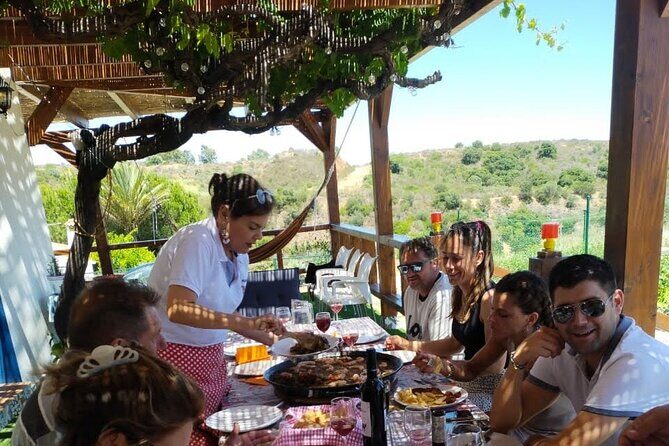
You start at Las Marías (Cam. Nicola, km 1, Estepona area) with the day moving right into food. Arrival includes Sangria made with local wine, plus fruit and citrus from their orchard. If you’re visiting in warm weather, this early drink hits the sweet spot because it sets a relaxed pace while you get oriented.
Then you begin with traditional starters alongside drinks—think mussels, cheeses, olives, Iberian ham and sausages, and artisan breads. This matters because it builds your appetite without turning the event into a long wait-and-watch. You’re already eating while the hosts explain what’s coming next and how the paella is tied to their land and community.
One more practical detail I appreciate: the experience includes bottled water from a deep well with high magnesium and minerals. That’s not just a talking point. It helps you stay comfortable when you’re eating something salty and seafood-forward.
Farm tour with the Mediterranean Sea and Sierra Bermeja as your frame
Before the main cooking work, you tour the farm in a setting that feels genuinely Andalusian. The views give you context for the ingredients you’ll use: the Mediterranean Sea in one direction, and the Sierra Bermeja in the other. You can picture how seafood, mountain produce, and garden harvests fit together in one household kitchen.
You’ll also hear the story of the farmers in the area. That’s where the experience becomes more than dinner. It gives you a sense of how food traditions survive—through land stewardship, seasonal timing, and passing knowledge down through the family.
From a visitor’s perspective, I like this format because you don’t have to guess why the food tastes the way it does. You get the “why” before the “how,” which makes the cooking lesson easier to follow.
The hands-on paella de la Abuela Andaluza cooking moment
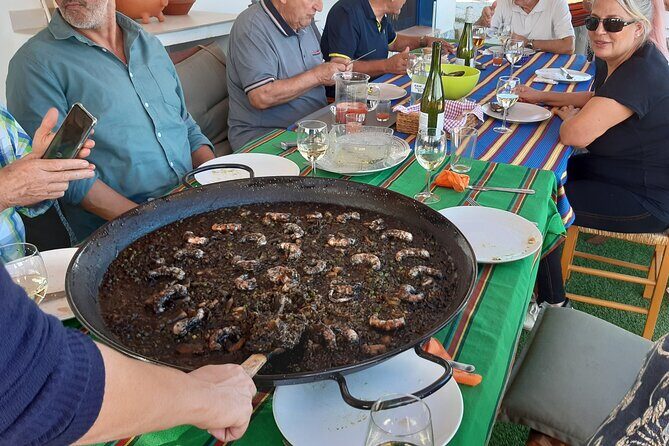
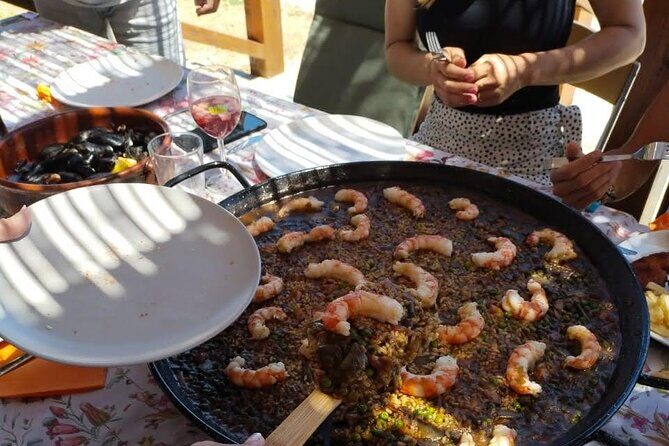
This is the core of the experience: you’ll actively participate in making Paella de la Abuela Andaluza. The hosts explain the recipe step by step and share the unique traditions tied to it, then you help prepare it as the afternoon continues.
What I’d highlight for your expectations is that paella is technical—at least in the sense that small choices change the result. The hosts put care into explaining the process clearly, and the group stays small enough that you can ask questions without feeling like you’re interrupting.
Paella options: seafood, meat, or vegetarian
You can choose among three versions:
- Seafood paella
- Meat paella
- Vegetarian paella
Since you’ll be using fresh products and traditional techniques, the option you pick should still feel like “the real thing.” And if you have dietary needs, the experience says they adapt when you inform them ahead of time.






Using ingredients that come from different places
A big part of the authenticity is sourcing in the rhythm of the region. The paella is described as made with fresh products from:
- the sea (local fish market),
- the mountains,
- and their garden.
That means the flavor profile shouldn’t feel one-note. Instead, it should come off as balanced: seafood brininess or meat depth or garden-driven freshness, plus everything tied together with traditional preparation.
Starters, mussels, cheeses, ham, olives, and how the meal flows
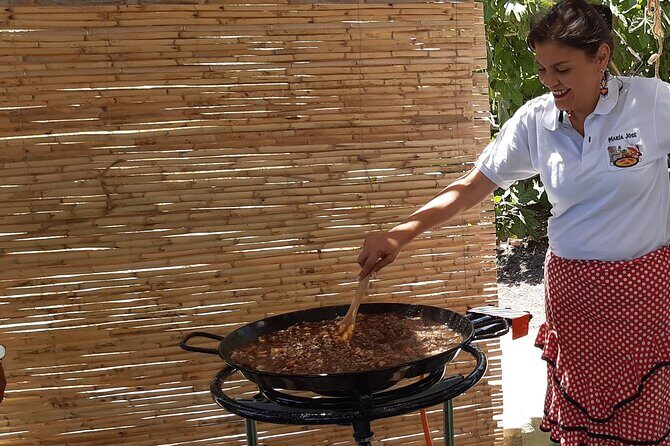
You start eating early with traditional starters of local production. The menu style is practical: it sets you up for the paella and keeps you from getting hungry while explanations happen.
Here’s what you can expect as part of that starter spread:
- steamed mussels
- fresh and cured cheeses
- olives
- ham and Iberian sausages
- artisan breads
Also, drinks are part of the rhythm. Soda/pop (non-alcoholic refreshing drinks) and water are included, and alcoholic drinks come through as part of the experience for adults.
One consideration: portions can feel tight if the group expands
The experience sets a maximum group size of 4 people, which is great for comfort and attention. Still, one earlier experience described a situation where the group felt cramped and the amount of some items didn’t match the listing details. I’d treat that as a caution to do two things:
- confirm the exact group size when you book,
- and if you have expectations around specific starter items, message the provider in advance.
If the group truly stays within the cap, you’re far more likely to get that relaxed, plentiful feeling the majority of diners highlight.
Sangria, wine, coffee, and the included drink setup
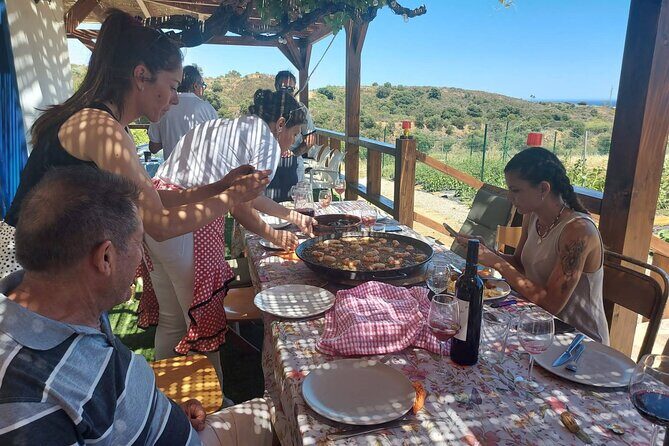
Let’s talk drinks, because this afternoon is designed to be social, not just instructional.
Included drinks for adults
Alcoholic options are included, including:
- Sangria made with locally produced wine and citrus from their orchard
- wines, beer
- shots of cocktails made with their own recipes
There’s an age rule: alcoholic beverages are only for people over 18. If you’re traveling with mixed ages, the non-alcoholic drinks are also included, so the table isn’t split into “drinks for some, water for others.”
Non-alcoholic options that still feel like part of the meal
Soda/pop and the deep-well bottled water are included. For me, that matters because long meals go better when everyone can stay hydrated without waiting for separate arrangements.
Colombian coffee and dessert to finish
After paella, you’ll end with coffee and dessert:
- Colombian coffee (and/or tea, plus infusions)
- traditional Estepona desserts
- locally produced artisan pastries
This ending is more than sweet food. It’s the point where the experience shifts from cooking work to “stay for a while.” You’re given time to relax after the technical part, and the coffee gives you something comforting to hold onto while you digest.
What you take home: a recipe book you’ll actually use
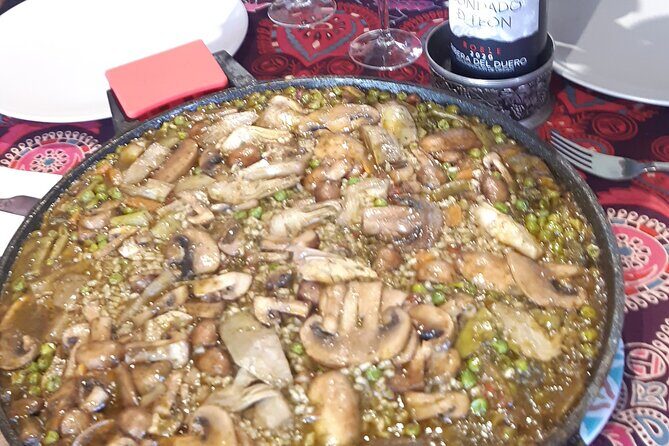
A lot of cooking classes hand you a generic card and call it a day. Here, you’re given a recipe book of their preparations. Even if you don’t cook paella often, having the method and ingredient structure in writing is what makes it repeatable later.
I also like that the recipe is tied to specific traditions (the Abuela angle, the farm sourcing, the step-by-step approach). That makes your leftovers less likely to turn into guesswork.
Price and value: what $138.17 buys you in real time
At $138.17 per person for about 4 hours, you’re paying for three things at once:
- a hands-on cooking lesson,
- a full lunch with starters, paella, dessert,
- included drinks (including Sangria and coffee).
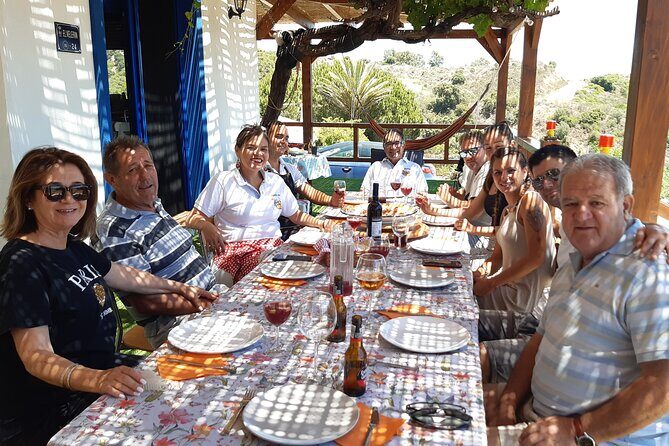
You’re not just buying food. You’re buying instruction, ingredients that come from the farm ecosystem (sea, mountains, garden), and a table experience that’s meant to feel like a family meal rather than a restaurant service.
The only meaningful “don’t forget” is transportation. Since private transport isn’t included, your total cost should factor in a taxi or other local ride to reach the meeting point in Estepona (start time is 1:00 pm).
Also consider the small-group advantage. With up to 4 people, the lesson can feel more direct. That’s where the price starts to make sense: you’re not competing for attention.
Who this is best for in Marbella
This experience fits best if you want:
- a cooking class that includes a real farm tour,
- paella taught with tradition, not shortcuts,
- and a meal where starters, paella, dessert, and coffee come as one package.
Ideal matches
- Couples and small friend groups who like eating together
- Food lovers who want the “how” behind a classic dish
- Travelers who prefer English instruction and a smaller setting
- Anyone who cares about diet options, since vegetarian paella is available and restrictions can be adapted when you inform the provider
People who might want to double-check expectations
If you’re the kind of diner who wants very specific amounts of each starter item no matter what, message ahead and confirm. The experience is capped at 4, but past accounts show that when the group feels crowded, food distribution can feel less generous.
Should you book this farm paella experience?
I think it’s a strong pick if you want paella with context: farm-to-table ingredients, a family-style approach, and a full afternoon meal. The high ratings (4.9 with 49 reviews) line up with what the format is trying to deliver—warm hosting, real learning during a hands-on cooking session, and a finish that feels like a proper Andalusian day out.
I’d book it if you can handle the logistics of getting to Estepona on your own, and if you’re happy with a small-group format where the pace is relaxed and focused on shared food.
If you want, tell me your travel month and whether you’re choosing seafood, meat, or vegetarian paella. I can help you plan what to expect from the meal flow and how to time your day around the 1:00 pm start.
FAQ
How long is the paella experience in Marbella?
It lasts about 4 hours.
What time does the experience start, and where does it end?
It starts at 1:00 pm at Las Marías (Cam. Nicola, km 1, 1, 29689 Estepona, Málaga, Spain) and ends back at the same meeting point.
Is the experience offered in English?
Yes. It’s offered in English.
Can I choose a vegetarian option or request dietary accommodations?
Yes. Vegetarian options are available, and the provider says they can adapt to dietary restrictions or allergies if you inform them.
What drinks are included, and is there an age limit for alcohol?
Soda/pop (non-alcoholic) and bottled water are included. Alcoholic beverages are included as well, but only for people over 18 years old.
What happens if the weather is poor or the minimum number of people isn’t met?
The experience requires good weather. If it’s canceled due to poor weather, you’ll be offered a different date or a full refund. If the minimum number of people isn’t met, you’ll also be offered a different option or a full refund.