Malaga feels compact, then surprises you. This private walk strings together Roman ruins, Moorish forts, and Picasso’s childhood spots, so the city tells a story as you move. You start at the Dark Door, once a port gate in Roman times, and you finish near the big shopping street by the port.
I really like the private-group format and the way Elmira keeps the pace friendly. I also love the street-level detail you get on the big names—Picasso and the Alcazaba—plus the smaller stops that help everything make sense (like ancient theater seats and the city’s symbolism).
One heads-up: a couple of the most famous monuments can involve extra entrance fees, and the Alcazaba climb can take a bit out of you. If you’re unsure about your walking stamina, plan for a slow, steady pace.
In This Review
- Key highlights worth knowing
- Meet At The Dark Door: Malaga’s Roman port gate, then straight into the story
- Park stroll and old institutions: a quick lesson in how the city grew
- Alcazaba: the Moorish fortress climb, legends, and that long fight
- The Roman Theatre: a 2,000-year-old find and how people sat back then
- Plaza de la Merced: Picasso’s birthplace area plus a political obelisk
- Picasso baptism church: sculptures, religious paintings, and practical questions
- Malaga Cathedral: unfinished, layered styles, and part of a former Muslim mosque
- Main square and the midnight ritual: bullfights, executions, and New Year 12 grapes
- The walking street: a nickname about women, money, and urban disinfecting
- Price and value: $101.27 per group, plus realistic ticket budgeting
- Who this tour fits best (and who might want to adjust expectations)
- Book it or skip it? My practical take
- FAQ
- How long is the Malaga private walking tour?
- What group size is this tour for?
- Is the tour offered in English?
- What entrance tickets are not included in the tour price?
- Where does the tour start and end?
- Is the tour suitable for people with moderate physical fitness?
- What is the cancellation policy?
Key highlights worth knowing
- Dark Door start: Roman port-gate history sets the tone fast.
- 155 exotic plants stop: You get real facts, not just pretty scenery.
- Alcazaba visit option: Arabs built it about 1,000 years ago, plus Moor-Christian legends.
- Roman theatre details: Find out where women and men sat, and what actor status looked like.
- Picasso on Plaza de la Merced: Birthplace context, monument, and optional interior visit.
- New Year ritual stop: 12 grapes, midnight chimes, and the wish tradition.
Meet At The Dark Door: Malaga’s Roman port gate, then straight into the story
Your tour starts at the meeting point near Estatua del Biznaguero in the Jardines de Pedro Luis Alonso area. Even before you hit the main landmarks, you get a strong sense of what Malaga used to be: the Dark Door was once a port gate in Roman times. That matters because Malaga doesn’t just look old—it grew old in layers. When you understand that first hinge, the rest of the walk feels logical instead of random.
You’ll also hear how Malaga got its name and what its symbols mean. I like this kind of opening because it gives you a mental map you can keep using when you’re back on your own later. It’s not a lecture—more like the first page of the city guide you’ll carry in your head.
You can also read our reviews of more walking tours in Malaga
Park stroll and old institutions: a quick lesson in how the city grew
After that, you’ll move toward a park stop with more than 155 varieties of exotic plants. It’s the kind of botanical tangent that could go boring—except the key is you’re not just looking. You’re learning facts about the plants, which makes the area feel alive and specific rather than generic greenery.
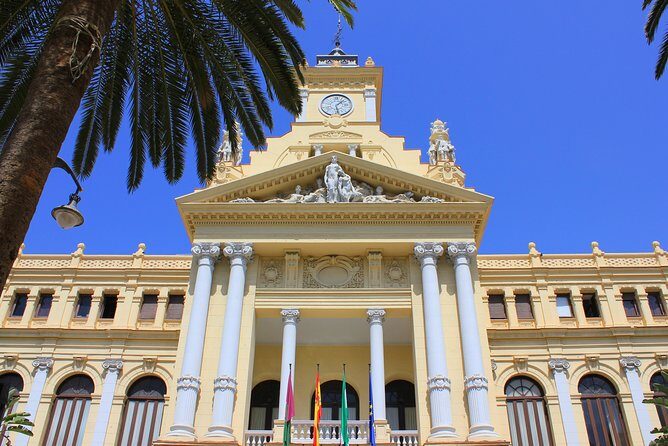
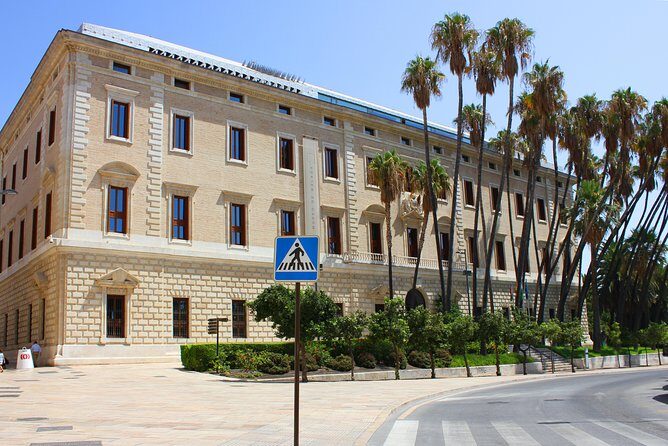
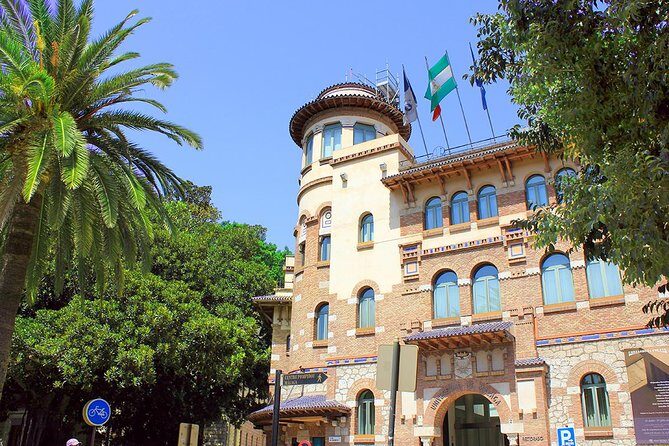
From there, you’ll walk along an alley where you can see buildings built about 100 years ago, including the Town Hall, Malaga city university, and the National Bank of Spain. This portion is useful because it bridges the gap between “historic fortress” and “modern city.” You start to see how Malaga’s older power centers and wealth symbols sit near each other, often within walking distance.
Alcazaba: the Moorish fortress climb, legends, and that long fight
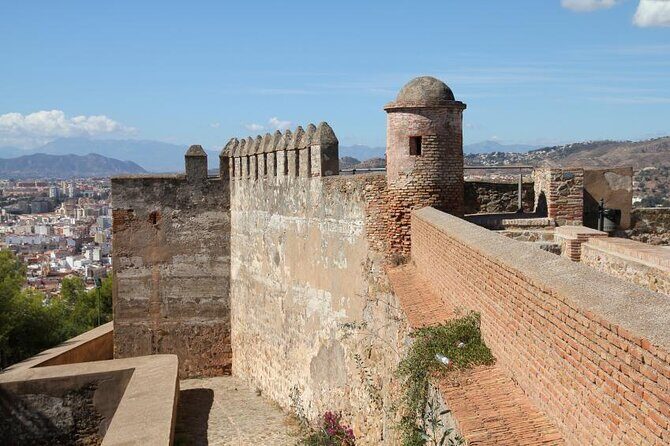
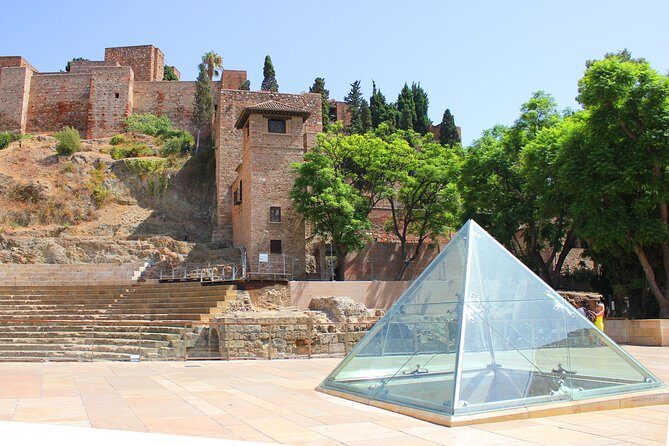
Stop 1 is Alcazaba, the Arab-built fortress that goes back around 1,000 years. This isn’t only about walls and views. You’ll learn about the long conflict—an eight-century war between Moors and Christians—and you’ll also hear legends tied to the fortress. The legends are the fun part, but the historical context makes them better, not just creepier.
If the group pace allows, you may be able to visit the monuments inside. The walking time listed for the climb and return is around 40 minutes. That’s short enough to do without turning your tour into a workout, but it still requires moderate stamina—especially if the steps feel slippery or you’re traveling in hot weather.
Entrance ticket note: Alcazaba is 3.5 euros and not included in the tour price. I like that the tour is honest about it. You’ll know what to bring, instead of feeling surprised at the gates.
The Roman Theatre: a 2,000-year-old find and how people sat back then
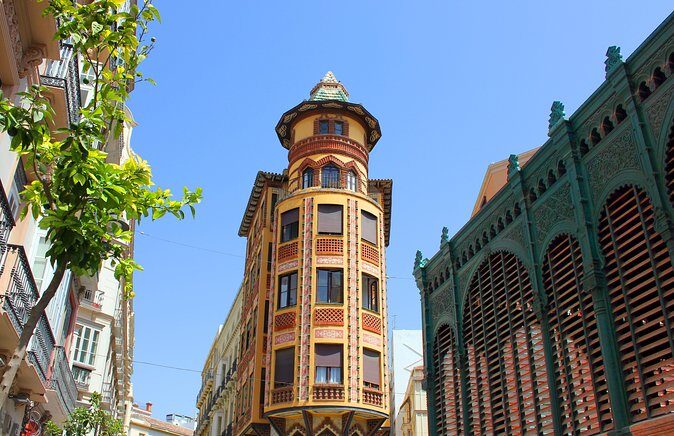
Next comes a Roman theatre you’ll learn is about 2,000 years old, discovered by accident. That detail matters because it gives the site a sense of discovery rather than something staged for tourists. You’ll also get explanations about the seating arrangement for women and men in Roman times, plus what the status of actors was like during that era.
This stop is valuable because it turns ruins into a human scene. You’re not only learning dates—you’re getting a sense of everyday life and social rules. It also helps you appreciate why Malaga’s older culture left behind what it did.
Plaza de la Merced: Picasso’s birthplace area plus a political obelisk
Then you reach Plaza de la Merced, one of the most meaningful stops for art fans. Here, you’ll see the birthplace of Pablo Picasso and his monument. You’ll also hear facts about his early life and childhood, which is a nice way to connect the name you already know with the city that shaped him.
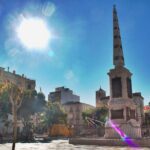
You’ll also notice an obelisk dedicated to the death of a Spanish revolutionary. That’s an example of how Malaga isn’t one-theme. Art and politics share the street here, and the tour helps you notice both.
There’s an optional add-on if you want to go inside the story more deeply: you can visit the house where Picasso was born. It’s about 15 minutes, and the ticket is 3.5 euros and not included. If you tend to love museums but hate rushing, this timing is about right for a quick interior stop without derailing the rest of the walk.
You can also read our reviews of more private tours in Malaga






Picasso baptism church: sculptures, religious paintings, and practical questions
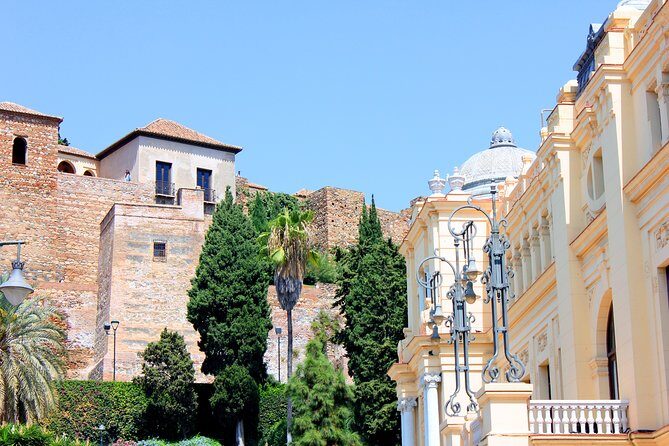
Right around this square is a church known as Picasso’s baptized place. You’ll also see sculptures and religious paintings. The tour notes these paintings are linked with wishes, which gives the church another layer beyond architecture—people come back to this kind of faith-and-art mix for years.
Even if you’re not a church person, I think this stop works because it anchors Picasso in everyday life, not just in galleries. It also makes the city feel like it still lives in the present, not only in the past.
Malaga Cathedral: unfinished, layered styles, and part of a former Muslim mosque
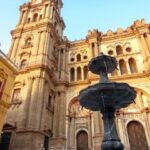
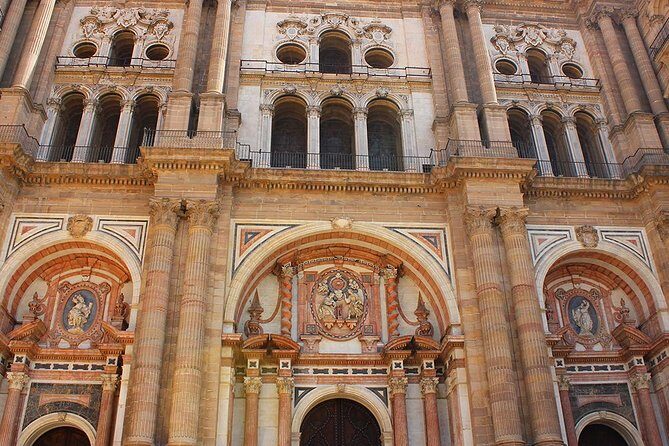
Stop 3 is Malaga Cathedral, described as unfinished and packed with layers. You’ll learn how it combines different styles, and how part of a Muslim mosque is connected to the site. That kind of architectural overlap is one reason Malaga’s history feels closer than you’d expect. The city didn’t wipe the slate clean—people built on what was already there.
If you can visit, expect about 20 to 30 minutes. Entrance ticket: 7 euros, not included. I’d plan for it ahead of time so you’re not deciding on the spot. If you’re short on energy, you can still enjoy the external atmosphere, but the guided visit is where the explanations land.
Main square and the midnight ritual: bullfights, executions, and New Year 12 grapes
As you move toward the city’s main hub—one that connects the port to the heart—you’ll hear about its older role. It used to be a place for bullfights and executions. That’s heavy context, and it’s part of why the current traditions feel more striking.
Then comes the lighter, local ritual: on New Year Eve, when the chimes strike 12, you make a wish, eat 12 grapes, and hope it comes true. It’s the kind of tradition that sounds simple until someone tells you it’s tied to the city’s pulse. You’ll see how Malaga keeps its identity through small, repeatable moments like that.
The walking street: a nickname about women, money, and urban disinfecting
The tour ends with time on the main street area, described as the paradise of women with a husband’s credit card. You’ll hear the story behind the founder, plus how the city was disinfected at the expense of architecture.
That last detail is a classic “how cities change” moment. It’s a reminder that preservation and progress often pull in opposite directions. I like ending on that note because it makes you look at the streets differently once you’re done—more question marks, less autopilot.
Price and value: $101.27 per group, plus realistic ticket budgeting
The tour price is $101.27 per group (up to 10 people) for about 2 hours. Since it’s a private walk, the biggest value play is splitting the cost with friends or family. For couples, it can still feel like a splurge, but you’re paying for one guide, one route, and a pacing that fits your group.
English is offered, and you’ll get a mobile ticket, which makes check-in simple. The tour is also listed as private, so you’re not stuck waiting for a bigger crowd.
Paid entrances to plan for (not included):
- Alcazaba: 3.5 euros
- Picasso house (optional): 3.5 euros
- Malaga Cathedral: 7 euros
If you do all three of those paid stops, budget about 14 euros total in ticket costs, on top of the tour price. Add that to your walking-time expectations, especially for the Alcazaba climb (around 40 minutes).
Who this tour fits best (and who might want to adjust expectations)
This is a great fit if you want a guided walk that ties together big icons—Alcazaba, Picasso, and Malaga Cathedral—without turning your day into museum marathon mode. The stops are spaced so you get explanation and context, then you move on before you lose interest.
It’s also a good match if you like asking questions. The guide experience here has strong signals of humor, professionalism, and responsiveness, including one traveler noting Elmira stayed on top of everything from when they stepped off a ship to when it was time to go back. If you’re traveling with a schedule (cruise timing, early departure plans), that kind of confidence can matter.
The main adjustment you might make is physical pacing. The listed fitness level is moderate, and the main climb is the Alcazaba area. If you know you tire quickly on steps, you can still do the tour, but I’d be upfront with your pace and let the guide steer you.
Book it or skip it? My practical take
I’d book this tour if you want the fastest way to understand Malaga’s layers: Roman-era beginnings, Moorish power, Roman everyday life, and Picasso’s imprint—plus a local tradition you’ll actually remember at midnight.
I’d think twice if you’re looking for a fully ticket-free, low-walking experience. The Alcazaba climb and the optional paid monument visits are part of the plan, so you’ll want a little extra flexibility.
If you like cities with stories you can walk through, this private walk is a smart use of time.
FAQ
How long is the Malaga private walking tour?
It’s listed at about 2 hours.
What group size is this tour for?
It’s a private tour/activity, with up to 10 people per group.
Is the tour offered in English?
Yes, English is offered.
What entrance tickets are not included in the tour price?
Alcazaba is 3.5 euros, the Picasso birthplace house is 3.5 euros, and Malaga Cathedral is 7 euros. Other noted admission items are listed as free.
Where does the tour start and end?
Start: Estatua del Biznaguero, Jardines de Pedro Luis Alonso, C. Guillén Sotelo, 31, Distrito Centro, 29016 Málaga.
End: Calle Marqués de Larios, C. Marqués de Larios, Distrito Centro, Málaga.
Is the tour suitable for people with moderate physical fitness?
Yes. It’s suggested for travelers with moderate physical fitness.
What is the cancellation policy?
You can cancel for free up to 24 hours in advance for a full refund. If you cancel less than 24 hours before the start time, the amount paid is not refunded.