REVIEW · MALAGA
Picasso roots Private Walking Tour in Central Malaga
Book on Viator →Operated by Voila Malaga · Bookable on Viator
Picasso starts in ordinary street corners. This private walk in Central Malaga connects Picasso’s early life to real buildings, streets, and family ties, with an English-speaking guide keeping it moving and understandable. You’ll see how a 19th-century setting helped shape the young artist and why certain places still matter today.
I especially like the way the tour pairs story with specific locations. You get birthplace-and-family context (not vague art talk), and the guide approach comes through as friendly and passionate—Juan Diego in particular is described as helpful and informative. The only real consideration: this is a long walk for a short time, so comfortable shoes matter.
In This Review
- Key highlights you should know before you go
- Price and what you’re really paying for in Central Malaga
- Where the tour starts and how the 2 hours feel on the ground
- Stop 1: The building that frames Malaga in the 1800s
- Stop 2: Where Picasso’s playground comes into focus
- Stop 3: Picasso’s birthplace and what it reveals about his family
- Stop 4: The church tied to baptism and the parents’ marriage
- Stop 5: Why there’s a Picasso museum—and the family lending his works
- Stop 6: Where Picasso’s father taught—and where Picasso went to visit
- Stop 7: Cafe Chinitas and what happened on Picasso’s last visit
- Stop 8: The Bishop’s House and its Picasso-focused exhibition
- Guide style: what you can expect from Juan Diego and the team approach
- What to wear and how to set yourself up for an easy walk
- Who this tour suits best (and who should consider alternatives)
- Tips to make the most of your Picasso roots walk
- Should you book this Picasso roots private walking tour?
- FAQ
- How long is the Picasso roots private walking tour in Central Malaga?
- How much does the tour cost per person?
- What language is the tour offered in?
- Is this a private tour?
- Where do we meet, and where does the tour end?
- Is there a mobile ticket?
- How soon will I get confirmation after booking?
- What should I wear for the walking tour?
- What is the cancellation policy?
- Is the tour near public transportation?
Key highlights you should know before you go
- Central Malaga route from Teatro Cervantes to Plaza del Obispo, designed for efficient sightseeing
- 19th-century context that explains the society Picasso was born into
- Family-focused stops at Picasso’s birthplace, the church linked to his baptism and parents’ marriage, and where his father taught
- Cafe Chinitas history tied to Picasso’s last visit to Malaga
- Bishop’s House exhibition stop that connects his legacy to today’s displays
- Private format means only your group joins, with an actual local guide
Price and what you’re really paying for in Central Malaga
At $120.41 per person for about 2 hours, this isn’t the cheapest way to see Picasso-related sights. But you are paying for a private guide and a tight walking route that aims to connect dots across multiple landmarks, not just point at plaques.
The value angle here is time and coherence. Instead of bouncing between sites on your own, you’ll get a sequence that explains why each place links to Picasso’s story—society in the 1800s, his playground, family details, and even how the Picasso museum came to be. If you like your tours to have a clear thread, this style makes the price easier to justify.
You can also read our reviews of more walking tours in Malaga
Where the tour starts and how the 2 hours feel on the ground
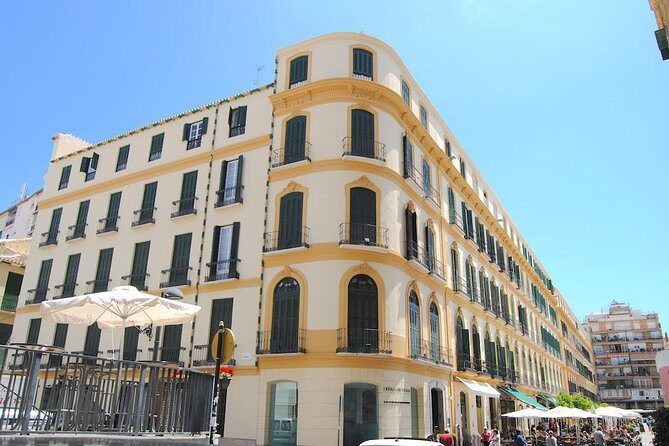
You’ll meet at Teatro Cervantes in Distrito Centro and end at Plaza del Obispo. That matters because it keeps the route logical: you’re moving through central sights in a way that feels like a guided walk, not a hunt.
It’s scheduled for roughly 2 hours, and the pacing includes several stops. A review notes the walk is long and you do a lot of it, so build this into your day accordingly. If you’re trying to pack a museum visit right after, you’ll want some breathing room.
Stop 1: The building that frames Malaga in the 1800s
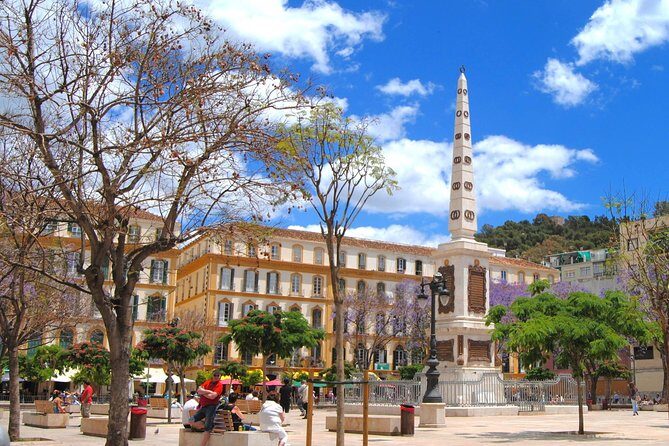
The tour kicks off with a building used to explain the society of Malaga in the XIXth century, the same era Picasso was born into. This is more than an opener—this kind of context helps you understand why a young artist’s early world looked the way it did.
A good tour doesn’t just say who someone was; it shows what their surroundings demanded and offered. Here, the focus is on the city’s environment before the story narrows to Picasso himself. If you usually find art biographies too “floating,” you’ll likely appreciate this grounding.
Stop 2: Where Picasso’s playground comes into focus
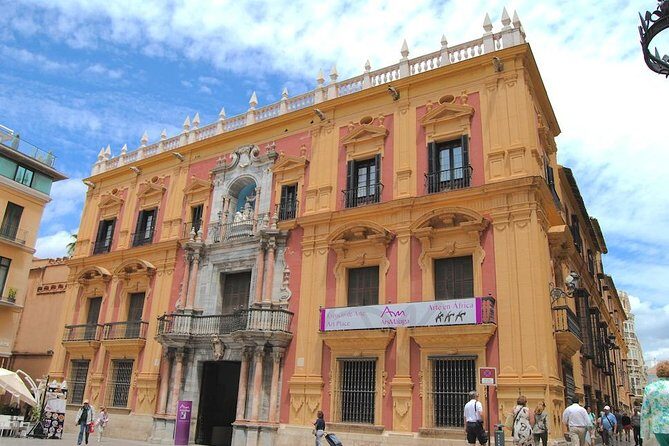
Next, you’ll meet what was described as Picasso’s playground. Even if you’ve heard Picasso’s name a hundred times, seeing the specific area where his early life unfolded makes the narrative feel less abstract.
This is one of those stops that can be as much about atmosphere as facts. You’ll likely start noticing how old neighborhoods and street layouts shape daily life, and that’s the point. If you’re the type who enjoys walking through “real places” rather than just collecting dates, this fits your style.
Stop 3: Picasso’s birthplace and what it reveals about his family
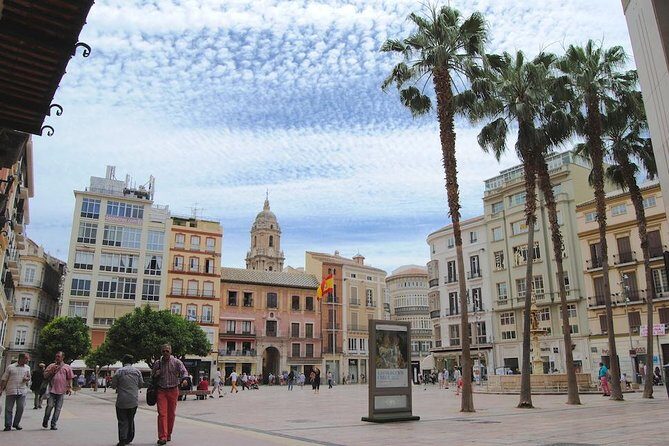
Then the tour shifts to Picasso’s birthplace, with a discussion of his family. This is a core part of the experience because it grounds the artist in relationships, not only talent and training.
Family context often changes how you interpret someone’s later work and choices. Here, the tour uses location to make those relationships tangible—what it might have meant to grow up where he did, and how the people around him influenced his path.
One practical note: this is still a walking tour, so expect to keep moving between stops. Bring patience for short transitions and use the breaks to check your footing.
You can also read our reviews of more private tours in Malaga





Stop 4: The church tied to baptism and the parents’ marriage
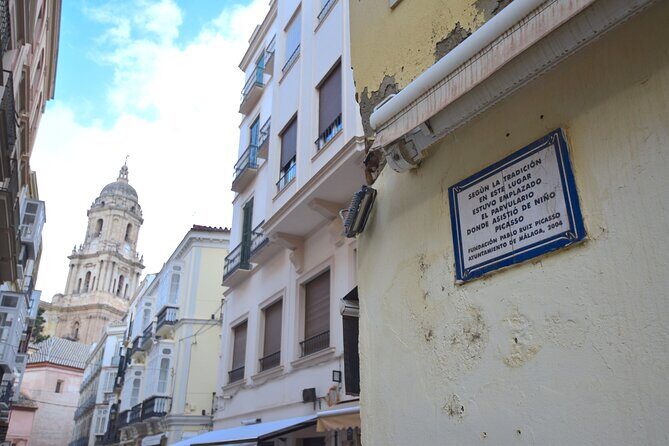
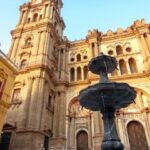
You’ll see the church where Picasso was baptised and where his parents got married. This is an interesting pairing because it links two major family milestones in one place.
Why does it matter? Because churches are often where communities recorded life events, and those events tell you what “normal” life looked like for families of the time. It’s also a stop that tends to feel visually rewarding—religious buildings often carry a sense of presence even when you’re just passing through the perimeter.
If you prefer tours that explain both the personal and civic side of history, this is one of the stronger moments.
Stop 5: Why there’s a Picasso museum—and the family lending his works
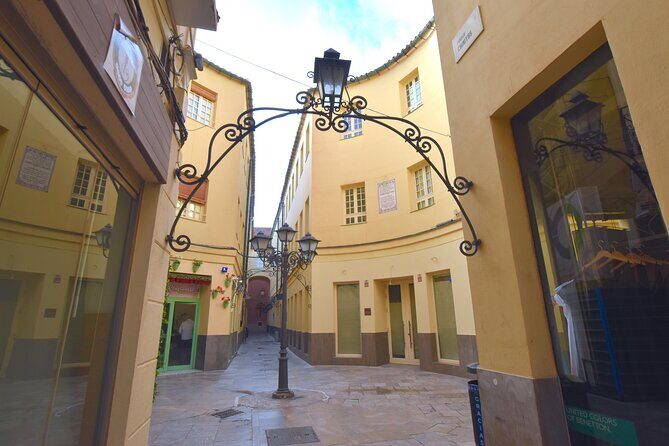
One of the most useful parts of the walk is learning why we have a Picasso museum. The explanation includes how Picasso’s family lent his works to the city, which explains the museum’s existence in a grounded, human way.
That detail helps you move beyond the idea that museums appear out of nowhere. It frames the museum as something built from relationships—between family, city institutions, and the desire to preserve what matters.
For you, that can change how you approach museum time later. You won’t just see objects; you’ll understand the intention behind them.
Stop 6: Where Picasso’s father taught—and where Picasso went to visit
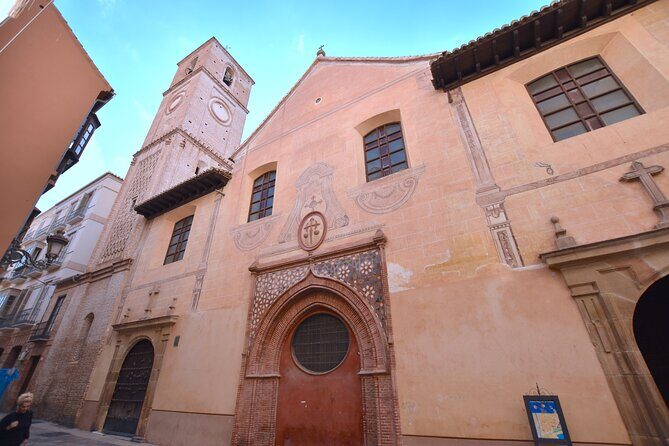
Next comes a stop about where Picasso’s father used to teach, and that Picasso himself used to go to visit him. This connects education, daily routines, and a personal link to learning.
This is also where the tour’s storytelling style becomes clear. A good guide doesn’t treat art as a mystery box. Instead, they show how everyday settings—schools, lessons, visits—could shape an inquisitive young mind.
If you like tours that tie biography to real-life habit patterns, you’ll probably enjoy this section. It’s specific, and it keeps the focus on relationships and places.
Stop 7: Cafe Chinitas and what happened on Picasso’s last visit
Then you’ll see where Cafe Chinitas was and learn about what happened there in Picasso’s last visit to Malaga. This stop gives the story a sharper edge and reminds you that Picasso wasn’t only a “childhood” figure in the city.
Cafes and social venues are often where famous people mix with real locals, and where cultural life happens. Even if you don’t know the details ahead of time, the payoff is understanding how the city stayed linked to him over years, not just at the start.
If you’re the kind of person who likes a tour that includes personality and turning points, this is a great moment to watch how your guide brings it to life.
Stop 8: The Bishop’s House and its Picasso-focused exhibition
The walk finishes at Plaza del Obispo, with a stop at the Bishop’s House, where a special exhibition about Picasso’s work was held. This ending works because it connects the “roots” theme to what you can see now.
Instead of ending on a street memory, you end with the idea that Malaga continues to interpret and display Picasso through exhibitions. That makes the entire experience feel less like a one-off story and more like a loop from past to present.
This is also a practical finishing point. You’ll be in a central spot that’s easier to continue exploring on your own.
Guide style: what you can expect from Juan Diego and the team approach
The tour is described as private and led by a local guide from Voila Malaga. In the feedback provided, Juan Diego is specifically mentioned as helpful, friendly, and informative, with a clear passion for both Malaga and Picasso.
One more detail stands out: a French review describes a guide who is an architect by trade and presents Picasso from a fascinating angle using that perspective. Whether your guide is an architect or not, the common thread is that the commentary tends to be more than memorized facts. It’s structured like a guided conversation through places.
That’s great for you if you like a tour where your questions feel welcome. You’re not stuck just watching a slideshow in street form.
What to wear and how to set yourself up for an easy walk
This is a walking experience, so wear comfortable shoes and clothes that handle Mediterranean weather. The tour is offered in English, and it’s designed so most travelers can participate.
You’ll also be near public transportation, which helps when you plan your arrival and departure. For the best day, I’d start with a quick look at your map before you leave the hotel, just so “Teatro Cervantes” and the ending point don’t turn into a puzzle.
Who this tour suits best (and who should consider alternatives)
This tour is a strong fit if you want a coherent Picasso story tied to real addresses. It’s also a good choice if you like guides who explain context, not just “here’s the building.”
It may be less ideal if you get tired from walking quickly or you want a slower pacing with lots of seated time. Because several stops happen within a tight 2-hour window, you’ll want to treat it as an active sightseeing sprint.
If you’re traveling with adults who like history plus art, you’ll likely be in the sweet spot. Solo travelers also do well here because the private format keeps the experience focused on you and your group.
Tips to make the most of your Picasso roots walk
- Ask about the connections: when a guide links one place to another, it helps you remember the whole thread.
- Use the church and museum stops as anchors: those are the moments that turn family milestones into civic legacy.
- Take water seriously on warm days. It’s only 2 hours, but you’re still walking in the center of town.
- Go in curious, not expert: the tour is built to be understandable, not a test of Picasso knowledge.
Should you book this Picasso roots private walking tour?
Book it if you want a private, English-speaking guide to connect Malaga’s streets to Picasso’s early life—birthplace, family, church ties, education, and even Cafe Chinitas. The price makes sense when you value a structured route and a storyteller who can make locations feel like part of one narrative.
Skip it or swap plans if you want lots of sitting time, or if you’re dealing with limited walking tolerance. This experience is short, but it still asks you to keep moving between stops.
If Central Malaga is on your agenda anyway, this walk is a practical way to get more meaning out of the streets than you’d get from a quick pass.
FAQ
How long is the Picasso roots private walking tour in Central Malaga?
It lasts about 2 hours.
How much does the tour cost per person?
The listed price is $120.41 per person.
What language is the tour offered in?
The tour is offered in English.
Is this a private tour?
Yes. It’s private, and only your group participates.
Where do we meet, and where does the tour end?
You start at Teatro Cervantes on C. Ramos Marín, s/n, Distrito Centro, 29012 Málaga. You end at Plaza del Obispo in Distrito Centro, 29015 Málaga.
Is there a mobile ticket?
Yes, the tour includes a mobile ticket.
How soon will I get confirmation after booking?
Confirmation is received within 48 hours of booking, subject to availability.
What should I wear for the walking tour?
Wear comfortable shoes and clothes.
What is the cancellation policy?
Free cancellation is available. You can cancel up to 24 hours in advance for a full refund.
Is the tour near public transportation?
Yes, it’s near public transportation.