REVIEW · MALAGA
Tour around the Central Market of Malaga
Book on Viator →Operated by Rutas a pie por la Málaga más tradicional · Bookable on Viator
Malaga reveals itself on foot. This small-group walk pairs the Atarazanas Central Market with stories tied to Holy Week churches, so you get the city behind the postcard view. You’ll also thread through flamenco lanes and Malaga’s coffee-and-chocolate habits. One small catch: you’re walking for about two hours, and food or drink isn’t included, so plan to eat after.
I like that the tour keeps things practical, with a professional local guide and a group capped at 20 people. In a recent run, the guide Lourdes came through as friendly and especially clear about what you’re seeing. With a mobile ticket and an end point at the main entrance of the market, it’s built for easy follow-up exploring.
In This Review
- Key highlights to look for on this Malaga Central Market walk
- Entering Malaga through the markets, not around them
- Plaza Enrique García Herrera to Santo Domingo: Holy Week stories on a walking route
- C/ Compañía and Mapas y Compañía: old Muslim streets with modern surprises
- Neo-Gothic church details: Fernando Guerrero Strachan’s 1920 plan
- Plaza de la Constitución: Cathedral views and Malaga’s coffee habits
- Pasaje de Chinitas: where flamenco stories live in the narrow lane
- Calle Larios and the 1887–1891 shopping spine
- Plaza de Félix Sáenz and the quiet power of old façades
- Edificio Sagasta: a 1925 corner building that looks like a boat
- Mercado Central de Atarazanas: Muslim walls, old shipyards, and what to notice
- Price and logistics: value that feels real
- Who this Malaga Central Market tour suits best
- Should you book this Central Market walking tour?
- FAQ
- How long is the Central Market of Malaga walking tour?
- What does the tour cost?
- Do I need a printed ticket?
- Where does the tour start and end?
- Is food or drink included?
- Are tips included in the price?
- Is the tour suitable for people with limited mobility?
- How large are the groups?
- FAQ
- What’s the meeting point address for this tour?
- Is it near public transportation?
Key highlights to look for on this Malaga Central Market walk
- Atarazanas Market as the landing spot: finish right where you’ll want to keep browsing on your own
- Holy Week landmarks you can actually point to: churches and brotherhood stories, not vague background
- Pasaje de Chinitas for flamenco atmosphere: famous for over a century of performers honing their duende
- Plaza de la Constitución as the city’s living room: coffee culture, a famous fountain, and big Cathedral sightlines
- Architecture on purpose: neo-Gothic church details, and corner buildings by Fernando Guerrero Strachan
- Small group pacing: max 20 travelers, and a route designed to be comfortable for different ages
Entering Malaga through the markets, not around them
The smart move with this tour is that it treats Malaga like a place where everyday life matters. You’re not just collecting photos. You’re learning how people shop, worship, celebrate, and hang out—then you see how those habits shaped streets, buildings, and even music.
And yes, you end at the Mercado Central de Atarazanas. That’s a great design choice. Instead of squeezing market time into the middle and rushing out, you get the market as a finishing reward. You’ll leave with a clearer sense of what’s worth noticing while you wander around after the tour.
The price—$17.80 per person—is also hard to beat for a 2-hour, guided, small-group experience that includes taxes and hands you a route packed with named places. It’s one of those deals where the guide does the heavy lifting: explaining what you’re looking at so the street feels legible.
You can also read our reviews of more shopping tours in Malaga


Plaza Enrique García Herrera to Santo Domingo: Holy Week stories on a walking route
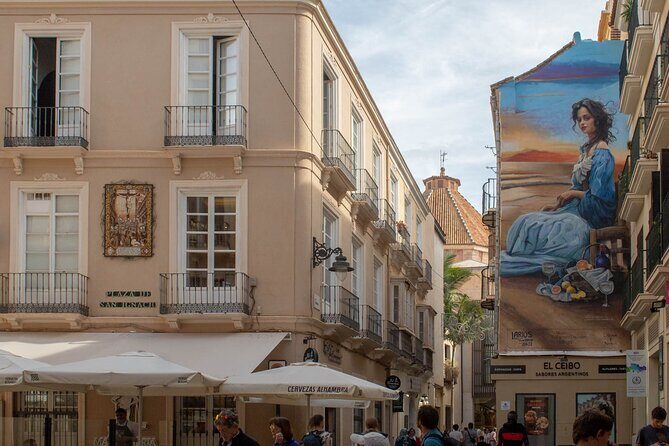
You start at Pl. Enrique García-Herrera, 20. The location matters because it puts you near the Guadalmedina River and the Puente de los Alemanes view—good grounding before you move into the older streets.
From there, you head toward churches and brotherhood traditions tied to Holy Week in Malaga. One key stop is the Church of Santo Domingo area. What I like about this approach is that it connects architecture to a calendar event you can actually understand. It’s not about memorizing dates. It’s about seeing why certain places matter to the people of Malaga.
You also pass the Unicaja Museum of Popular Arts and Customs. Even if you don’t go inside on the tour, it’s a strong signpost. The museum traces archaeology and ethnographic roots of the city, and it helps you frame what follows: shops, crafts, religious festivals, and everyday customs.
Possible drawback to consider: you’ll be on foot for the whole stretch, and the route is built around sights rather than long sits. If you prefer long breaks, bring that mindset. You’ll still get stops and explanations, but the emphasis is motion.
C/ Compañía and Mapas y Compañía: old Muslim streets with modern surprises
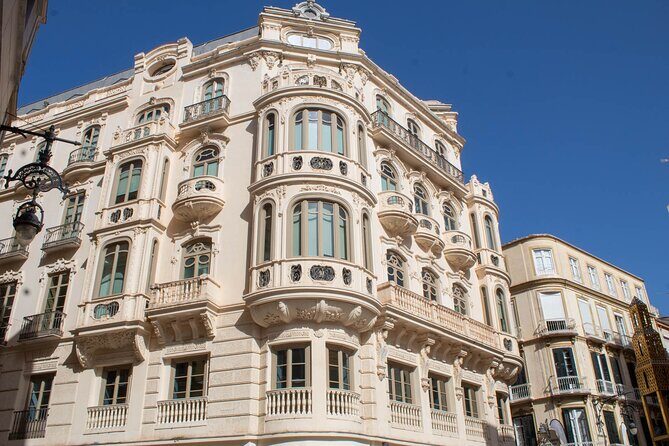
Next, you drift along C/ Compañía and surrounding lanes. This is where Malaga feels layered: Muslim-influenced street character mixed with newer cultural energy.
A standout for me is Mapas y Companía, described as an original bookstore where imagination can run. Even if you’re not a serious book shopper, this kind of place is useful on a walking tour because it shows you the city’s tastes. Malaga isn’t one mood. It’s craft, art, and business all sharing the same space.
You’ll also see displays tied to religious and customs imagery: fans, wicker crafts, flamenco dresses, and similar visual culture. This matters because flamenco in Malaga isn’t treated as a museum subject. It’s connected to the way people dress, celebrate, and socialize.
Then comes a modern contrast: an example tied to the Thyssen Museum in Malaga façade. The point isn’t to debate architecture styles. The point is to show how “old street” doesn’t mean “no new ideas.”
Neo-Gothic church details: Fernando Guerrero Strachan’s 1920 plan
Another moment on the route is a neo-Gothic church built in 1920. It was designed by architect Fernando Guerrero Strachan. You’ll get a clear, visual explanation of its plan: it’s basilica-shaped and divided into three naves.
Why this stop works: it’s specific enough that you’ll be able to notice details later. You’re not just passing a building. You’re learning how it’s laid out—so the façade and interior logic start to make sense, even from outside.
Plaza de la Constitución: Cathedral views and Malaga’s coffee habits
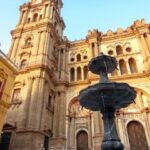
When the tour reaches Plaza de la Constitución, the feel changes. This is an emblematic square—one of those places that can be both tourist-friendly and still genuinely local.
You’ll learn how the square’s name changed through Spain’s political and social shifts. That kind of context helps you read public spaces as living documents, not just open areas.
You’ll also hear about the Fountain of the Three Graces, plus the story of the mythical café Café Central—and its disappearance. Even if you never visit that exact café, the idea sticks: Malaga’s social life evolves, but the square remains a central stage.
And then there’s the coffee angle. The guide talks about Malaga’s wide variety of coffees and even describes how a cloud can look more like condensation of water drops in the sky. That detail is a small reminder: you’re in a city where everyday drinks and weather rhythms blend into local habits.
From the plaza, you’ll get majestic views of the Cathedral and learn how the square connects to key “arteries” of the city. You’ll also get pointers toward:
- Plaza Uncibay
- C/ Granada, with reference to Picasso and the city’s creative pull
- Pimpi and The Bell, popular recreation and hangout spots
You can also read our reviews of more tours and experiences in Malaga



Pasaje de Chinitas: where flamenco stories live in the narrow lane
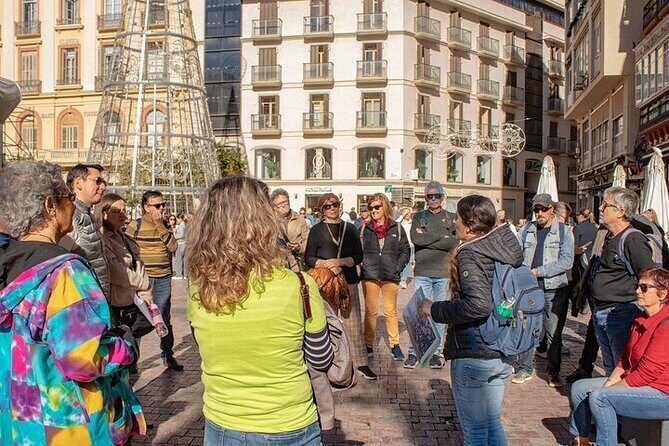
Then you turn into Pasaje de Chinitas. This place is famous for a reason: it’s recognized worldwide as a flamenco passage where singing and dancing artists developed their duende in bars and taverns along the walkway.
The value of including it here is simple. You see a short, specific stretch of space that carries a big cultural reputation. It’s easy to understand flamenco when it’s tied to a physical place, not just a performance ticket.
Expect a quick stop—more about atmosphere and context than a long detour.
Calle Larios and the 1887–1891 shopping spine
From there you move to Calle Larios, described as the city’s main street built between 1887 and 1891. This is where commerce and street energy show up in a more formal way.
Two practical things to look for:
- Casa Mira, a long-standing pharmacy presence in the story of the street
- Architectural details tied to the old entrance to the sea view idea
Even if you’re not here for shopping, this stretch helps you understand Malaga’s economy and how entertainment and retail life concentrated in specific corridors.
Plaza de Félix Sáenz and the quiet power of old façades
Next up is Plaza De Felix Saenz. You’ll focus on the wonderful façade of the old Almacenes de Félix Sáenz. The route includes why the building mattered to Malaga’s cultural and economic life, plus how it was renovated.
This stop is worth it if you like reading a city with your eyes. The guide points out sculptures and corners that are easy to miss when you’re just walking through.
Also, the square is presented as a meeting point for locals—somewhere you’d run into people while shopping, then shift into leisure and dining. That helps you picture what the plaza is for, not just what it looks like.
Edificio Sagasta: a 1925 corner building that looks like a boat
One of the most interesting “spot it if you can” stops comes at Edificio Sagasta, 5 on Guerrero Strachan (on the corner with Herrería del Rey).
The building was built in 1925. It’s described as a narrow house that fits into a corner, forming a shape like a kind of keel. That ship-like detail is the kind of description that makes an architectural stop memorable.
Why I like this on a walking tour: the guide gives you a concrete visual target. When you walk on, you’ll catch it again if you look from different angles.
Mercado Central de Atarazanas: Muslim walls, old shipyards, and what to notice
Finally, you land at the Mercado Central de Atarazanas. The tour ends at C. Atarazanas, 9, at the main entrance.
This is a strong finish because you get a guided framing of what you’re seeing:
- The Muslim walls that once surrounded the city
- The old shipyards in the same location as the market
- Architectural elements that connect the market to Malaga’s past
- Traditional and more avant-garde businesses in the nearby streets
Even if you don’t buy anything, this kind of talk changes how you move through a market. Instead of seeing stalls as random rows, you start noticing how commerce grew out of older geography.
The market is also a perfect “choose your own adventure” ending. After the guide points out what matters, you can decide how much time to spend: seafood browsing, specialty food shopping, or just soaking up the street-level energy.
Price and logistics: value that feels real
Let’s talk value without hand-waving. You pay $17.80 per person for a ~2-hour walking tour with a professional local guide, and taxes are included. That’s a good setup when you consider how many named places you’ll pass—squares, churches, cultural stops, flamenco corridors, and then the market itself.
A couple logistics notes you’ll feel on the ground:
- The group limit is 20, so you’re not crushed in a crowd.
- It’s designed to be accessible for people regardless of physical ability or age, and service animals are allowed.
- It’s near public transportation, with a metro stop at Atarazanas and a train stop at Málaga Centro Alameda Station. If you’re planning how to get back, that’s a big help.
If your main goal is food, remember food and drink are not included. Think of this as an orientation tour. Use it to learn what to order later.
Also, the tour can be in-demand. It’s commonly booked about 82 days in advance, so if your dates are fixed, booking early saves stress.
Who this Malaga Central Market tour suits best
This is a good fit if you:
- Want a guided introduction to Malaga’s center that doesn’t ignore culture and tradition
- Like your history connected to places you can stand in front of (church façades, squares, markets)
- Want a short, practical walking plan that ends somewhere you can keep exploring
It’s also good if you want flamenco context without turning it into a full performance night. Pasaje de Chinitas gives you a place-based sense of the tradition.
If you dislike walking at all, or you’re the type who needs long sit-down breaks, you might find the pace a bit brisk. This is 2 hours of moving, not a slow meander with frequent long pauses.
Should you book this Central Market walking tour?
Book it if you want Malaga to feel readable: market life, Holy Week landmarks, coffee culture, flamenco streets, and architecture you can actually spot. The $17.80 price is strong for what you get, and the small-group cap helps keep the experience comfortable.
Skip it only if you already know the city well and you’re mainly hunting for a big food sampling program. This tour is more about orientation and insight than eating a menu.
One more deciding clue: the tour holds a 4.8 rating out of 5 across 13 ratings, and feedback shows 100% recommendation. That usually lines up with the part that matters most on walking tours: the guide. In this case, Lourdes is specifically cited for being both warm and sharp about details, which is exactly what turns a street walk into a real experience.
FAQ
How long is the Central Market of Malaga walking tour?
It’s listed as about 2 hours.
What does the tour cost?
The price is $17.80 per person.
Do I need a printed ticket?
No. You’ll receive a mobile ticket.
Where does the tour start and end?
It starts at Pl. Enrique García-Herrera, 20, Distrito Centro, Málaga and ends at the main entrance of Mercado Central de Atarazanas, C. Atarazanas, 9, Distrito Centro, Málaga.
Is food or drink included?
No. Food and drink are not included.
Are tips included in the price?
No. Tips are optional.
Is the tour suitable for people with limited mobility?
It’s described as accessible to all types of people regardless of physical ability or age.
How large are the groups?
There’s a maximum of 20 travelers.
FAQ
What’s the meeting point address for this tour?
Meet at Pl. Enrique García-Herrera, 20, Distrito Centro, 29005 Málaga, Spain.
Is it near public transportation?
Yes. It’s near public transportation, including metro at Atarazanas and a train stop at Málaga Centro Alameda Station, plus bus stops very close from different points in Malaga and province.