REVIEW · MALAGA
Private visit to Ronda 2 hours
Book on Viator →Operated by Ronda Private Tours · Bookable on Viator
Ronda looks like it was built for postcards, but this private 2-hour visit is about seeing why it became one. You get tight timing and smart stops at the Old Bridge and New Bridge viewpoints, plus the Alameda del Tajo gardens and key plazas that help you connect the city’s different eras. I also like that this is a private group (up to 15), so the guide can pace it for your interests and not the loudest people in the room. One thing to consider: you’re mostly outdoors and on foot for short stretches, so wear shoes you trust and plan for sun or shade.
A guide is the difference here. In the same route, the stories shift from Roman-and-medieval layers to bullring lore, then back to sheer cliffside scenery. I like that most stops have free admission, which keeps the overall cost feeling fair for a guided highlight circuit. If you’re expecting a long museum visit, you may feel a bit short-ended because the emphasis stays on viewpoints and quick, meaningful stops.
In This Review
- Key Highlights You’ll Really Notice
- Alameda del Tajo: A 200-Year-Old Start With Big Ronda Energy
- Plaza de Toros de Ronda: Bullfighting Stories in an Iconic Setting
- New Bridge: The Symbol You See From Multiple Angles
- Jardines de Cuenca: The Gorge Framing That Everyone Wants
- Arco de Felipe V: Passing Through History (and a Photo Frame)
- Palacio de Salvatierra: A Facade Stop That Adds Period Detail
- Plaza Duquesa de Parcent: Where Layers of Ronda Collide
- Plaza de María Auxiliadora (El Campillo): Views to Sierra de Grazalema and Beyond
- Iglesia de Nuestra Senora de La Paz: A Small Church With Color and Baroque Interior
- Mirador de Aldehuela: The Grand Wrap-Up View
- How Guides Make This Tour Feel Personal (Marta, Alfredo, Alberto)
- Price and Value for a 2-Hour Private Ronda Highlight
- Who This Private Ronda Visit Fits Best
- Should You Book This Ronda Private Visit?
- FAQ
- How long is the private Ronda visit?
- Where do we meet and where does the tour end?
- Is the tour offered in English?
- How big is the group for this private tour?
- Is this a mobile-ticket experience?
- Do I need tickets for the stops?
- Can I cancel for a full refund?
- Are service animals allowed?
Key Highlights You’ll Really Notice
- Alameda del Tajo gardens + viewpoints: 200-year-old gardens that make the first photos easy.
- Plaza de Toros de Ronda setting: the oldest bullring’s cultural story, tied to famous names.
- New Bridge viewing angles: multiple pauses so you don’t just “see it,” you understand it.
- Jardines de Cuenca photo point: the classic Bridge-in-the-gorge framing.
- Old-bridge entrance details: Arco de Felipe V as a built-in framing device for nearby architecture.
- End at Mirador de Aldehuela: a final roundup view that pulls Old Bridge, New Bridge, and gardens together.
Alameda del Tajo: A 200-Year-Old Start With Big Ronda Energy
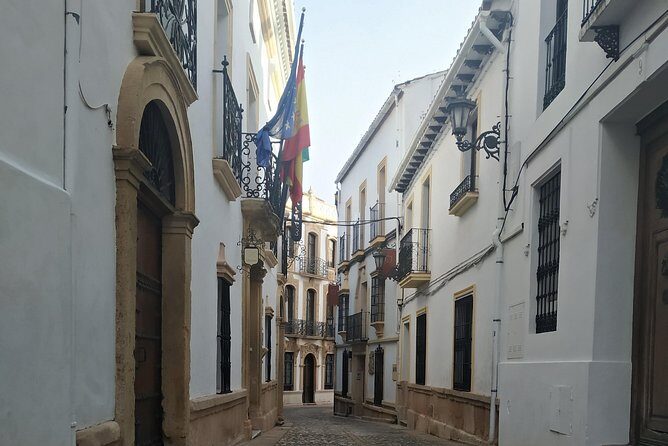
You start at the Alameda del Tajo, and that’s a smart choice. The gardens here have been around for about 200 years, and you can feel it in how the space is arranged—paths, overlooks, and that slow transition from street noise to cliff-calm. The goal of the first stop is not just photos (though you’ll take plenty), but orientation.
From the viewpoints, you start to understand Ronda’s layout: the city perched over a gorge, the way lookouts are placed like they’re designed for watching the landscape change with light. It’s the kind of start that helps you stop wandering later. Also, the timing is quick—about 10 minutes—so you’re not stuck “waiting” for the tour to begin. You’ll get what you need, then move on.
What to watch for: don’t rush your first overlook. Take one wide look, then step to a second angle. The canyon and river shape look different as you shift position.
You can also read our reviews of more private tours in Malaga


Plaza de Toros de Ronda: Bullfighting Stories in an Iconic Setting
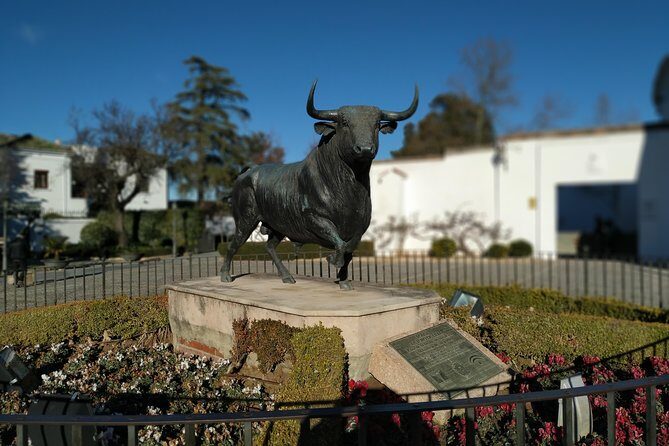
Next up is the Plaza de Toros de Ronda, surrounded by the kind of stonework that makes you look twice. This bullring is described as the oldest in Spain, and the guide’s job is to turn that fact into something human. Expect the story of modern bullfighting and how cultural life in Ronda pulled in big-name visitors—names like Orson Welles and Ernest Hemingway show up in the narrative, tied to their interest in Ronda.
Here’s why I like this stop: it’s not presented as a shock-value topic or a history lecture. It’s a way to understand how Ronda became more than just a pretty bridge town. The bullring is part of the city’s identity, and knowing that makes the rest of the walking route feel more grounded.
Possible consideration: if you’re not interested in bullfighting culture, you might skim the story and focus on the setting. That’s fine—you can still enjoy the architecture and the sense of place.
New Bridge: The Symbol You See From Multiple Angles
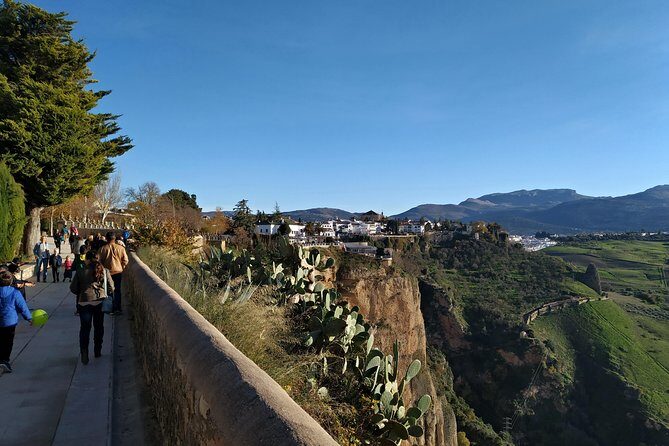
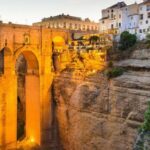
No Ronda highlights list is complete without the New Bridge, and this visit treats it like the centerpiece it is. Completed in 1793, it became a symbol of Ronda—and you’ll look at it from several angles rather than one “front-facing” moment.
Those angles matter because the bridge sits over dramatic drop-offs. When you view it from different positions, the scale shifts. A bridge can look elegant from above, massive from below, and strangely delicate when the gorge depth shows up behind it. The tour builds that understanding in about 10 minutes, which is exactly the right length for most people. Long enough to register it, short enough that you keep moving.
Photo tip: take one photo that includes the gorge depth, then take one that frames only the bridge. It helps you remember the place later.
Jardines de Cuenca: The Gorge Framing That Everyone Wants
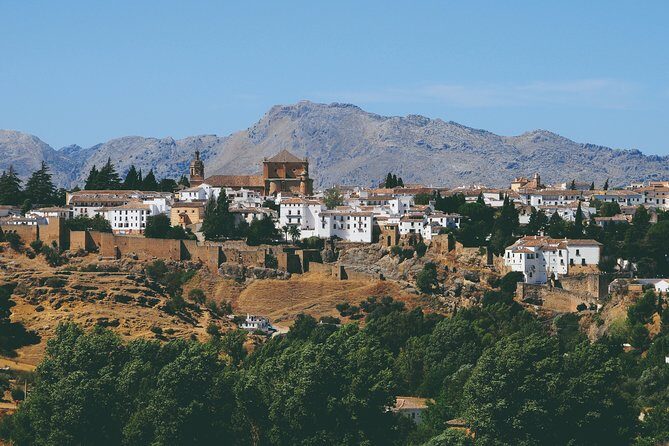
After the New Bridge, you jump to Jardines de Cuenca—hanging gardens designed for one of the most requested images in Ronda: the New Bridge sitting in the gorge. The garden stop is about 15 minutes, and that extra time is useful. You’re not just looking once; you’re allowed to get your bearings, adjust your position, and try the viewpoint that matches your camera or phone.
This is also where the tour’s layout becomes clear. Jardines de Cuenca is set up like a “photo sequence,” moving your eye from the garden structure toward the bridge and the valley below. The stop also ties in nearby landmarks mentioned in the route: the House of the Moorish King and the Old Bridge. Even if you don’t go deep into those buildings, the viewpoints connect the dots.
What I love here: the gardens make the scenery feel designed, not accidental. It’s easier to enjoy the view when you understand the reason the garden exists.
Arco de Felipe V: Passing Through History (and a Photo Frame)
Next, you enter through the Old Bridge area and reach the Arco de Felipe V. This arch is described as dating to the 16th century, and it acts like a built-in stage for the next view. Once you cross, the guide points you toward the Church of Father Jesus, specifically mentioned as being photographable framed by this arch.
That framing detail might sound small, but it’s one of those “why a guide matters” moments. Without someone showing you where to stand, you might photograph the wrong angle. With it, you get a composition that feels intentional—like the city has directions written into its stone.
The stop itself is brief (about 5 minutes), so treat it as a quick reset: one cross, one aligned photo, then keep going.
If you hate rushing: tell the guide you want one extra minute here. A private tour is made for small timing adjustments.
You can also read our reviews of more tours and experiences in Malaga





Palacio de Salvatierra: A Facade Stop That Adds Period Detail
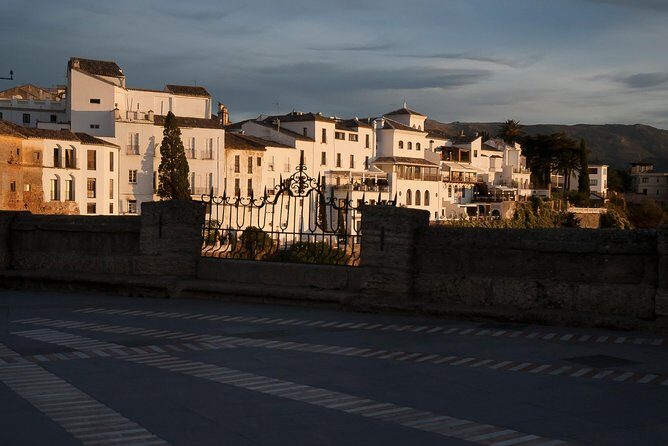
Palacio de Salvatierra is next, and the focus is on the exterior: an 18th-century facade with features like a noble shield, colonial elements, and a wood cover mentioned in the tour notes. This is the kind of stop where you benefit from having a guide translate what you’re looking at.
If you’ve seen a lot of “big sightseeing” towns, you know the common problem: you get overwhelmed and remember nothing. This kind of targeted facade stop helps you store a single image in your mind—the building’s look and what it signals about Ronda’s importance in that period.
Budget note: admission here is noted as not included, unlike many other stops on the route. If you love interiors, you might want to plan a little extra for this. If you don’t, you can still enjoy the outside details without going in.
Plaza Duquesa de Parcent: Where Layers of Ronda Collide

Plaza Duquesa de Parcent is described as the most important square in Ronda, and the big reason is archaeological importance. This is the kind of place where you sense earlier cities under your feet—centuries overlapping around one open space.
You also get a religious and civic snapshot. The tour mentions three Catholic churches as evidence of the area’s importance, and highlights specific places like the City Hall and the Church of Santa María de la Encarnación. Even with a short stop (about 10 minutes), the square works because it’s a center. You’re not just looking at buildings—you’re grasping how Ronda organized itself.
Practical advice: stand in the center long enough to spot the churches and then pick one to photograph. Don’t try to capture everything at once.
Plaza de María Auxiliadora (El Campillo): Views to Sierra de Grazalema and Beyond
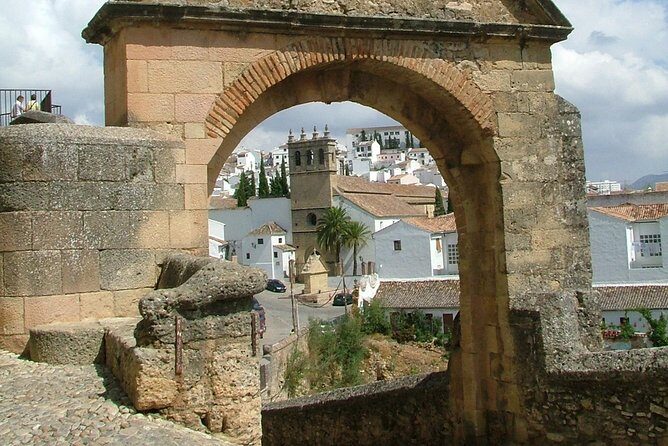
Now you move to Plaza de María Auxiliadora, also known as El Campillo. This is another viewpoint-heavy stop (about 10 minutes), but the difference is the distance. From here, you can see the Sierra de Grazalema, Hoya del Tajo, and the Archaeological Site of Acinipo in the far background.
That distance view is what makes Ronda more than “a gorge with bridges.” You’re seeing the surrounding region—how Ronda connects to a bigger geography. The tour also mentions two pinsapos of interest in the gardens here, which adds a botanical curiosity in the middle of the scenery.
Consideration: on bright days, far views can be hazy. If that happens, shift your camera settings or rely more on your eyes for the outline than the fine detail.
Iglesia de Nuestra Senora de La Paz: A Small Church With Color and Baroque Interior
At Iglesia de Nuestra Senora de La Paz, the tour focuses on a colorful facade and a baroque interior. The stop is about 10 minutes, so don’t expect a slow, lingering worship visit. Instead, treat it like a “wow check”: a chance to switch from outdoor cliffs to crafted interior decoration.
The church also has a named patroness connection: the Virgin of the Paza is noted as the patroness of Ronda. That kind of detail matters because it adds meaning to the artwork. This is one of those stops where you might not need long explanations—you just need someone to point out what you’re seeing and why it’s tied to the city.
Photo tip: if you can, take one exterior shot first. Then step back and capture the church doorway area framed by your own position, because angles can be tricky in older streets.
Mirador de Aldehuela: The Grand Wrap-Up View
You end at Mirador de Aldehuela, with the tour finishing right next to the New Bridge. This last stop is about pulling the story together visually. From the viewpoint, you can see the New Bridge, the Old Bridge, the Gardens of Cuenca, the Casa del Rey Moro, and Plaza de España.
This is a satisfying ending because you’re no longer reading the city stop-by-stop—you’re looking at the city as a whole. The vantage point is where the route starts making sense as one continuous narrative: gardens, bridges, and plazas all in relationship to the gorge.
If you only remember one moment: make it the last one. The wrap-up view is usually what you’ll want to show friends later when you explain what Ronda felt like.
How Guides Make This Tour Feel Personal (Marta, Alfredo, Alberto)
One of the best parts of this private format is the guide’s delivery. Names that come up with standout warmth include Marta, Alfredo, and Alberto. The common thread is that they don’t just recite facts. They connect history to how people lived—sometimes through personal storytelling and how they learned the city as kids.
You’ll also notice different teaching styles. One guide’s approach comes across as lively and experience-based, another as methodical and structured, and all of them seem to keep the route moving at the pace of real sightseeing rather than museum-style marching. That matters because Ronda can swallow time fast: you turn a corner and suddenly you’re staring at stone for 15 minutes.
If you like having a plan: you’ll appreciate the structured stops.
If you like small talk and local context: you’ll appreciate the human storytelling.
Price and Value for a 2-Hour Private Ronda Highlight
At $300.40 per group (up to 15) for about 2 hours, the value depends on who you’re traveling with.
If you’re two or three people, the cost is still reasonable because you’re paying for a private guide plus a tight, high-impact route. The biggest value booster is that many stops are described as free admission, so you’re not stacking ticket costs at every corner. You do have one admission note: Palacio de Salvatierra is listed as ticket not included. That’s not a dealbreaker, but it’s the one place you might need to think about whether you want to go in.
For families or mixed-age groups, private pacing is a win. You can linger at the bridges, take your time with a viewpoint, and skip whatever doesn’t interest you—within reason—because it’s your route.
Bottom line: this is best if you want a guided highlights circuit without paying museum-line prices for every stop.
Who This Private Ronda Visit Fits Best
This tour is a good match if you want:
- A 2-hour way to orient yourself in Ronda’s main sights
- A mix of viewpoints, architecture, and small cultural stories
- English-language guiding for a smooth experience
It also works well if you’re the type who likes a plan. Ronda is famous, but it can feel like a lot of walking with no structure. This keeps it focused. And because it’s private, it’s easier to tailor pacing—especially if someone in your group wants more time at the bridges or less time in the plazas.
If you’re a “full-day Ronda researcher” who wants long museum hours and deep interior tours, you might find this short. But if you want the essential Ronda in a way that actually makes sense, it hits the sweet spot.
Should You Book This Ronda Private Visit?
I think you should book it if your priority is a smart, guided highlight walk that shows you why Ronda’s landmarks matter—without dragging you through long ticket stops. It’s also a strong choice if you value local-style explanations and clean pacing.
Skip it (or adjust expectations) if you’re after a long, ticket-heavy day or you want lots of long indoor museum time. This route is built for viewpoints and quick, meaningful stops, and that’s the trade.
If your travel style is: see the big things, understand them a bit, then enjoy the city on your own afterward—this is a solid buy.
FAQ
How long is the private Ronda visit?
It’s about 2 hours, with the itinerary built from short stops at each major sight.
Where do we meet and where does the tour end?
You meet at Pl. de la Merced, 1, 29400 Ronda, Málaga, Spain, and you end at Mirador de Aldehuela, C. Armiñán, 1, 29400 Ronda, finishing right next to the New Bridge.
Is the tour offered in English?
Yes, it’s offered in English.
How big is the group for this private tour?
It’s a private tour for your group, up to 15 people.
Is this a mobile-ticket experience?
Yes, it includes a mobile ticket.
Do I need tickets for the stops?
Most stops are listed as free admission. Palacio de Salvatierra is noted as admission not included.
Can I cancel for a full refund?
Yes. Free cancellation is available up to 24 hours in advance for a full refund.
Are service animals allowed?
Yes, service animals are allowed.