Malaga rewards people who slow down. This private tour gives you a guided route through the city’s essentials without getting stuck in big crowds, and you get real conversation time to ask questions as you go. I especially like how the experience is built around outdoors-first stops (so you still move at a comfortable pace) plus included access to the places that matter most. The one thing to consider: parts of the tour are outdoor only, so if you want lots of indoor wandering, you’ll need to plan extra time or choose an upgrade.
You also get a human touch. On this tour you might be guided by locals such as Nahuel or Manuel, and both styles focus on clarity, comfort, and local color. If you have mobility needs, that care shows up in how the guide paces the route and keeps you comfortable. Still, since it’s 2–3 hours total, you won’t have time to fully museum-hang at every stop, and the Picasso connection at the end is more of an overview than a deep museum visit.
In This Review
- Quick takeaways
- What You’re Really Buying With a Private Tour of Essential Malaga
- Plaza de la Constitución: How the Route Starts and Why It’s a Smart Base
- La Calle Larios: The Iconic Start That Sets the Mood
- Malaga Cathedral History From the Outside: What You Gain by Not Going Inside
- Alcazaba: The 1026 Fortress-Palace With Room for Questions
- Teatro Romano de Malaga: A Roman Stage You Can Actually Understand
- Museo de Malaga Area: Ending With Picasso’s Birthplace Significance
- Price and Value: Is $120.02 a Fair Deal?
- Guides Make the Difference: Nahuel and Manuel’s Style of Storytelling
- Who This Private Tour Fits Best
- Should You Book This Private Tour of Essential Malaga?
- FAQ
- What is the duration of the Private Tour of Essential Malaga?
- Is this tour private?
- What language is the tour offered in?
- Where does the tour start?
- Which stops are included in the itinerary?
- Are admission tickets included?
- Is the Picasso Museum included?
- Does the tour include food or drinks?
- Is port pick up included?
- Can I cancel for a full refund?
Quick takeaways
- Private, just your group: no sharing the guide or the route with strangers
- Alcazaba included: ticket access is part of the experience
- Roman theatre focus: you’ll see Teatro Romano with context that makes it click
- Cathedral is outdoor only: great history talk, but no interior visit
- Picasso-area finale: you end near the birthplace significance of Pablo Ruiz Picasso, without a full museum stop
What You’re Really Buying With a Private Tour of Essential Malaga
This isn’t a “walk and hope you get it” outing. You’re paying for a guide-led order to the city’s key moments, plus the convenience of knowing what to look at and why it matters. Malaga can feel a bit like a collage when you’re on your own. With a private guide, you get a route that connects the old fortress layer (Alcazaba) to the city’s later public spaces and arts history.
Another big value is the group size. Because it’s private, your guide can adjust pace and make room for questions. In practice, that’s what turns a quick sampler into a real introduction. Guides on this route have a knack for giving crisp, detailed explanations while also keeping it comfortable—one guide even adapted to mobility concerns while still sharing history in a friendly way.
Finally, there’s flexibility. The tour covers the essentials in roughly 2–3 hours, and there’s an option to upgrade to a longer version if you want more time to roam. If you’re short on days, this format helps you get bearings fast.
You can also read our reviews of more private tours in Malaga



Plaza de la Constitución: How the Route Starts and Why It’s a Smart Base
The meeting point is Plaza de la Constitución, in the Centro area. That matters more than it sounds. A central start means you don’t burn time crossing town before you even begin. It also helps if you’re using public transportation, since the meeting point is described as being near transit.
From there, the itinerary flows in a way that keeps your day efficient: you start on a lively main street, then move through key historical highlights, ending back at the meeting point. That return-to-start setup is convenient if you plan dinner nearby or want to keep exploring on your own afterward without figuring out new logistics.
Timing-wise, you’re looking at about 25 minutes at each early city landmark stop, then longer blocks for the fortress and the Roman theatre. The pace is designed so you can absorb what you’re seeing instead of speed-walking through it. That’s especially helpful if you’re traveling with anyone who gets tired easily, because the guide can manage the flow.
La Calle Larios: The Iconic Start That Sets the Mood
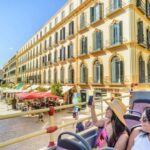
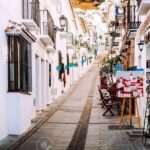
Your first stop is La Calle Larios, one of Malaga’s most emblematic streets. Even if you’ve never heard the name before, it’s the kind of place that immediately signals the city’s energy—where locals and visitors naturally cross paths. It’s also used as a meeting spot, so it’s practical right away.
This starting segment is about orientation: you begin in the most recognizable thread of the city, then your guide sets context so the rest of the walk doesn’t feel random. Since this stop is marked with an admission ticket included, you should treat it like a meaningful first checkpoint rather than just a photo stop.
What you’ll get from a good guide here is the “how to read the street” approach. You’re not only seeing the buildings—you’re learning how the street fits into Malaga’s rhythm and why it functions as a symbolic entry point.
One small note: this isn’t the time to expect deep museum-style content. Think of it as the warm-up act that gets your brain switched on for what comes next.
Malaga Cathedral History From the Outside: What You Gain by Not Going Inside
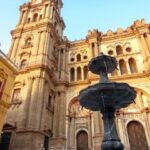
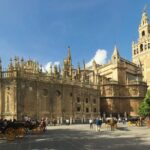
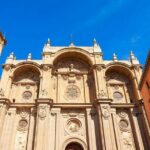
Next comes Malaga Cathedral, but with an important twist: it’s outdoor only. Your guide will explain the history of the cathedral and the fact that it’s incomplete. That one detail changes how you interpret the building. You’ll start looking at what’s missing and how that shapes the story of the place.
This is a smart choice for a short tour. Cathedral interiors are impressive, but they also come with time pressure, queues, and the need to plan your route around opening hours. By staying outside, you still get the big-picture history without losing time you can spend on the sites that include tickets and deeper access.
For your planning, treat this stop like a guided lecture with good views. You can expect your guide to connect facts into a coherent timeline rather than turning it into a hurried photo sprint. If you specifically want to go inside, you can add that later on your own day—but as part of this “essential” route, the outdoor approach keeps the pacing clean.
Alcazaba: The 1026 Fortress-Palace With Room for Questions
The core highlight is Alcazaba, the imposing palace fortress with origins tied to 1026 AD. This isn’t just about walls and viewpoints. The key context is that the Alcazaba had both a military role and an administrative function—meaning it served as an important governmental seat for the city.
You get about 1 hour here, and tickets are included. That’s worth noting because it removes a common vacation headache: you don’t have to scramble for entry while your day is already moving. The included access also helps keep the tour smooth.
Why this stop is so valuable on a private route is simple: Alcazaba is the kind of place where details help. Without a guide, you can still enjoy the atmosphere, but with the guide you start understanding what you’re looking at—defense layouts, power functions, and how the site’s role shifts from military to administrative use. That turns “cool fortress” into “I get what this was for.”
Also, if you care about views, this is the part that tends to deliver. The fortress setting gives you a perspective over Malaga that you just don’t get from the street-level core. That’s one reason this stop is often the memorable one.
The only consideration: 1 hour is solid, but it’s not an all-day hike. If you want slow exploring at your own rhythm, the private format helps, but you still won’t replace a longer visit.



Teatro Romano de Malaga: A Roman Stage You Can Actually Understand
Then you move to Teatro Romano de Malaga, a theatre dating back to the 1st century. Here’s a detail that makes the whole visit more interesting: it wasn’t discovered by the people of Malaga until 1951. Once you hear that, you start thinking differently about the city’s layers—how something can sit in plain sight and still be unknown for a long time.
You’ll spend about 50 minutes, and tickets are included. The guide also frames where it sits: it’s next to the public library known as the House of Culture. That pairing is useful for orientation because it connects the old world space to a modern civic setting.
Capacity and use matter too. The theatre had space for almost 1,200 individuals, and it hosted theatrical performances, opera, and even public votes or referendums in Malaga’s life. That’s the kind of detail that makes a ruin feel like a community building, not just a historical leftover.
If you like history but hate vague talk, this is the stop that usually satisfies. The guide’s job is to connect facts into something you can picture: audiences, events, and the way the theatre functioned as part of public life.
Museo de Malaga Area: Ending With Picasso’s Birthplace Significance
The last stop is at the Museo de Malaga area, but the visit is marked outdoor only. Your guide wraps things up around a key cultural connection: this place signifies the birth of Pablo Ruiz Picasso. The tour doesn’t promise a long indoor museum experience here—it focuses on the birthplace significance and shares details about his life and work to close the loop.
This ending works well because it shifts you from architecture and civic life into art and creativity. It’s a clean pivot. You leave with a sense of why Malaga matters beyond its look—why it produced someone so globally recognized.
You’ll have only about 20 minutes here, so it’s best thought of as a guided “what to notice next” finish rather than a complete Picasso deep dive. If you were hoping for a full Picasso museum visit, you might find this ending too brief. But as part of a fast, essential route, it keeps the day efficient and gives you a strong reason to continue exploring on your own afterward.
Price and Value: Is $120.02 a Fair Deal?
At $120.02 per person for a 2–3 hour private tour, the best way to judge value is not just the number—it’s what you get that you usually don’t.
First, you get a private guide for the whole time. That’s different from typical group tours where you’re competing with other people’s questions and photos. Here, the guide can tailor pacing and answer what matters to you.
Second, you get included access where it counts. Tickets are included for Alcazaba and also for Teatro Romano de Malaga. Those sites are the backbone of the itinerary. When entry is included, you save time and decision fatigue.
Third, the route is built around outdoors-first stops. That keeps the schedule flexible and manageable. You’re also starting centrally at Plaza de la Constitución and finishing back there, which makes the rest of your day easier to plan.
A quick practical note: the tour is said to be booked about 54 days in advance on average. If you’re traveling in a busy season or want a specific guide, earlier booking can help you lock it in.
Group discounts are listed too. Even though it’s private, if your group can take advantage of that structure, it can reduce the per-person cost versus booking tiny private outings at peak times.
The only potential value mismatch: if you want a long museum-heavy day, this may feel short. But that’s not a flaw—it’s simply a different goal. This tour is for a strong introduction and a guided path through the city’s must-sees.
Guides Make the Difference: Nahuel and Manuel’s Style of Storytelling
One of the strongest reasons to pick this tour is the way guides lead the experience. You might meet Nahuel, and his style centers on clear historical detail and local context. He’s also noted for adapting to comfort needs, which matters more than most people expect until they’re tired on day one.
Another possible guide is Manuel, described as friendly and well-rooted in Malaga. His tours focus on knowing the town well, not just reciting facts. That local feel is what helps you get useful “what to do next” thinking after the tour—like where to eat and how to keep exploring beyond the route.
On a private tour, the guide is basically your itinerary engine. If the guide is good, the city feels organized. If the guide is average, you’ll just see places. This experience aims for the first option, and the feedback pattern is consistent about professionalism and comfort.
Who This Private Tour Fits Best
This is a great match if you want:
- A fast intro to key Malaga sites in a compact schedule
- A route you can ask questions about, instead of reading plaques alone
- Included access to major stops like Alcazaba and Teatro Romano
- A calm pace that can adapt to comfort needs
It’s less ideal if you’re trying to do a heavy indoor day of galleries and long museum visits. The cathedral is outdoor only, and the Picasso portion is also outdoor only. You’ll still get the meaning, but you won’t get a full deep dive.
If you’re traveling with teens who like history, the Roman theatre details tend to land well—especially the capacity and the idea that it hosted more than just plays. If you’re traveling with older adults or anyone who needs slower pacing, the private format helps because the guide can keep things comfortable.
Should You Book This Private Tour of Essential Malaga?
Book it if you want a guided overview that helps you understand what you’re seeing—especially if it’s your first time in Malaga. The mix of Alcazaba’s fortified power and the Roman theatre’s community role makes for a strong “city layers” story, and the private format keeps it personal.
You might skip or supplement it if you already planned to spend most of your time inside museums. This tour is built as an essential, outdoors-friendly sampler with included tickets at key points. You’ll likely finish with a clearer sense of where to go next—rather than feeling like you already did everything.
My final take: if you’re weighing between wandering on your own and paying for a guide, this private option is a smart use of time. It helps you move efficiently, ask questions, and walk away with context you can actually carry into the rest of your Malaga day.
FAQ
What is the duration of the Private Tour of Essential Malaga?
The tour lasts about 2 to 3 hours.
Is this tour private?
Yes. It’s a private tour and only your group participates.
What language is the tour offered in?
The tour is offered in English.
Where does the tour start?
The meeting point is Plaza de la Constitución in Distrito Centro, Málaga, Spain. The tour ends back at the same meeting point.
Which stops are included in the itinerary?
The itinerary includes La Calle Larios, Malaga Cathedral (outdoor only), Alcazaba, Teatro Romano de Malaga, and Museo de Malaga (outdoor only).
Are admission tickets included?
Alcazaba tickets are included, and the itinerary also lists admission tickets included for La Calle Larios, Alcazaba, Teatro Romano de Malaga, and the Museo de Malaga outdoor stop. Malaga Cathedral is outdoor only and has admission not included.
Is the Picasso Museum included?
No. The tour’s end is outdoor only around the Museo de Malaga area with Picasso-related context, not a full museum visit.
Does the tour include food or drinks?
No. Food and drinks are not included.
Is port pick up included?
No. There is no port pick up. The guide greets you at the meeting point.
Can I cancel for a full refund?
Yes. Cancellation is free up to 24 hours in advance for a full refund.