REVIEW · MALAGA
Private 3 hours Walking Tour of Ronda with official tour guide
Book on Viator →Operated by Tour Travel & More · Bookable on Viator
A town this split by a gorge deserves a guide. This private, 3-hour Ronda walk helps you see the story behind the bridges, the old streets, and the standout Moorish-era Arab Baths. I really like how it’s not a race through photo stops, and you get real context from your guide—Jamie, for example, was praised for being local and genuinely interesting.
My second favorite thing is the pacing: you get a set structure with time for the big sights, plus you can pause and rest because it’s private. The one thing to keep in mind is that there’s some mild walking on uneven old-town terrain, and the Plaza de Toros admission can be a little confusing depending on how your booking details are listed—so it’s smart to confirm what your voucher covers.
In This Review
- Key highlights at a glance
- Why this private 3-hour Ronda walk feels worth your time
- Meeting at the Parador and how pickup works in Ronda
- Puente Nuevo first: your best start for canyon views
- The bridges in between: Puente de San Miguel and the walk-through logic
- Arab Baths: Moorish-era engineering with a Roman reference point
- Old-town markers and how your guide connects the dots
- Puente Viejo: the second bridge that changes the view
- Casa Museo Don Bosco: a modernist palace with real museum value
- Plaza de Toros de Ronda: famous bullring stop, with extra ticket possible
- Walking comfort: what “mild walking” means in real life
- How the guides make the difference: Jamie and Alexi as examples
- Price and value: what you’re really paying for at $235.25 per person
- Who should book this tour (and who might not)
- Should you book this private Ronda walking tour?
- FAQ
- How long is the walking tour of Ronda?
- What’s the price per person?
- Is the tour private or group-based?
- What language is the tour offered in?
- Where do we meet the guide?
- Is pickup available from other cities like Malaga or Marbella?
- Are entrances included?
- Are there any ticket-free stops?
- Is there a lot of walking?
- What if I need to cancel?
Key highlights at a glance
- Private, official guide for 3 hours: you can stop, ask, and adjust the route.
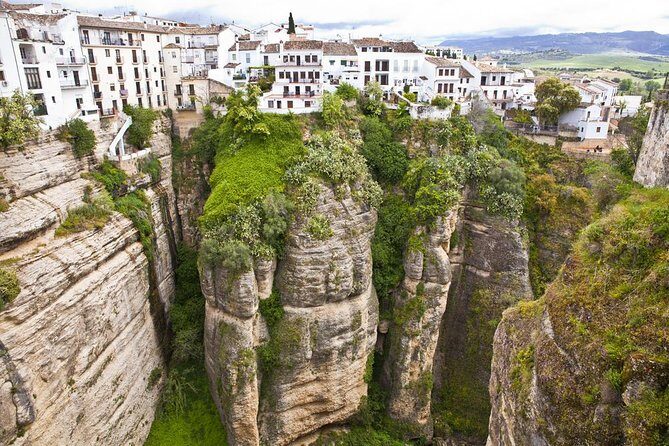
- Canyon viewpoints from multiple bridges: Puente Nuevo and Puente Viejo get proper time.
- Arab Baths context: steam used instead of Romans’ hot-water approach.
- Casa Museo Don Bosco included: a modernist palace from the early 1900s.
- Plaza de Toros is a stop, but entry may vary: plan for the possibility of extra ticket cost.
Why this private 3-hour Ronda walk feels worth your time
Ronda is one of those places where the main sights aren’t clustered neatly together. They’re spread across a dramatic canyon edge, connected by bridges and steep streets. A private guide matters here, because you’re not just seeing Ronda—you’re being taught how the town is built to defend itself, trade with itself, and show off its power.
You’ll get a guided stroll through the historic core, and it’s timed in a way that feels realistic. The stops are long enough to look carefully and ask questions, not just pass by. And because it’s a private experience, you aren’t stuck with the slowest or fastest group pace.
Also, this is offered in English, which is a big quality-of-life detail. You’ll understand what you’re looking at, and you won’t lose time trying to translate key points on the fly.
You can also read our reviews of more walking tours in Malaga
Meeting at the Parador and how pickup works in Ronda
The meeting point is set as the Parador of Ronda, which is a practical anchor if you’re trying to find the tour start without stress. If your hotel is in the center of Ronda, you may be picked up there instead, which is especially helpful if you don’t want to map your way through streets you haven’t learned yet.
There’s also an optional pickup from Malaga or Marbella (if you’re starting that way). That can be a comfort if you’re pairing a few days together, but even without that option, the central meeting plan helps you keep the day simple.
One small note: there was a bit of confusion about meeting point in one past experience, but the guide handled it and the route ended up working smoothly. So if you’re picky about accuracy, just double-check the meeting instructions you receive at booking time.
Puente Nuevo first: your best start for canyon views
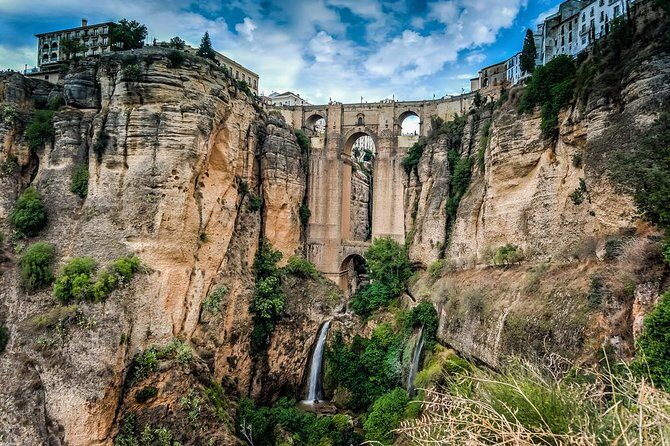
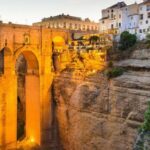
The tour kicks off at Puente Nuevo (New Bridge). You get about 10 minutes here, plus the big payoff: the chance to peer down into the Tajo Canyon from the bridge’s viewpoint.
This is where Ronda often makes its first strong impression. From this angle, the canyon doesn’t feel like background scenery. It feels like part of the town’s design—an engineered separation that shaped defenses, movement, and drama for centuries.
Even with a short stop, you’ll get guidance on what you’re seeing and why these bridge positions matter. You’ll also likely notice how the town’s layout turns the canyon into a feature, not a barrier.
If you’re the type who loves photos, arrive ready to take a few slow shots rather than just one quick snap. Ten minutes goes fast when you’re trying to frame everything at once, so keep an eye on the guide’s cues and you’ll get the most out of that first viewpoint.
The bridges in between: Puente de San Miguel and the walk-through logic
After the New Bridge viewpoint, you’ll move along to Puente de San Miguel. Even if this isn’t the headline bridge for most visitors, it helps you understand how Ronda stitches together two sides of itself.
This part of the walk is useful because it’s less about a single photo and more about navigation. Ronda’s edges and levels can feel confusing if you arrive on your own. With a guide, you learn the logic of the route—what to look for and what direction matters for the next viewpoint.
This is also the zone where you can settle into the tour rhythm. Because it’s private, you can slow down, ask a question about the town layout, and not feel like you’re holding anyone back.
Arab Baths: Moorish-era engineering with a Roman reference point
One of the most important stops isn’t a bridge at all. You’ll see Ronda’s Arab Baths, described as among the best preserved in Europe. These baths are a strong reminder that Ronda wasn’t only about medieval streets and later fame—it had a functional, everyday infrastructure shaped by different cultures over time.
Here’s one detail that makes this stop more than just a pretty photo: the baths are similar to designs perfected by the Romans, but steam is used to sweat out pollutants rather than soaking in hot water the way Romans did. That Roman-to-Moorish comparison is exactly the kind of context that turns a building into a story.
What I like about this portion is that it shifts your focus from the dramatic canyon to the human scale of the town. Your brain stops riding the adrenaline of the views and starts understanding life here: hygiene, comfort, routine, and the engineering behind it.
This stop also sets you up for the bullfighting era later, because it helps explain how Ronda’s identity formed across multiple periods—not just one famous chapter.
You can also read our reviews of more guided tours in Malaga

Old-town markers and how your guide connects the dots
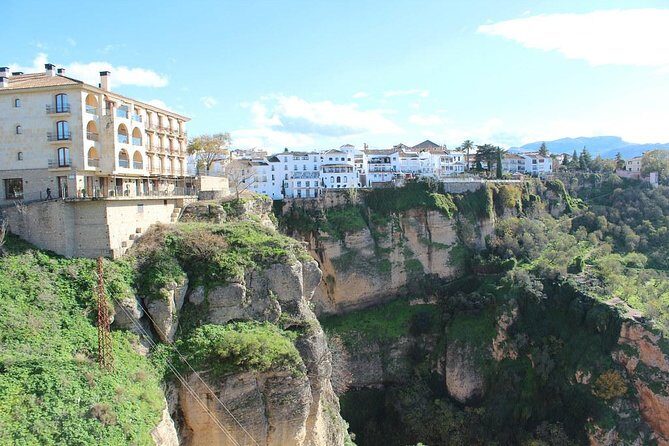
As you continue through the historic heart, you’ll pass landmarks that help you imagine Ronda’s timeline more clearly. The old town hall is one of those markers—along with the atmosphere of a fortified settlement that begins, in a broad sense, with a Roman fortified post.
You don’t need to be a history buff to enjoy this. Your guide’s job is to connect the visible parts—streets, buildings, and key sites—into a coherent storyline you can actually remember.
If you’re the kind of person who normally walks through streets and forgets everything 10 minutes later, this is the fix. Your guide puts order on the chaos and helps you place each stop in the bigger picture.
Puente Viejo: the second bridge that changes the view
Next up is Puente Viejo (Old Bridge), about 15 minutes. This is one of those stops where the time is key: 15 minutes lets you look from a few angles, not just stand in one place.
What makes Puente Viejo valuable is that it gives you comparison. After Puente Nuevo, you start noticing how bridge positions affect what you see and how the canyon walls look from different sides. The town feels less random at that point and more intentionally arranged.
Also, Puente Viejo is part of the trio visitors usually associate with Ronda’s dramatic edge—along with Puente Nuevo and Puente Romano. Even when the route focuses on the specific stops scheduled, the guide’s explanation helps you understand how those bridges work together as a visual system.
Take this time to slow down. If you rush, you’ll only remember the canyon. If you let it sink in, you’ll remember how each bridge frames the story.
Casa Museo Don Bosco: a modernist palace with real museum value
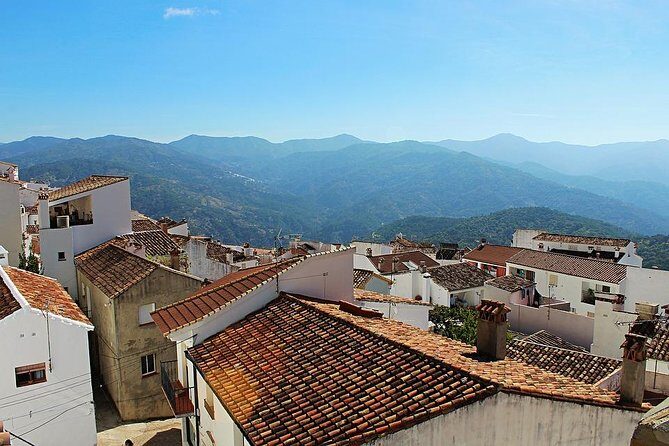
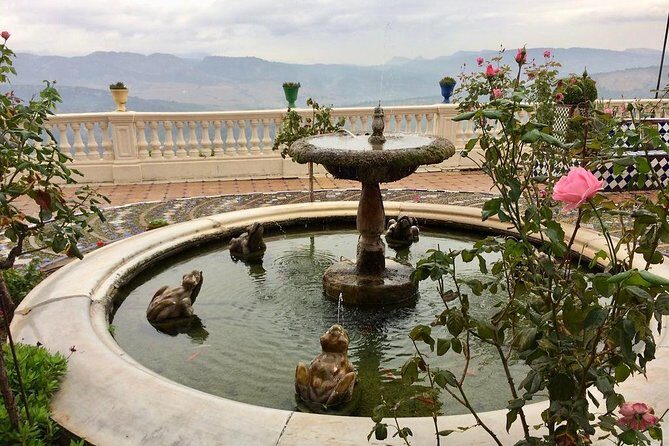
Then you’ll hit Casa Museo Don Bosco, with about 30 minutes and admission included. This is a modernist palace built at the start of the 20th century, which makes it a nice contrast to the older street fabric and the Moorish-era bath stop.
This is one of the strongest “variety” points in the itinerary. You’re not only repeating canyon views. You also get a shift in architecture and mood.
In a walk tour, museum time can be a gamble. Too short and it turns into a quick look with no payoff. Here, 30 minutes is enough to see the main character of the house and get guided context without feeling trapped.
If you like interiors, design, or anything that breaks up the exterior-only pattern of many sightseeing days, this stop is where you’ll feel the tour is doing more than ticking boxes.
Plaza de Toros de Ronda: famous bullring stop, with extra ticket possible
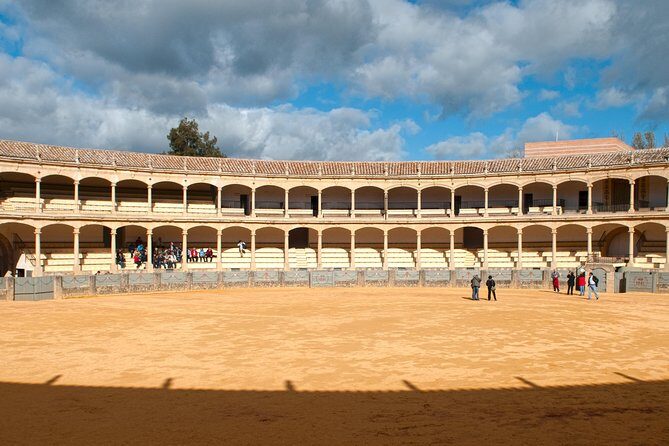
You’ll finish the core sightseeing around Plaza de Toros de Ronda (the bullfighting ring), about 20 minutes. The stop is part of the tour and is meant to connect to the golden age of bullfighting, with Corrida Goyesca mentioned as one of Spain’s oldest and largest bullrings.
Now the practical bit: the entry details are a little inconsistent depending on how the booking is listed. One part of the tour details says entry for Plaza de Toros is included, but another part notes the ticket isn’t included. I’d treat this as a “check your voucher” item.
Either way, you’ll want to budget a bit of flexibility so you’re not stuck deciding on the spot. If your ticket truly is included, great. If it’s not, you’ll be glad you planned ahead.
Also, if you’d rather not focus on the bullfighting side, you can still learn a lot just by understanding how this ring fits Ronda’s identity and how the architecture functions as a stage for tradition.
Walking comfort: what “mild walking” means in real life
This is a walking tour with mild walking over about 3 hours. Because it’s private, you can stop and rest whenever you want. That matters a lot in Ronda, where even short distances can feel steep because the town clings to the canyon edge.
So I’d think of it like this: you’re not doing an all-day hike, but you are walking on old-town streets. If you have any mobility limits, this tour may still work with extra breaks—but you’ll want to be honest with yourself about comfort on uneven surfaces.
Good shoes aren’t optional. Even if the pace is manageable, the ground and stone steps are part of Ronda’s charm, and also part of the effort.
How the guides make the difference: Jamie and Alexi as examples
In my book, the success of a private walking tour lives or dies with the guide. Here, the feedback on the guides is strong. Jamie has been praised as a real local and for being highly interesting and knowledgeable, and the 3-hour length was called the perfect match.
Another guide, Alexi, got high marks for being informative and for steering people to places not obvious to the general tourist. That’s the kind of skill that turns a “see the sights” walk into something you actually remember.
If you’re booking because you want more than surface-level facts, a private official guide is the right direction. The tour doesn’t just show you where to stand; it gives you reasons to care about what you’re standing in front of.
Price and value: what you’re really paying for at $235.25 per person
At $235.25 per person, this isn’t the cheapest way to see Ronda. But the value comes from a few clear items.
First, you’re paying for a private official guide for about 3 hours. That’s time with someone who can explain the sites and also adjust the morning itinerary if there’s something you want to add or emphasize.
Second, you’re paying for guided access to key stops with entrance included for Casa Museo Don Bosco and some bridge viewpoints listed as ticket-free. That reduces your mental load, because you’re not constantly sorting out which sites cost extra during your walk.
Third, the option for pickup from central Ronda hotels (and even optional pickup from Malaga or Marbella) can save you time and confusion—especially if you arrive in Ronda already tired from travel.
If you’re traveling in a small group, the offered group discounts can improve the math. And the minimum of 2 people for booking matters here: if you can fill at least two spots, you spread the cost and get a better per-person value.
My take: this price makes sense when you want high-quality context and a relaxed pace, not when you’re just looking to check off landmarks as fast as possible.
Who should book this tour (and who might not)
This private Ronda walk is a great fit if you:
- Want English guidance and clear explanations as you go
- Prefer a relaxed pace, with the option to pause whenever you need
- Like seeing both iconic viewpoints and less-obvious cultural stops like the Arab Baths
- Appreciate architecture variety, from Moorish-era baths to a modernist palace
It may be less ideal if you:
- Want to roam fully on your own with zero structure
- Are trying to cover Ronda with very limited walking or steep-street tolerance
- Are extremely price sensitive and only want ticket-free sights
For couples, friends, or small groups, private tours like this often feel the most “right,” because you get flexibility without sacrificing the best parts of a guided route.
Should you book this private Ronda walking tour?
I’d book it if you want a clean 3-hour hit of Ronda that mixes the must-see canyon bridges with two high-value stops: Arab Baths and Casa Museo Don Bosco. The private format is the real selling point, because it keeps the day calm and tailored, and the guide feedback (Jamie and Alexi) points to strong storytelling and local insight.
I’d also book it with one quick homework step: check your voucher for what’s included for Plaza de Toros. If the admission is extra, you’ll feel much better knowing that ahead of time instead of at the entrance.
If you’re planning Ronda as a main day and you want the best version of it without stress, this is a smart choice.
FAQ
How long is the walking tour of Ronda?
The tour is about 3 hours.
What’s the price per person?
The listed price is $235.25 per person.
Is the tour private or group-based?
It’s a private tour. Only your group participates.
What language is the tour offered in?
The tour is offered in English.
Where do we meet the guide?
The meeting point is the Parador of Ronda. Pickup from central Ronda hotels may be offered.
Is pickup available from other cities like Malaga or Marbella?
Optional pickup from Malaga or Marbella is available.
Are entrances included?
Casa Museo Don Bosco entrance is included. Plaza de Toros is a stop on the tour, but the details provided note that the admission ticket may not be included—check your booking details.
Are there any ticket-free stops?
The bridge stops listed (Puente Nuevo and Puente Viejo) show free admission tickets.
Is there a lot of walking?
Walking is mild for the 3-hour duration, and because it’s private you can rest whenever you want.
What if I need to cancel?
You can cancel for a full refund if you cancel at least 24 hours before the experience starts.