REVIEW · MALAGA
Visita Guiada Ronda
Book on Viator →Operated by Claudia Valle Visitas Guiadas · Bookable on Viator
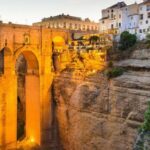
Puente Nuevo grabs you right away. In about two hours, this guided walk ties together Ronda’s main sights with clear English explanations, starting at Puente Nuevo and ending in the heart of the old town.
I love the private small-group feel, which makes it easier to ask questions and keep a calm pace. I also like how the tour mixes heavy history with quick, gorgeous viewpoint stops so you get variety without rushing.
One thing to plan for: monument entry fees are not included, so a few places may cost extra if you want inside access.
In This Review
- Key highlights you’ll feel on this route
- Why this 2-hour private Ronda walk works so well
- Price and value: what $239.65 per group really buys
- Meeting point and how the route finishes in the center
- Puente Nuevo: why the tour starts with Ronda’s signature bridge
- Plaza de Toros de Ronda: bullfighting tradition with real context
- Blas Infante promenade and the Serranía viewpoints
- Mirador de Aldehuela and Puente Viejo: looking at history from above
- A ceramic tribute, plus an 1800s palace-feeling break
- Palacio de Mondragón: mudéjar-renacentista style and the municipal museum
- Plaza Duquesa de Parcent: Plaza Mayor energy and the Santa María focus
- The guide quality is the whole point here
- Timing tips: when 2 hours can feel short
- Who should book this Ronda tour (and who should skip it)
- Should you book the Visita Guiada Ronda?
- FAQ
- How long is the Visita Guiada Ronda tour?
- Is the tour offered in English?
- Is this a private tour?
- Where do I meet for the tour?
- Where does the tour end?
- Are monument entry tickets included?
- Is lunch included?
- Do I need good weather for the tour?
- How does free cancellation work?
Key highlights you’ll feel on this route
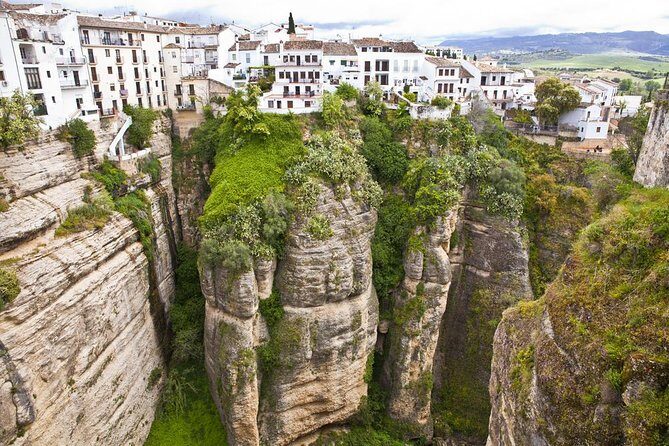
- Puente Nuevo first: the tour starts with the landmark that sets the tone for everything else
- Bullring context, not just facts: you’ll connect the arena to Ronda’s culture and past
- Viewpoints built into the walk: Serranía views and Puente Viejo perspectives come quickly
- Mudéjar-renacentista architecture stop: Palacio de Mondragón adds architectural texture
- Ends at Plaza Duquesa de Parcent: a logical finish near Santa María la Mayor
- Private group, up to 15: your guide can adapt without crowd-control chaos
Why this 2-hour private Ronda walk works so well
Ronda is famous for being dramatic: bridges over deep cuts, cliffs, and neighborhoods that feel stacked on top of each other. The trick is timing. Try to do it all on your own and you’ll either miss key context or you’ll walk too much with no rhyme or reason.
This tour is built for the sweet spot: about 2 hours of guided movement between the city’s signature moments. You’re not stuck in a museum schedule, and you’re not wandering randomly. Instead, your guide points at what matters, explains why it matters, and moves you along at a pace that still lets you look around.
The setup is also practical. It’s a private tour/activity, for only your group (up to 15). That matters in Ronda, where tight streets and sudden viewpoints can make larger tours feel stressful. A smaller group means easier spacing, and it’s simpler to pause for photos without holding up strangers.
You can also read our reviews of more tours and experiences in Malaga.

Price and value: what $239.65 per group really buys
The price is $239.65 per group, up to 15 people, and the tour lasts about 2 hours. When you look at it as a per-person cost, it’s only a bargain if you’re traveling as a group. If you’re a solo traveler, it’ll feel less like a “tour deal” and more like paying for a personal guide.
That said, you should compare it to the alternative: hiring a guide, or trying to self-navigate while also paying for entry tickets. Here, the tour covers the guiding and the interpretation; it does not cover monument entry fees. You’re paying mainly for the route design and the explanation that turns stops into understanding.
Also note what’s included: the tour includes an impuesto sobre bienes y servicios (VAT/tax). What’s not included is the part that can be unpredictable in Spain—entry tickets to monuments.
If you want the highest value, this tour fits best when:
- you’re a couple or small group,
- you want the highlights without planning a whole day,
- you’d rather pay for guidance than spend time figuring things out.
Meeting point and how the route finishes in the center
You start at Pl. de la Merced, 3, 29400 Ronda, Málaga, Spain. The end is Pl. Duquesa de Parcent, 13, 29400 Ronda, near the Plaza Mayor area.
This matters because Ronda is easiest when you don’t fight your bearings twice. Starting at Plaza de la Merced puts you on the side of town that lines up well with the bridge-and-old-core flow. Ending at Plaza Duquesa de Parcent helps you land near major public squares where it’s easy to keep exploring afterward—coffee, tapas, and wandering to nearby churches and streets.
You’ll also want to plan for walking comfort. The tour is short, but Ronda’s streets aren’t always flat, and you’ll be switching between viewpoint areas and plazas.
Puente Nuevo: why the tour starts with Ronda’s signature bridge
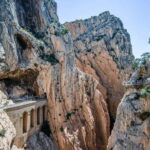
Stop 1 is Puente Nuevo, where you get about 25 minutes focused on the monument that defines the city’s silhouette.
This is a smart first stop because Puente Nuevo isn’t just pretty. It helps you “read” Ronda. Once you understand where the bridge sits over the gorge, you start noticing the logic behind the city’s layout—why buildings feel positioned for views and why the old parts cling to certain ledges.
Expect your guide to explain the bridge’s importance and connect it to Ronda’s broader story. Even if you’ve seen photos, this is where the scale lands. The gorge looks deeper in person, and the bridge becomes the anchor point for the rest of the tour.
Planning note: entry isn’t included for this stop. Depending on what your guide offers in the moment and what you choose to do (look-only versus access), you may decide whether it’s worth paying extra.
Plaza de Toros de Ronda: bullfighting tradition with real context
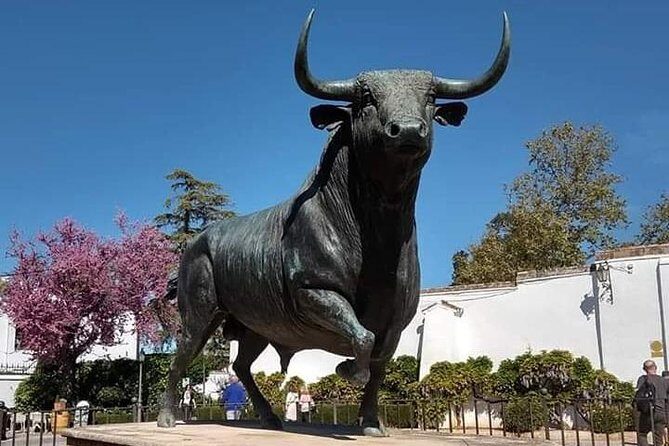
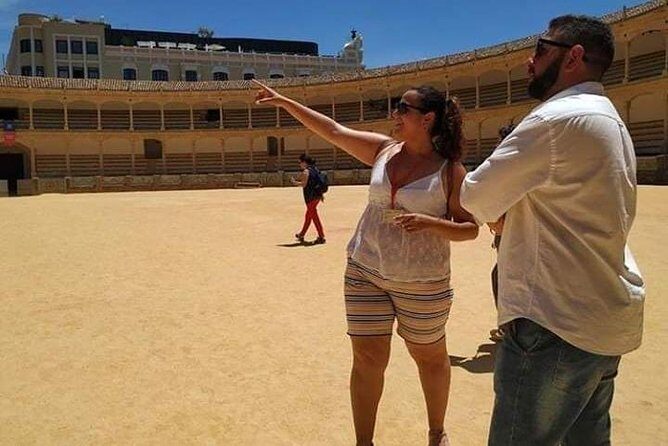
Next comes the Plaza de Toros de Ronda, another 25-minute stop. This one is about history and tradition—how bullfighting culture shaped Ronda and how the arena became part of the city’s identity.
If you care about Spanish history beyond the postcard version, this stop is useful. It’s not just a description of an arena. You’ll learn how it fits into social life and local identity, and you’ll get cultural context that makes the whole practice easier to understand, even if it isn’t your thing personally.
One reason I like starting with these two heavy hitters—Puente Nuevo and the bullring—is that it frames Ronda as a place where engineering, ritual, and power all show up in stone.
Cost note: entry to the monument is not included here either, so factor in possible extra tickets if you want to go inside.

Blas Infante promenade and the Serranía viewpoints
Stop 3 is the Paseo de Blas Infante, about 15 minutes. This segment leans into gardens, miradores, and sightlines toward the Serranía de Ronda.
This is where the tour gives your brain a break. After two history-heavy stops, you get an easier pace and a more open feeling. The viewpoints are where you can step back, take in the cliffs and the layered town, and realize why Ronda has been so photogenic for so long.
I like that this section is short. In Ronda, if you overstay in viewpoint areas, you can end up too tired for the later highlights. Here, it’s enough time to appreciate the scenery and keep energy for the next stops.
Good to know: this stop is listed as free of admission requirements.
Mirador de Aldehuela and Puente Viejo: looking at history from above
Stop 4 is Mirador de Aldehuela, around 10 minutes, focused on views of Puente Viejo (from the 17th century), plus gardens and Casa del Rey Moro.
This is one of those “small stop, big effect” moments. Miradors change the way you understand a place. From above, Puente Viejo makes more sense in relation to the gorge and the later bridge (Puente Nuevo). You start seeing how Ronda’s solution to crossing the gap evolved over time.
Your guide should help connect what you’re seeing to the city’s layered past. The view isn’t just scenery; it’s a history lesson with your feet planted on a viewpoint.
Admission isn’t part of this stop, so you can enjoy it without extra ticket math.
A ceramic tribute, plus an 1800s palace-feeling break
Stop 5 is the Placa a los Viajeros Románticos, about 10 minutes, and it’s exactly the kind of detail that makes a place feel lived-in. It gives you a quick cultural breadcrumb: the way writers, visitors, and romance-era travelers looked at Ronda, and how the city has been interpreted through art and memory.
Immediately after, there’s a stop described as a 19th-century palace home (a casa palaciega). Even without getting formal entry, these older residential-feeling stops matter. They help you shift from monuments to everyday grandeur—how wealth and taste showed up in Ronda’s architecture.
This is also a good moment to regroup. A short pause near heritage details helps the tour feel more like a walk through the city rather than a checklist.
This part is time-efficient, and it keeps the route from feeling overly monumental.
Palacio de Mondragón: mudéjar-renacentista style and the municipal museum
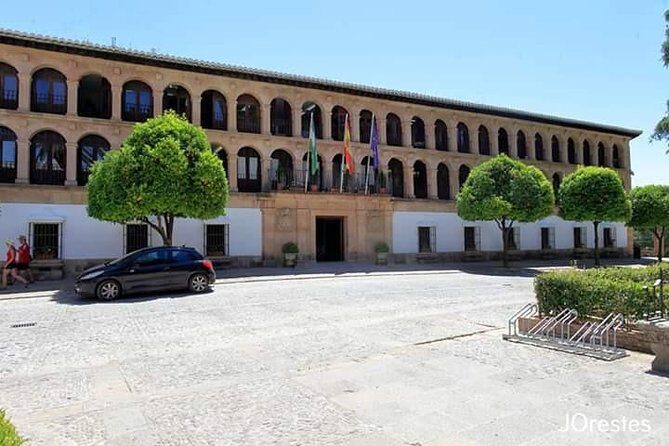
Stop 6 is Palacio de Mondragón, about 10 minutes, described as a mudéjar-renacentista palace style (14th–15th century) with an archaeological museum inside.
Even if you don’t go deep into the museum content, the exterior feel and the architecture cues are worth the stop. Mudéjar-renacentista style typically signals the blending of influences over centuries, and Ronda is a city where cultural overlap is a theme you keep running into.
This is also where stories often matter more than memorizing dates. You’re seeing how Ronda’s built world reflects shifting periods of control, trade, and culture.
Cost note: entry here is not included. If you want museum access, check prices on the spot or ask your guide what’s realistic in the time you have.
Plaza Duquesa de Parcent: Plaza Mayor energy and the Santa María focus
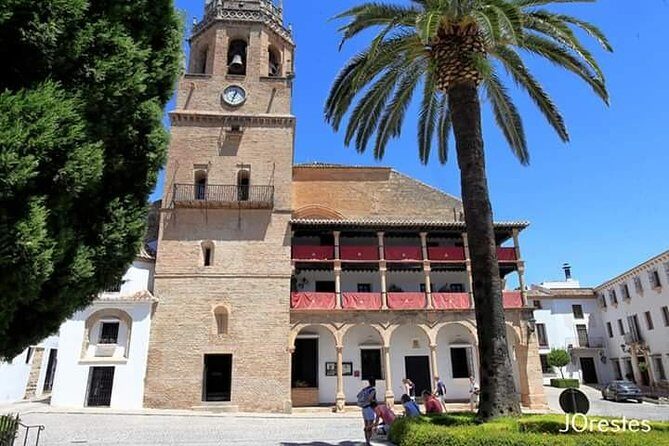
Stop 7 is Plaza Duquesa de Parcent, about 20 minutes. This is where the tour lands near the Plaza Mayor area, with the town hall and Colegiata de Santa María la Mayor as key reference points.
This stop is valuable because it’s practical for your next hours. After walking bridges, viewpoints, and specialized monuments, you end in a public square zone where it’s natural to:
- find a coffee or snack,
- browse streets at an unhurried pace,
- keep exploring nearby without needing another plan.
Also, plazas in Spain often act like history hubs. Even when you’re not going inside everything, the layout and surrounding buildings give you a quick sense of civic life.
Admission isn’t included for this stop, so your experience may be mostly exterior and viewpoint-based unless you choose to add tickets for specific indoor access.
The guide quality is the whole point here
The route is solid. But the reason this tour scores high is the guide’s ability to turn facts into something you can remember.
Across multiple guide names tied to this experience—Carmen, Claudia, Jamie, Marta, Ana María, Elena, and Toñi—the common thread is story-driven explanation. You’ll hear connections between periods and communities, including how Muslim and Christian communities interacted in different eras. That kind of narration is what helps you see beyond the stones and understand why Ronda shaped itself the way it did.
A useful tip: if you’re the type who likes “what’s real versus what’s legend,” you can ask your guide to point out what’s documented and what’s more story-like. One guide style described here leans into that difference, and it can make the whole experience more fun without losing accuracy.
Also, don’t worry about energy mismatch. The experience is designed for normal walking ability, and guides here have been described as keeping groups together even when there are older or slower guests. That’s exactly what you want in a town with uneven footing and sudden viewpoint steps.
Timing tips: when 2 hours can feel short
Two hours can feel short in Ronda, especially if you like lingering at viewpoints. The best way to make it work is to choose your photo moments wisely.
Here’s how I’d approach it:
- At Puente Nuevo, spend a few extra seconds absorbing scale, then move on when your guide signals it’s time.
- At Mirador de Aldehuela, treat it like a payoff stop. If you’re going to do a long photo, do it here.
- Keep an eye on your feet. You’ll go from plazas to viewpoint areas, and Ronda can be uneven underfoot.
Heat can also matter. One short guide note from real-world experience described the tour working even under hot conditions, but your comfort depends on the season. Bring water, wear shoes you can trust, and consider a hat if you’re touring in peak sun.
And since this experience requires good weather, plan an alternate day if you’re traveling with flexibility.
Who should book this Ronda tour (and who should skip it)
This tour is a good match if you:
- want a fast, guided hit of Ronda’s key sights,
- enjoy history explained with stories, not just dates,
- prefer a private group format (up to 15),
- might not want to manage entry tickets and route planning alone.
It may be less ideal if you:
- want a long, museum-heavy day (the timing is short and entries are not included),
- are a die-hard architecture expert who needs hours in interiors,
- dislike walking between multiple viewpoints and plazas, even if it’s not long.
If you’re on a tight schedule—maybe you’re passing through Málaga and only have a half-day for Ronda—this is the kind of organized route that saves time while still feeling personal.
Should you book the Visita Guiada Ronda?
I’d book it if you want high-impact highlights in low-planning time. The pairing of Puente Nuevo, the bullring, key viewpoints, and the Palacio de Mondragón stop gives you a well-rounded “Ronda picture” without requiring a full day.
You’ll get the most out of it if you:
- come prepared to pay separate entry fees if you want interiors,
- plan to walk at a steady pace,
- pick a guide style you’ll enjoy. If you like passion and story-based explanations, this format suits that.
If you’re traveling with a group (up to 15), the value gets easier to justify. If you’re solo, it can still work, but treat it as a paid guided orientation—then use your extra time after the tour to wander the areas you liked most.
FAQ
How long is the Visita Guiada Ronda tour?
It lasts about 2 hours.
Is the tour offered in English?
Yes, it is offered in English.
Is this a private tour?
Yes. Only your group participates.
Where do I meet for the tour?
The start is Pl. de la Merced, 3, 29400 Ronda, Málaga, Spain.
Where does the tour end?
The tour ends at Pl. Duquesa de Parcent, 13, 29400 Ronda.
Are monument entry tickets included?
No. Admission tickets are not included for several listed stops. Some areas are free of admission.
Is lunch included?
No, lunch is not included.
Do I need good weather for the tour?
Yes, this experience requires good weather. If it’s canceled due to poor weather, you’ll be offered a different date or a full refund.
How does free cancellation work?
Free cancellation is available up to 24 hours in advance for a full refund.