REVIEW · MALAGA
Malaga: Roman Theater and Alcazaba of Malaga Guided Tour
Book on GetYourGuide →Operated by Empresa Memorias de Málaga · Bookable on GetYourGuide
Malaga’s ruins explain two empires in one walk. This guided tour takes you through Roman Malaga at the Roman Theater and then up into the Alcazaba fortress, where you’ll get the big-picture stories behind what you’re seeing.
I especially like how the tour keeps the focus tight and practical: you get a guided walkthrough of both sites instead of just wandering on your own. I also love the way the guides bring the past to life, including clear explanations and even examples like photos of what things may have looked like, so the stones start to make sense quickly.
One drawback to plan for: there’s no elevator at either stop, so you’ll be dealing with stairs and uneven ground at both the Roman Theater and the Alcazaba.
In This Review
- Key things that make this tour worth your time
- Roman Theater First: Augustus and Everyday Life in Malaga
- Alcazaba Fortress Walk: Arabic Malaga and Strategic Design
- Panoramic Views From the Citadel: Where the Climb Pays Off
- Skip-the-Line Value: How a Short Tour Packs Two Major Sites
- Meeting Point and Timing: Start Simple, Keep Your Brain Fresh
- What to Bring (and What You’ll Thank Yourself For)
- Guide Style: Clarity, Friendly Energy, and Q&A That Actually Helps
- Who Should Book This Tour (and Who Might Want a Different Plan)
- Should You Book the Roman Theater and Alcazaba Guided Tour?
- FAQ
- Where do I meet the guide for this tour?
- How long is the Roman Theater and Alcazaba guided tour?
- What’s included in the price?
- What is not included?
- Is there skip-the-line entry?
- Are there any elevators at the sites?
- Is this tour suitable for people with mobility impairments or wheelchair users?
- What should I bring?
- Are pets allowed on the tour?
Key things that make this tour worth your time
- Skip-the-line entry at both the Roman Theater and the Alcazaba, so you spend more time inside and less time waiting outside.
- Roman Theater stories tied to Emperor Augustus and Roman customs, which helps you read the site instead of just looking at it.
- Alcazaba panoramic lookout time, with city views that make the climb feel worth it.
- Two time periods in one route, Roman and Arabic, guided so you can connect the dots.
- Guides get praised for clarity and friendliness, including named guides like Rocío and Lydia in recent feedback.
Roman Theater First: Augustus and Everyday Life in Malaga
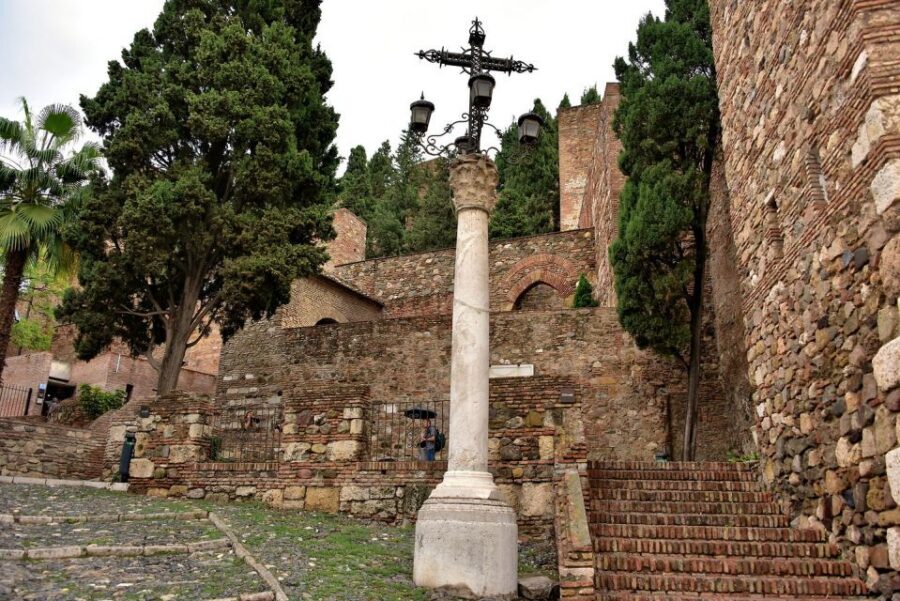
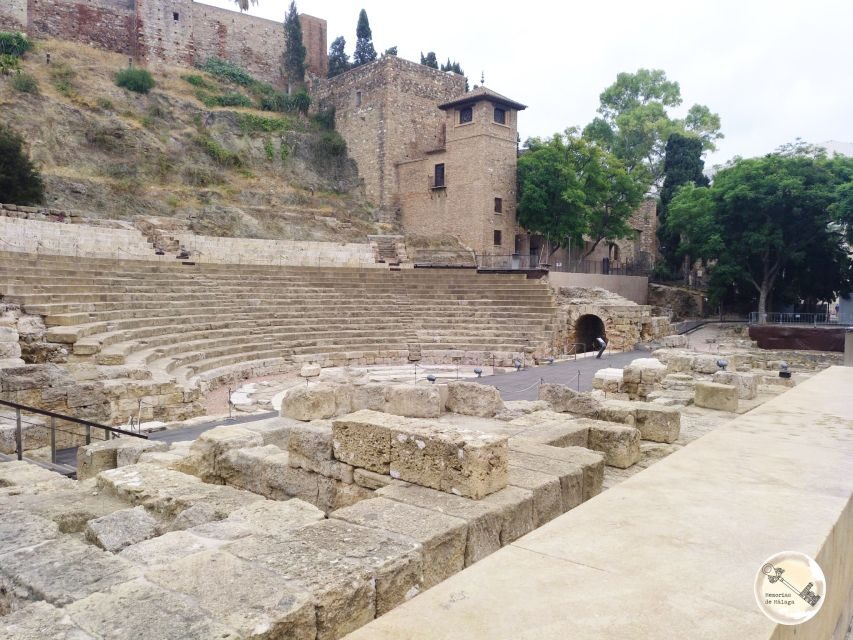
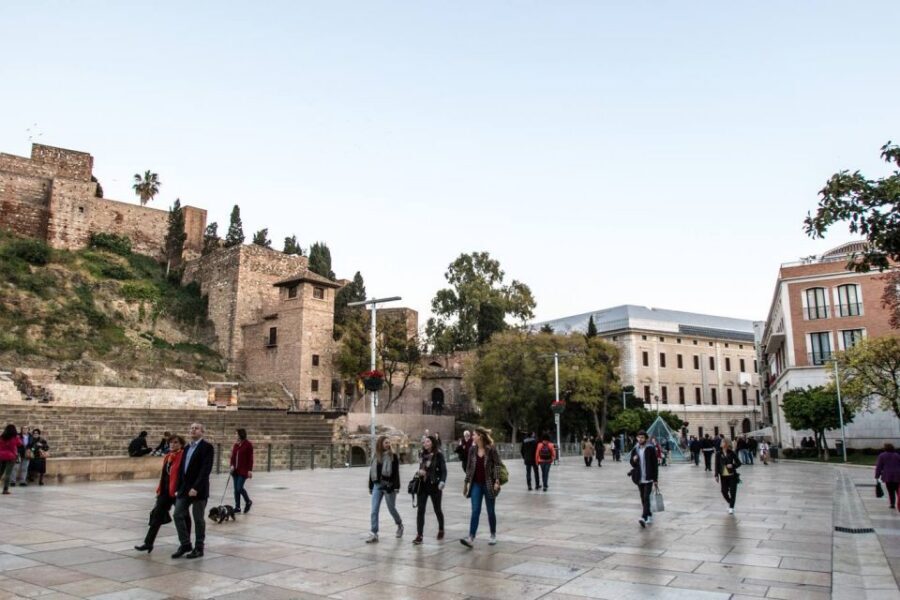
Most of your experience starts with the Roman Theater, located at the foot of the citadel area. You’ll begin with a guided visit that frames the site in a way that’s easy to hold onto: you’re not just seeing an old venue, you’re learning what Roman Malaga was doing when this place mattered.
The tour focuses on Emperor Augustus and what life in Roman Malaga looked like through the lens of the theater. That’s important because theaters weren’t only about performances. They were tied to public life—gathering, visibility, and civic identity. When your guide points out how the building worked and why it was set up the way it was, you’ll start noticing details you might otherwise overlook.
You’ll also spend time enough to look around at the ruins without feeling rushed. That timing matters. In a short 1.5–2 hour window, a good guide has to do more than narrate; they have to help you see.
Practical tip: wear shoes you can trust on uneven surfaces. The Roman Theater is outdoors, and you’ll likely be on varied stone textures while you pause for explanations and photos.
You can also read our reviews of more guided tours in Malaga
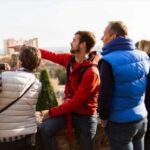

Alcazaba Fortress Walk: Arabic Malaga and Strategic Design
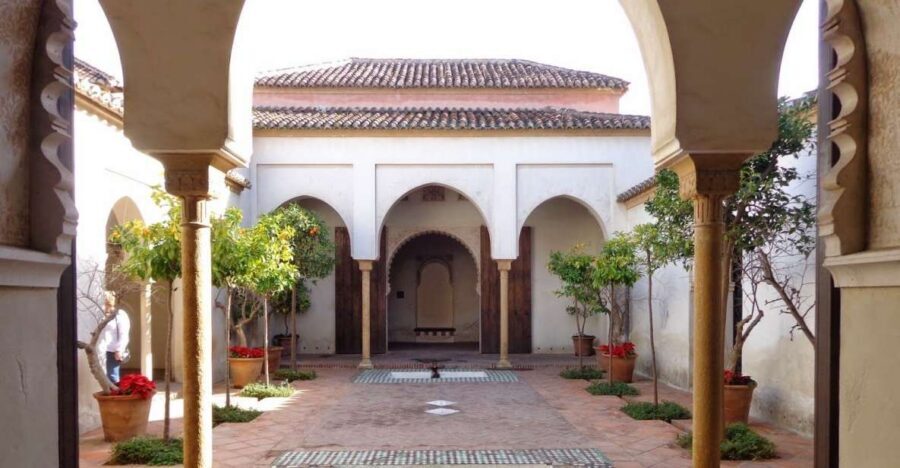
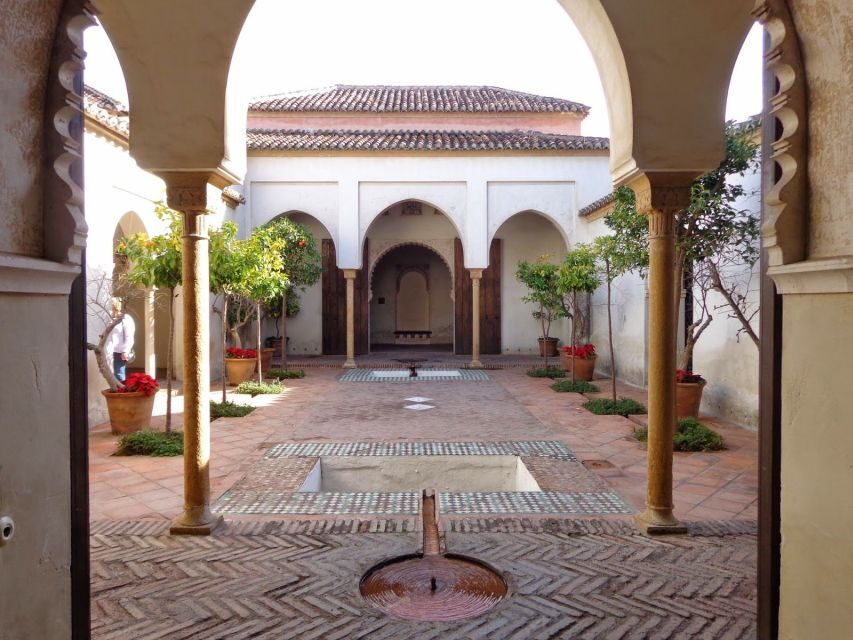
After the Roman Theater, you’ll head to the Alcazaba, the fortress that sits above the city. This is where the tour shifts from Roman public life to Arabic influence and defensive architecture—still the same city, but a different chapter of control, culture, and design.
You’ll explore the fortress and learn about the historical context of the Alcazaba and how Arabic influence shaped Malaga. The value here is in the comparison. The guide can point out how the fortress layout and the way it’s built reflect its purpose, so you understand why the place feels both imposing and functional.
The Alcazaba is also one of Spain’s best-preserved fortresses, and that preservation affects how you experience it. Well-kept stone means fewer gaps in what you can interpret. You can trace the logic of walls and paths, and you’re not constantly guessing what used to be there.
You’ll get guided storytelling while walking through the fortress, and then you’ll have time after the tour to wander on your own. That free strolling time is a smart inclusion. Even if you’re listening closely, your brain needs a little space to convert facts into a mental map.
Practical tip: if you want photos, plan to stop often. The best photos come from pauses—when you step aside, let your view settle, and then frame the city and walls at once.
Panoramic Views From the Citadel: Where the Climb Pays Off
The Alcazaba is famous for views, and this tour schedules time to actually use that advantage. Instead of rushing to the next checkpoint, you’ll reach the lookout areas and take in panoramic scenes over Malaga.
Those views are useful in a very real way. From up high, you can connect the site to the modern city below, so you understand how the fortress sits as a guardian above everything else. It turns the experience from two separate history stops into one connected story: how Malaga’s geography influenced who could control it.
Expect the view to be a big part of the payoff, especially if you’re squeezing Malaga into a tight schedule. Even better, it helps you remember the tour after you’ve left, because you’ll carry a strong image in your head: the city spread out beneath the fortress walls.
Practical tip: bring sunglasses and sunscreen. Fortresses and viewpoints mean open skies and strong light. If you’re sensitive to glare, you’ll enjoy the stops more with the right eye protection.
Skip-the-Line Value: How a Short Tour Packs Two Major Sites
At $27 per person and 1.5–2 hours long, this tour is built for efficiency. You’re paying for two big things: a live guide and skip-the-line access to both the Roman Theater and the Alcazaba.
In plain terms: if you show up on your own, you may spend more time waiting or trying to figure out what you’re looking at. In this format, you get a guided narrative while also reducing time spent on access hassles. That’s usually where you see real value—not only in the ticket price, but in the hours you save.
There’s also an extra detail in the highlights that’s worth taking seriously: the information you’re shown also mentions skip-the-line entry to Malaga Cathedral and the Picasso Museum. Those are separate major attractions, so it’s smart to confirm what’s included in your exact booking. If those extras truly apply to your ticket, they could make the deal even stronger.
How to think about value: if you want an organized introduction to Roman and Arabic Malaga and you want to see both the Roman Theater and Alcazaba without wasting time, this fits well. If you already know the history and you prefer to wander at your own pace for half a day, you might feel the guide time is less essential.
Meeting Point and Timing: Start Simple, Keep Your Brain Fresh
The meeting point is at the Alcazaba, on the stairs next to the Information Center. Your guide will be holding a yellow umbrella with Memorias de Málaga printed on it.
That matters because it reduces the most annoying start-of-tour problem: searching for your guide. A clear marker like a specific umbrella color is the difference between a calm beginning and a stressful scramble—especially in historic areas where streets and entry points can feel confusing.
The tour runs 1.5–2 hours, so you’ll want to arrive ready to walk and listen. There’s no elevator at either site, which means your pace depends on your comfort with stairs and uneven ground.
Also, the tour languages are Spanish and English. If you’re choosing between times, pick the one that matches your comfort level. English tours are listed, but double-check language when booking if that’s a deal-breaker.




What to Bring (and What You’ll Thank Yourself For)
This is an outdoors-heavy route with viewpoints and stone steps. The best “bring list” isn’t fancy—it’s the essentials that make the tour smoother.
Bring:
- Comfortable shoes for stairs and uneven ground
- Water (you’ll be walking and standing)
- Sunscreen, sunglasses, and a sun hat
- A camera for the Roman Theater details and Alcazaba viewpoints
- Weather-appropriate clothing
You’ll also see packed lunch listed. The tour itself is short, but having a snack plan can help if you’re combining this stop with other sights afterward.
Not allowed: pets.
Guide Style: Clarity, Friendly Energy, and Q&A That Actually Helps
One of the biggest strengths you can expect here is the guide quality. Recent feedback specifically praises guides for being friendly and for explaining the history clearly, with guides like Lydia and Rocío appearing in positive accounts.
What that usually means in practice: you’ll get a guide who can answer questions and keep the tone engaging. When someone can connect Roman and Arabic periods without turning it into a lecture, you’ll understand more and remember more.
The guide format also helps you learn. Instead of reading signs one by one, you get a story arc: what you’re standing in front of, why it was built, and how it fits into the bigger Malaga timeline. That’s the kind of guidance that makes a short tour feel substantial.
Who Should Book This Tour (and Who Might Want a Different Plan)
This tour fits best if you want:
- A guided introduction to Roman Malaga and the Arabic influence you’ll see in the Alcazaba
- Skip-the-line access to two major historical stops
- Views with meaning, not just a quick glance from below
- A short, focused itinerary that you can pair with other Malaga highlights
It may be less ideal if:
- You need wheelchair-friendly access. There’s no elevator at either location, and the terrain involves stairs.
- You strongly dislike guided walking tours. Since there’s a plan and a guide schedule, you’ll be walking with the group.
If mobility is limited but you can handle stairs with assistance, you might still want to evaluate your comfort carefully—because the tour doesn’t advertise step-free access.
Should You Book the Roman Theater and Alcazaba Guided Tour?
Yes, I’d book it if you want to see two of Malaga’s most important historic sites in one efficient 1.5–2 hour plan, with skip-the-line help and an actual narrative guiding what you’re looking at. The Roman Theater gives you a framework for the Roman period, and the Alcazaba gives you the Arabic chapter plus the payoff views. Add in guides praised for clarity and friendliness, and this is a strong choice for first-time visitors or anyone who wants a better-than-self-guided introduction.
Book with a quick checklist before you go: confirm the exact skip-the-line inclusions connected to Malaga Cathedral and the Picasso Museum (since your materials mention it), wear good shoes, and plan for stairs because there’s no elevator. If you do those basics, you’ll get a high-value history walk with views that stick.
FAQ
Where do I meet the guide for this tour?
Meet your guide at the Alcazaba on the stairs next to the Information Center. The guide will be holding a yellow umbrella with Memorias de Málaga on it.
How long is the Roman Theater and Alcazaba guided tour?
The tour lasts about 1.5 to 2 hours.
What’s included in the price?
The tour includes a live guide and skip-the-line tickets to the Roman Theater and the Alcazaba of Malaga.
What is not included?
Hotel pickup and drop-off, plus food and drinks, are not included.
Is there skip-the-line entry?
Yes. The tour includes skip-the-line tickets to the Roman Theater and the Alcazaba.
Are there any elevators at the sites?
No. There is no elevator at the Roman Theater and the Alcazaba of Malaga.
Is this tour suitable for people with mobility impairments or wheelchair users?
It is not suitable for people with mobility impairments, and it is not recommended for wheelchair users.
What should I bring?
Bring comfortable shoes, sunglasses, a sun hat, a camera, sunscreen, water, packed lunch, and weather-appropriate clothing.
Are pets allowed on the tour?
No, pets are not allowed.