REVIEW · MALAGA
Guided Tour of Ronda
Book on Viator →Operated by Ronda Private Tours · Bookable on Viator
Ronda feels like a secret cliffside theater. You get a tight 2-hour loop with native storytelling, built for big photo moments and quick stops that keep your day moving.
I especially like the way the route works: you bounce between viewpoints and monuments in short segments, so you’re not stuck listening too long in one place. And I really like that the same guide-led plan focuses on what matters—parks with 200-year-old gardens, the New Bridge from multiple angles, and the old-and-new bullfighting story told in context.
One thing to consider: the tour has had a couple of serious scheduling problems in the past, including a missed meetup and a last-minute cancellation. If your schedule is tight, I’d plan an extra hour in Ronda so you have breathing room if something goes wrong.
In This Review
- Key highlights to look for on this Ronda tour
- Entering Ronda’s viewpoints: why this walk feels different
- Where you meet, where you end, and how the 2-hour plan actually works
- Alameda del Tajo: 200-year-old gardens and gorge views
- The oldest bullring area: modern bullfighting with literary echoes
- New Bridge from multiple angles: the 1793 symbol of Ronda
- Jardines de Cuenca: the classic New Bridge in-gorge shot
- Arco de Felipe V: a door with a 16th-century story
- Palacio de Salvatierra: when the stop is short and the ticket is not included
- Plaza Duquesa de Parcent: ruins, churches, and Ronda’s center of gravity
- Plaza de María Auxiliadora (El Campillo): viewpoints and Pinsapos
- Iglesia de Nuestra Senora de La Paz: color outside, baroque inside
- Mirador de Aldehuela: the wrap-up where the bridges all connect
- Price and value: $240.30 per group (up to 15) for an English private tour
- What the best guides bring: stories, pacing, and real personal touches
- A fair warning: rare scheduling failures do happen
- Who should book this tour?
- Should you book this guided tour of Ronda?
- FAQ
- How long is the Guided Tour of Ronda?
- Is this tour private or shared?
- What language is the tour offered in?
- Where do we meet and where does the tour end?
- How big is the group for this tour?
- Are admissions included at the stops?
- Is there free cancellation?
Key highlights to look for on this Ronda tour
- Big photo stops with a purpose at Alameda del Tajo, Jardines de Cuenca, and both bridges viewpoints
- Native guide storytelling with real Ronda characters, including bullfighting references tied to Orson Welles and Ernest Hemingway
- New Bridge done the smart way: multiple angles, not one look-and-run photo
- Short, efficient walking segments that fit into a day without draining you
- Best value for groups up to 15 at one flat price per group
- Mostly free admissions for the stops listed, with one notable exception
Entering Ronda’s viewpoints: why this walk feels different
Ronda is a city of edges. You’re up on a plateau above a dramatic gorge, and that changes how everything feels—from the bridges to the gardens to the church facades that seem to frame the sky.
This tour is built for that “look, then understand” rhythm. You don’t just get dropped at a viewpoint. You’ll pause at key spots long enough to take photos, catch details, and get the story behind what you’re seeing. The guides listed with this experience tend to be personable and hands-on, and you’ll hear the kind of background that makes Ronda’s monuments click in your mind instead of floating past.
You’ll also appreciate that it’s private. Your group goes together, in English, and you can set the pace with your guide as you move between parks, squares, churches, and bridge lookouts.
You can also read our reviews of more guided tours in Malaga
Where you meet, where you end, and how the 2-hour plan actually works
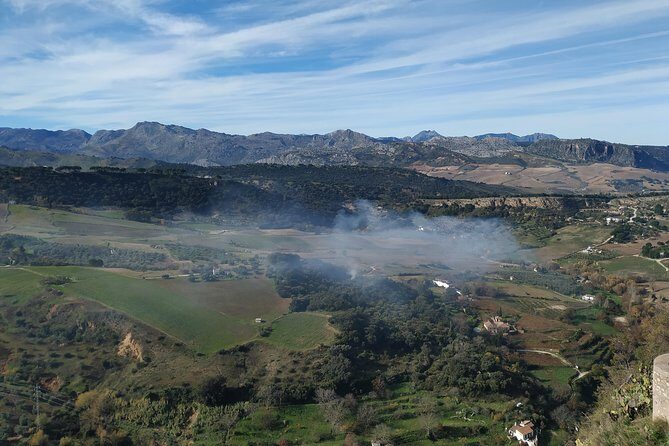
The tour starts at Pl. de la Merced, 1, 29400 Ronda and ends at Busto de Antonio Ríos Rosas, Pl. España, 6, 4, 29400 Ronda—right in the area where it’s easy to find restaurants.
The total time is about 2 hours, and the tour schedule is organized into quick stops, many in the 5–15 minute range. That matters, because Ronda’s highlights are scattered around viewpoints and monuments. If you’ve tried a DIY walk before, you know how time can evaporate when you’re searching for the next good angle.
Here’s how this plan tends to feel when you’re using it as part of a bigger day:
- You’ll start with a major park viewpoint, then move toward the bullring area.
- You’ll pivot to the New Bridge and spend time building a visual sequence with the gardens.
- You’ll work through a mix of arches, palaces, and plazas.
- You’ll finish with a final mirador viewpoint that ties the whole gorge-and-bridge story together.
Because it’s private, it’s also easier to time your photos without turning into that frantic “quick! one photo!” line.
Alameda del Tajo: 200-year-old gardens and gorge views
Your first stop is Alamenda del Tajo (often associated with Ronda’s classic viewpoints and old garden areas). This is the “settle in and take it all in” part of the route.
The big reason I think this start works is that it gets you oriented. Before you go hunting bridges and arches, you understand the geography: where the gorge sits, where the city’s edges run, and why the later photos look the way they do.
You’ll spend about 10 minutes here, with the park described as having gardens that are about 200 years old. Admission for this stop is listed as free, so you’re not paying just to get your bearings.
Practical note: gardens and viewpoints often mean uneven ground and lots of standing still for photos. Plan to wear shoes that handle steps and small changes in footing.
The oldest bullring area: modern bullfighting with literary echoes
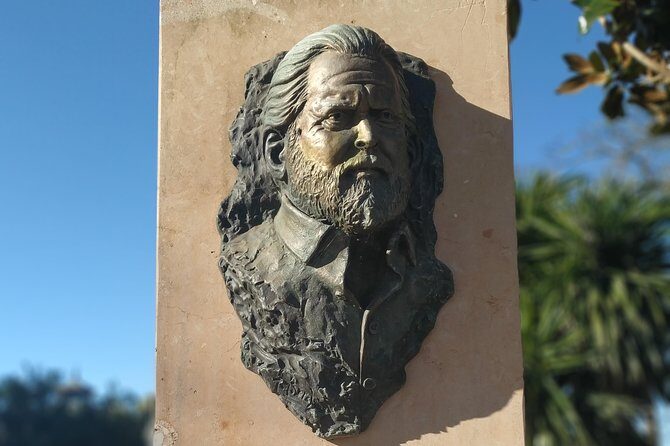
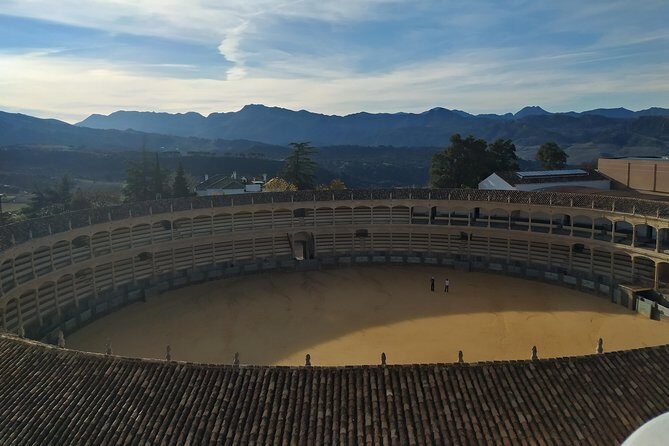
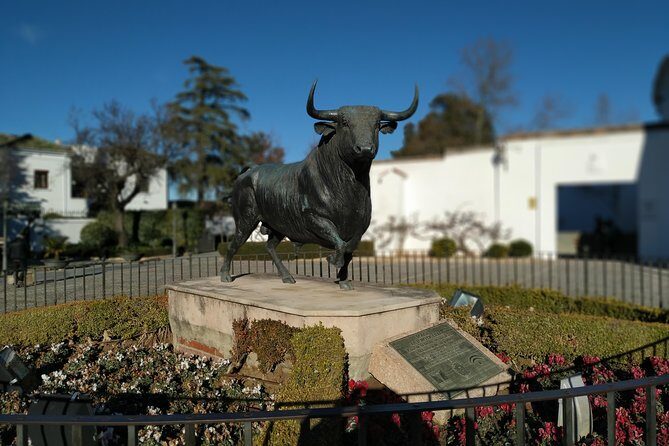
Next you’ll head to the surroundings of Ronda’s oldest bullring in Spain, where the guide tells the story of modern bullfighting. You’ll also hear about how major literary and cultural figures became part of Ronda’s bullfighting allure—specifically names like Orson Welles and Ernest Hemingway, who are linked to falling in love with the city.
This stop is short (listed at about 10 minutes), but it can be a meaningful one if you care about how traditions evolve. Instead of treating bullfighting like a single static spectacle, you get a thread that connects Ronda to broader cultural history.
If you don’t follow bullfighting, you can still enjoy this stop as cultural context: Ronda built an identity around the bullring, and it shows up in architecture, street life, and local storytelling.
New Bridge from multiple angles: the 1793 symbol of Ronda
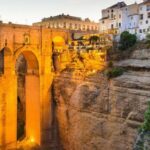
Then comes the star: New Bridge, completed in 1793 and treated here as Ronda’s symbol.
You’ll spend about 10 minutes here, and the key detail is that you’re not just seeing it from one spot. The plan has you observing the bridge from several different angles so you can really understand the shape of the arch and how it dominates the gorge.
Why this is a smart use of time: the New Bridge photographs beautifully, but if you only take one view, you miss the way the bridge interacts with the surrounding city walls and the garden terraces below.
Admission for this stop is listed as free, so you’re paying only for the guide and time—not for another ticket on top of everything.

Jardines de Cuenca: the classic New Bridge in-gorge shot
After New Bridge, you’ll hit Jardines de Cuenca, the hanging-garden area known for one of Ronda’s most sought-after images: the New Bridge nestled in the gorge.
This is listed for about 15 minutes, and the guide connects what you’re seeing to specific nearby landmarks, including:
- House of the Moorish King
- Old Bridge
- the garden viewpoints that help you frame both bridges and the gorge depth
Also listed are free admissions here. So you get more time in a photo-driven area without adding costs.
What I like about this stage is that it acts like a visual bridge between earlier context and later monuments. You’re basically building your mental map: the New Bridge isn’t alone. It sits within a broader set of bridges, houses, and gorge viewpoints that explain why Ronda became such a magnet for artists, photographers, and writers.
Arco de Felipe V: a door with a 16th-century story
Next is Arco de Felipe V, described as an entrance through the Old Bridge with a door built in the 16th century.
This portion is only about 5 minutes, but it’s designed for a quick architectural “frame moment.” Once you cross the arch, you’ll have a chance to photograph the Church of Father Jesus framed in the arch.
This is one of those stops where you’ll feel the guide’s value. Without directions, you might miss the framing angle. With a guide, you get the exact sightline and the quick bit of context that makes the arch more than just a pretty doorway.
Free admission for this stop is listed.
Palacio de Salvatierra: when the stop is short and the ticket is not included
You’ll then pass by Palacio de Salvatierra, known for its 18th-century facade.
This stop is listed for about 5 minutes. The description points out elements like the forge, a wooden cover, the noble shield, and colonial elements—basically a quick “read” of what makes this facade important.
Here’s the one cost note tied directly to the itinerary: admission for Palacio de Salvatierra is not included.
If you want to see inside, you’ll need to plan for that ticket separately. If you’re mostly there for the exterior and the photo and you’re tight on time, you can treat this as a quick exterior stop that still pays off.
Plaza Duquesa de Parcent: ruins, churches, and Ronda’s center of gravity
Now the tour shifts from viewpoints to civic and religious space at Plaza Duquesa de Parcent, described as the most important square in Ronda and a place where major archaeological remains have been found.
You’ll spend about 10 minutes, and the guide connects the square’s importance to:
- the presence of three Catholic churches
- standout buildings like City Hall and the Church of Santa María de la Encarnación
Free admission is listed for this stop.
This is a good pivot moment because squares let you reset. You can watch people, orient yourself, and absorb the architecture without the constant “edge of the gorge” angle dominating your brain.
Plaza de María Auxiliadora (El Campillo): viewpoints and Pinsapos
After that you’ll reach Plaza de María Auxiliadora, also known as El Campillo. This is another viewpoint stop, listed for about 10 minutes, and it includes a longer-distance visual payoff.
From here, you can see in the distance:
- Sierra de Grazalema
- Hoya del Tajo
- the Archaeological Site of Acinipo
The description also highlights something specific to look for in the gardens: two Pinsapos of interest.
Admission is listed as free.
The reason I like this stage is that it expands your horizon beyond Ronda’s core. You start seeing the wider region, which makes later photos of Ronda feel like part of a larger geographic story instead of just a single postcard town.
Iglesia de Nuestra Senora de La Paz: color outside, baroque inside
Next is Iglesia de Nuestra Senora de La Paz, about 10 minutes.
This is framed as one of Ronda’s most beautiful corners because of:
- the colorful facade
- the baroque decoration of the interior
The description also notes that the Virgin of the Paza is the patroness of Ronda.
Free admission is listed here.
If churches make you tune out, you can still get something here: a quick exterior photo and a moment of interior detail can shift your understanding of why Ronda’s plazas and viewpoints feel so ceremonial. It’s not just a cliff city. It’s a place with rituals and symbols that show up in everyday spaces.
Mirador de Aldehuela: the wrap-up where the bridges all connect
Finally, you end at Mirador de Aldehuela, a viewpoint designed to close the loop.
This stop is about 10 minutes and the payoff is the composition: you’ll see the New Bridge and the Old Bridge together, plus the Casa del Rey Moro and Plaza de España, where the visit ends.
Free admission is listed.
This is a great way to finish because it turns your earlier scattered stops into one coherent picture in your head. After this, you can walk around on your own and recognize what you’re looking at, instead of feeling like you’ve seen a list of highlights.
Price and value: $240.30 per group (up to 15) for an English private tour
The price is $240.30 per group, and the tour is for up to 15 people. That matters for value.
If you’re traveling as a family, a couple of friends, or a small group, this pricing can be a strong deal because you’re effectively paying for one guided experience rather than per-person admission to a maze of individual tickets and guides.
It’s also listed as offered in English, includes a mobile ticket, and runs about 2 hours. Many people try to squeeze Ronda into a broader Málaga day. A short, private, guide-led plan lets you do more of the essential sights without turning the whole day into transportation and waiting around.
Booking tends to happen about 40 days in advance on average, so if you know your dates, don’t treat this like a last-minute add-on. Earlier planning usually means more time choices, and in a city with lots of photo demand, that’s peace of mind.
What the best guides bring: stories, pacing, and real personal touches
Names from the guided experience include Juan, Manuel Aviles Bravo, Marta, Alfredo, and Elena—and the common thread is attention to detail and a warm, helpful approach.
One guide focus that really resonates is how personal storytelling can make Ronda’s major traditions feel more vivid. For example, Manuel Aviles Bravo is described as sharing personal experiences and context around the processions held during Holy Week, which makes Ronda’s religious culture feel tied to real moments, not just dates on a sign.
You’ll also want a guide who can adapt to your interests. Some of the feedback points to guides taking special interests into account, which is exactly what a private tour should do.
A fair warning: rare scheduling failures do happen
Here’s the balanced part. A couple of negative experiences in the record describe serious issues: one group waited for an extended time at the meetup and couldn’t reach the guide by phone, and another group had a last-minute cancellation after traveling a long way to get there.
I’m not saying this is the norm. The overall rating is 4.6 across 18 entries, and the majority of the experience details sound smooth and enjoyable. Still, if your trip is tight or Ronda is a must-do on a single day, I’d treat this like a priority booking and keep your day flexible.
Who should book this tour?
This is a strong fit if you:
- Want a structured introduction to Ronda in about 2 hours
- Care about photo angles of New Bridge and the gorge viewpoints
- Prefer a private guide instead of wandering with no plan
- Are traveling with a group of up to 15, where the flat price can be excellent value
It’s also a good match for people who enjoy a guided pace with short stops—enough time for photos, then moving on.
If you hate walking, know this route is built around multiple stops in a compact time window. Comfortable shoes and realistic expectations go a long way.
Should you book this guided tour of Ronda?
Yes, book it if you want a high-return, photo-friendly introduction to Ronda with a guide who can explain what you’re seeing and keep the pace moving. The combination of viewpoints (Alameda del Tajo, Jardines de Cuenca, Mirador de Aldehuela), the symbolic New Bridge, and quick cultural stops around bullfighting and churches makes the tour feel efficient without feeling rushed.
But book smart. Because there have been serious scheduling glitches in a small number of cases, add buffer time to your day, and avoid stacking zero-flex plans right after the tour.
If you want Ronda to click fast—this route is one of the most practical ways to do it.
FAQ
How long is the Guided Tour of Ronda?
It lasts about 2 hours.
Is this tour private or shared?
It’s a private tour/activity, meaning only your group participates.
What language is the tour offered in?
The tour is offered in English.
Where do we meet and where does the tour end?
You start at Pl. de la Merced, 1, 29400 Ronda and end at Busto de Antonio Ríos Rosas, Pl. España, 6, 4, 29400 Ronda.
How big is the group for this tour?
The price is for a group of up to 15 people.
Are admissions included at the stops?
Most stops list admission ticket free, but Palacio de Salvatierra is listed as not included.
Is there free cancellation?
Yes. You can cancel for a full refund up to 24 hours in advance of the experience start time.