REVIEW · MALAGA
Visita Entre Toros y Caballos
Book on Viator →Operated by RESERVATAURO RONDA · Bookable on Viator
Bulls and horses, close up, in the real pasture. This Reservatauro Ronda visit near Ronda is about how fighting bulls and Andalusian horses are raised day to day. I like that you’re not just looking at animals from a fence; you get inside the ranch workflow, including the bullfighting training spaces.
Two things I’d put near the top of your list. First, you get time at the arena and practice ring, where the tools of the trade are explained and you can even try a pass with the capote and muleta. Second, the animals aren’t all parked for show: you see them through selection and growth stages across big pastures under old oak trees in a UNESCO Biosphere Reserve.
One possible drawback: even though the experience is offered in English, some groups may feel less supported if you end up with audio guidance or a mixed-language group. That can turn a hands-on ranch story into background noise.
In This Review
- Key highlights worth planning around
- Reservatauro Ronda: where ranch life is the main event
- Timing and group size: why the 1 hour 10 minutes can feel different
- Stop 1 at the ranch: testing bullring, pens, and the ranch workflow
- The UNESCO Biosphere pastures: centenary holm oaks and animals in motion
- Bullfighter practice ring: capote and muleta, and that hands-on training moment
- Andalusian horses in the stables: more than a quick look
- Learning ranch life with a real guide: what makes it click
- Price and value: is $36.16 per person a fair deal?
- Who should book this ranch tour in Ronda
- Should you book Visita entre Toros y Caballos at Reservatauro Ronda?
- FAQ
- What is the tour location?
- How much does Visita entre Toros y Caballos cost?
- How long is the tour?
- What time does the tour start?
- Is the tour offered in English?
- Do I need to bring a printed ticket?
- What’s included with the ticket?
- How big are the groups?
- Can I cancel and get a full refund?
- Are service animals allowed?
Key highlights worth planning around
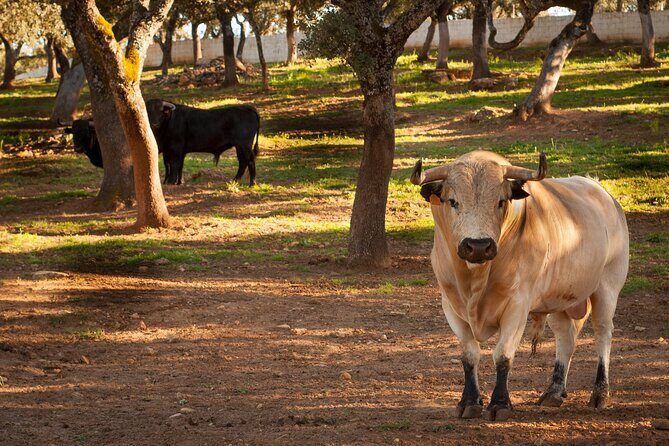
- Testing bullring access to see how fighting-bull selection and handling work in a working ranch setting
- UNESCO Biosphere Reserve pastures with centenary holm oaks and animals roaming freely
- Capote and muleta practice ring where bullfighting tools are shown and you can try a pass or two
- Horse stables visit focused on the Andalusian horse, not just quick photo stops
- Small group size (max 15) that helps you ask questions without feeling rushed
Reservatauro Ronda: where ranch life is the main event
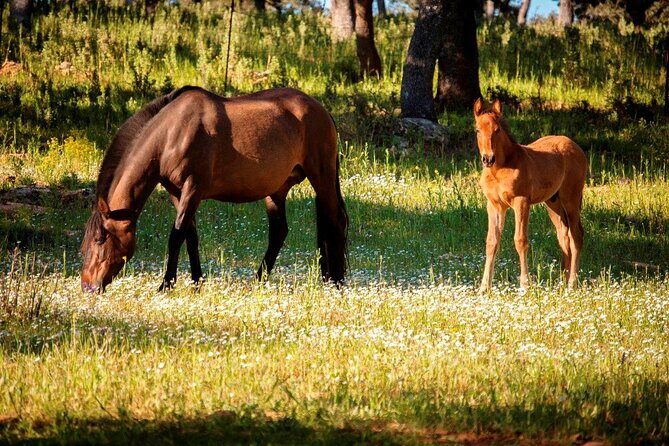
This is one of those tours where the setting does half the work for you. Reservatauro Ronda isn’t a museum. It’s a working property built around the breeding and development of the fighting bull and the Andalusian Horse.
That matters, because you’re seeing the animals in the environment they live in. You’ll notice how ranch routines shape everything: the layout of pens and work areas, the selection process, and the way training areas fit into the daily rhythm. It also gives you context that you just don’t get from a generic bullfight ticket, because here the story starts long before any event.
And yes, the place is gorgeous. Holm oaks dot the land, and the tour moves you through the kind of Mediterranean pasture scenery you’d expect near Ronda, but with the animals actively “in the system,” not staged.
If you’re curious about Spanish bullfighting culture from the ranch side, this is a sensible, practical way to learn it without needing deep background first.
You can also read our reviews of more tours and experiences in Malaga.

Timing and group size: why the 1 hour 10 minutes can feel different
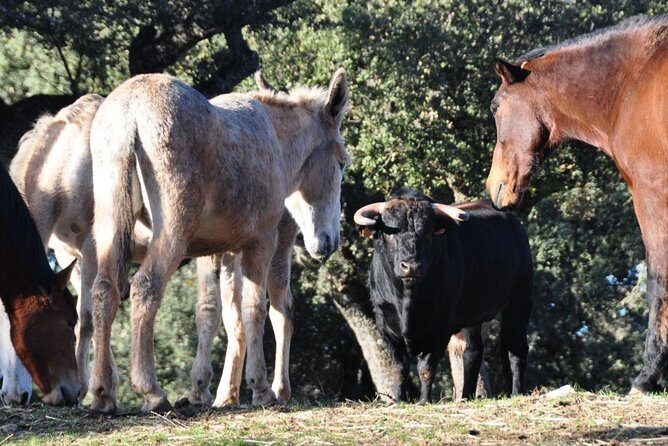
The tour start time is 12:00 pm, and the experience runs for about 1 hour 10 minutes. That’s the official estimate. In real life, ranch tours often stretch a bit because you’re switching between work areas, pastures, and training zones while guides explain what you’re seeing.
Group size is capped at 15 travelers. That’s a sweet spot. Big enough to make it social, small enough that your guide can point things out and answer questions.
You’ll also get a mobile ticket, which is convenient. There’s nothing to print, and it keeps the whole arrival moment simple.
One more thing to keep in mind: this is not a “sit and watch” show. Expect standing, walking, and moving between areas where animals and ranch operations are happening.
Stop 1 at the ranch: testing bullring, pens, and the ranch workflow
Your main entry point is Reservatauro Ronda, where you’ll start with the breeding world of the fighting bull. The highlight here is that you step inside the Testing Bullring, where the cattle are selected.
This is the part I love most if you like understanding systems. It’s not mystical. It’s practical. You see facilities built for direct work with animals, including pens where selection and training-related routines take place.
For a first-timer, this can be surprisingly educational. Even if you know almost nothing about fighting bulls, you walk away with a clearer sense of what “selection” means on a ranch: who’s kept, why they’re evaluated, and how the property supports those stages.
From there, you move into the rest of the ranch experience, where the story continues from selection into actual development in the pasture areas.
Tip for getting the most out of this stop: listen closely at the moments your guide connects a facility to a specific goal. Ranch visitors often remember the animals. The good guides help you remember the purpose.
The UNESCO Biosphere pastures: centenary holm oaks and animals in motion
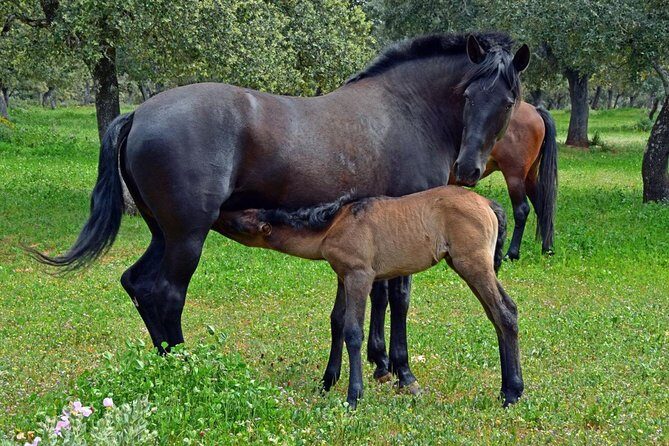
After the work areas, the tour shifts into a quieter kind of interest: pastures in a UNESCO Biosphere Reserve, with animals living more freely.
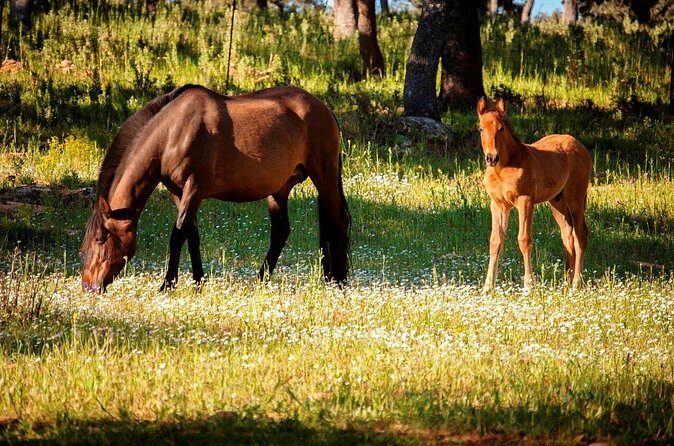
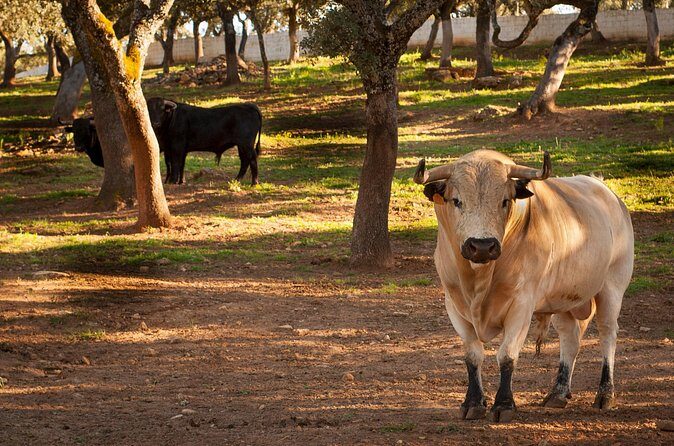
You’ll walk or move along a tour route among centenary holm oaks. This is where you’ll see bulls and horses at different stages of development. The key word here is stages. Instead of seeing one “finished” look, you get a feel for how the ranch evaluates and grows animals over time.
That’s also where the ranch feels most authentic. The land is doing the storytelling. The trees, the open fields, and the animal movement make bull breeding and horse raising feel less like an abstract cultural topic and more like a real agricultural process.
If you’re traveling with kids, this section tends to click. Animals wandering free plus wide-open space equals constant attention.
Bullfighter practice ring: capote and muleta, and that hands-on training moment
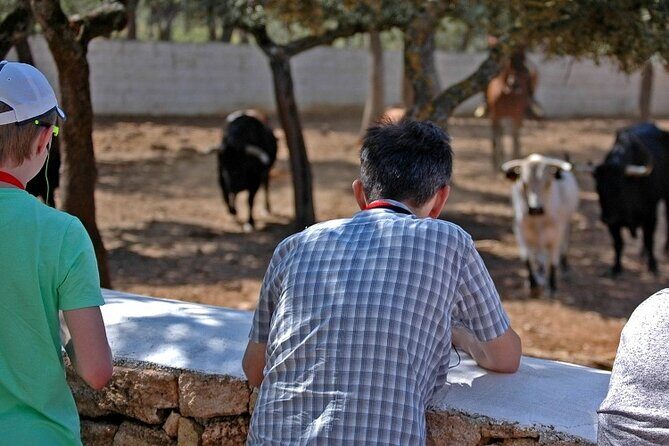
Next comes a favorite stop for many visitors: the practice ring, where bullfighters train daily.
This is where the tour stops being purely observational and becomes interactive. Guides explain the tools of the trade—especially the capote (pink cape) and muleta (red cape)—and you may have the chance to practice a pass or two.
Even if you’ve never watched a bullfight, it’s a fun, human-scale way to understand the choreography behind the headlines. And it helps you see why training and timing matter. A guide can explain technique in a way that feels understandable, not academic.
One note: this is hands-on, but it’s still a ranch environment. Wear shoes you don’t mind getting a little dusty, and keep your water bottle handy.
Also, bring your curiosity. The best part isn’t just handling the cape. It’s hearing how the training space connects back to the broader ranch story.


Andalusian horses in the stables: more than a quick look
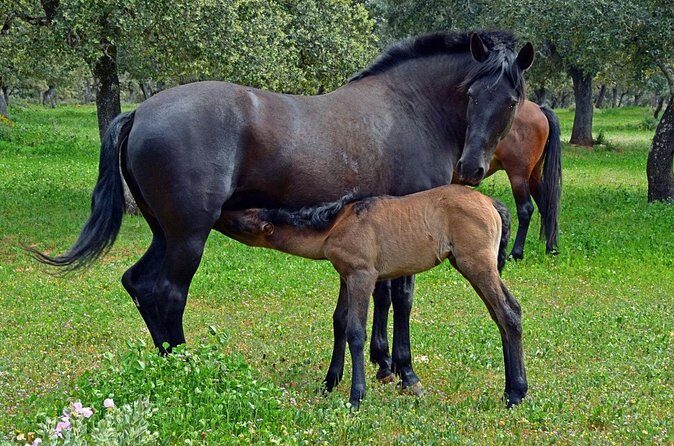
The experience isn’t only about bulls. You also visit the stables to meet the horses.
This is valuable because it keeps the tour balanced. The Andalusian horse in Spain is often discussed as heritage and sport, but here you see how the ranch keeps and trains horses within the working property context.
You’ll be guided through what you’re seeing—where horses are kept, how they relate to daily routines, and how their development fits the bigger ranch environment. You’ll also likely see how the guide frames the horse alongside the bull, since the tour is designed around both.
If you’re a horse person, I’d prioritize this part by paying attention during the explanations, not just snapping photos. The value here is the thinking behind care and training, not the pose you capture.
Learning ranch life with a real guide: what makes it click
The quality of a guide can make or break a small ranch tour. In this experience, the best visits tend to have guides who talk with passion and patience, and who actually answer questions instead of rushing you through.
You may hear different guide styles depending on the language on your day. Names that have shown up in past groups include Desiree, Frida, Lara, Paloma, and Paqui. The common thread is that they don’t just narrate. They explain the why behind the ranch setup—history, care routines, and what visitors are looking at.
If English is important to you, pick your expectations carefully. English is offered, but if your group ends up mixed-language, you might encounter audio-style support rather than a fully live English guide. That’s the main reason I’m flagging a possible drawback.
Price and value: is $36.16 per person a fair deal?
At $36.16 per person, this tour sits in a low-to-mid price zone for a working ranch experience. The value comes from two things you usually don’t get together:
- Admission included plus access to the key ranch areas (work and training spaces)
- A guided story that connects breeding, development, and training, not just a stroll past animals
You’re paying for entry plus interpretation plus time. With a maximum group size of 15, you also get a better chance of direct questions than you would on a huge bus tour.
Where value can vary is in how long you feel you’re on site and how interactive the practice-ring moment becomes. The experience is about 1 hour 10 minutes, but some visits can feel longer because ranch movement between zones takes time and the guide stops often to explain. Still, if you like learning as you go, that extra time tends to be productive.
Who should book this ranch tour in Ronda
This is a strong fit if you want:
- a working ranch experience near Ronda, not a roadside stop
- clear explanations of how fighting bulls are bred and developed
- a cultural tour that includes horse care and stable time
- a shorter outing that still feels like you learned something real
It’s also a solid choice for families. Many people appreciate that animals are visible in open areas and that the guide can keep kids engaged while explaining the setup in plain language.
Who should pause for thought?
- If you’re mainly after a live bullfight show, this isn’t that. This is the ranch side: selection, development, and daily training spaces.
- If you strongly need live English narration the entire time, consider that some days can run with audio support if guide staffing is limited.
Should you book Visita entre Toros y Caballos at Reservatauro Ronda?
I’d book it if you enjoy practical learning and you like seeing how traditions are built on everyday work. The best reason is the access: you’re not only looking at animals, you’re stepping into the facilities and training spaces that explain how the ranch functions.
Also, the price-to-time ratio is reasonable for a guided, small-group experience that includes admission and multiple ranch zones, including the practice ring and stables.
If you decide to go, go with the right mindset. This is about ranch operations and animal development. Expect hands-on explanation more than performance spectacle.
FAQ
What is the tour location?
The tour takes place at Reservatauro Ronda, a working ranch near Ronda, Spain.
How much does Visita entre Toros y Caballos cost?
It costs $36.16 per person.
How long is the tour?
The duration is approximately 1 hour 10 minutes.
What time does the tour start?
The experience starts at 12:00 pm.
Is the tour offered in English?
Yes, it is offered in English.
Do I need to bring a printed ticket?
No. You’ll use a mobile ticket.
What’s included with the ticket?
The admission ticket is included.
How big are the groups?
The tour has a maximum of 15 travelers per booking.
Can I cancel and get a full refund?
Yes. You can cancel for a full refund up to 24 hours before the experience start time.
Are service animals allowed?
Yes, service animals are allowed.