REVIEW · MALAGA
Paella Cooking Class with English Guide in Malaga
Book on Viator →Operated by Kulinarea · Bookable on Viator
Paella night with real ingredients starts at the market. This 4-hour class in Malaga pairs an English guide with a hands-on seafood paella cook session, plus tastings and drinks. It’s built for people who want more than a demo and actually leave with practical skills.
What I really like is the structure: you shop at Atarazanas Market (in the daytime class) and then cook in a clean, modern SOHO Art District kitchen. Another big plus is how much is included: olive oil tasting, gazpacho, sangria, paella, churros, and wine/beer along the way, so the price feels anchored in real food time.
One thing to consider: it’s not a good fit if you have celiac disease or a serious allergy that requires strict avoiding of cross-contamination, and it’s also not designed for vegans.
In This Review
- Key highlights to look forward to
- Paella starts at Atarazanas Market in the daytime class
- The SOHO Art District kitchen setup makes a difference
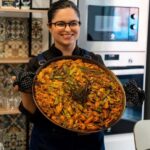
- What you actually cook: seafood paella with built-in options
- Your meal order: gazpacho, paella, sangria, churros
- Olive oil tasting before you cook your paella
- Drinks included: sangria plus wine and beer
- English guide experience and how small-group instruction feels
- Timing and what changes on evenings and Sundays
- Price value: what you get for $84.69
- Getting there: the address is central, but directions can be tricky
- Who should book this paella class in Malaga?
- The bottom line: should you book this paella cooking class?
- FAQ
- How long is the paella cooking class?
- Is the Atarazanas Market visit included?
- What does the class menu include?
- Are drinks included?
- Does it accommodate vegetarian or non-fish diets?
- Is this class suitable for celiac disease or severe allergies?
- Is it recommended for vegans?
- What’s the group size?
Key highlights to look forward to
- Atarazanas Market (daytime Mon–Sat): seasonal ingredients picked for your paella.
- English guidance with small groups: capped at 14 people so you can keep up.
- Olive oil tasting before cooking: you sample three Extra Virgin Olive Oils to learn what to notice.
- Hands-on paella process: seafood paella main, with vegetarian or meat alternatives.
- Included drinks and dessert: sangria plus churros, along with wine/beer and snacks.
- You get an apron to take home: a small souvenir that’s genuinely useful.
Paella starts at Atarazanas Market in the daytime class
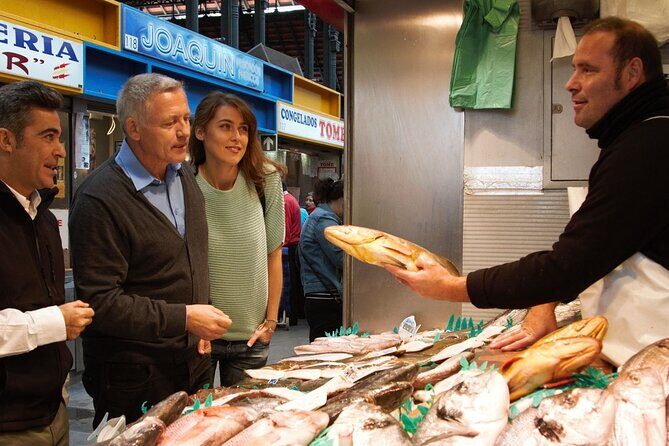
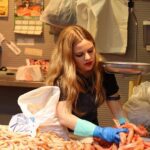
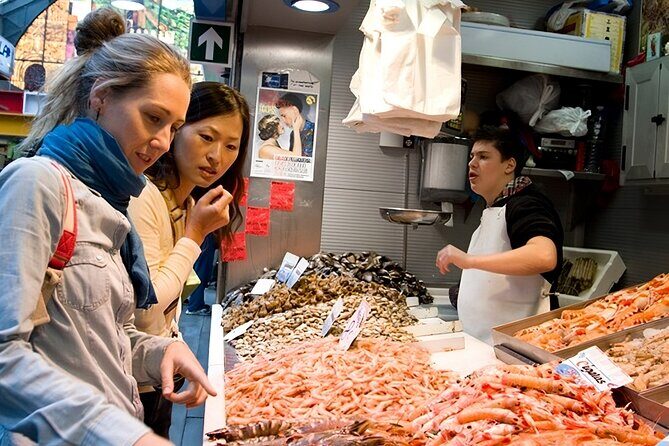
If you book the daytime session (Monday to Saturday), your experience begins with a visit to Atarazanas Market. That’s a smart setup in Malaga because the market is where you can see how the city actually shops for seafood, vegetables, and pantry staples before any cooking starts.
You’ll get introduced to seasonal produce and also to the meats and seafood you can expect to use later. Then your group selects quality ingredients suited to the paella you’ll make. I like this because it removes guesswork. Instead of learning recipes in a vacuum, you connect the dish to the local supply chain and the textures you’ll be working with in the pan.
Timing matters for the market stop. The market is closed on certain holidays, including New Year’s Day, Epiphany (6/1), some listed dates in February, major parts of Holy Week (Thursday and Friday), plus dates like 15/8, 19/8, 12/10, and 25/12 (and others on the list). If you’re traveling around those dates, the market portion may not run as usual, and the class timing (day vs evening vs Sunday) affects what you’ll see.
In short: if a market stop would change your satisfaction level, pick a daytime slot during the week.
You can also read our reviews of more guided tours in Malaga



The SOHO Art District kitchen setup makes a difference
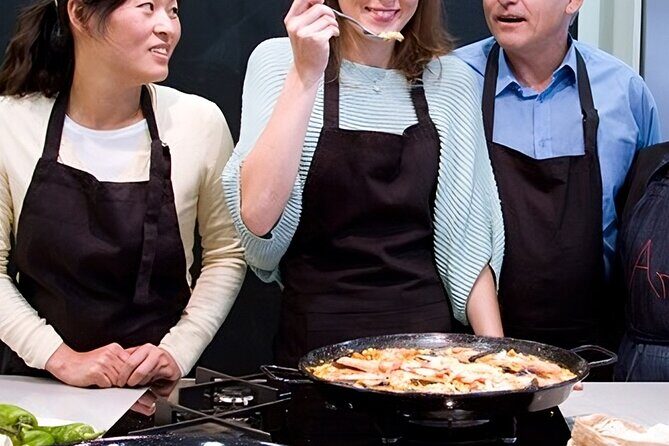
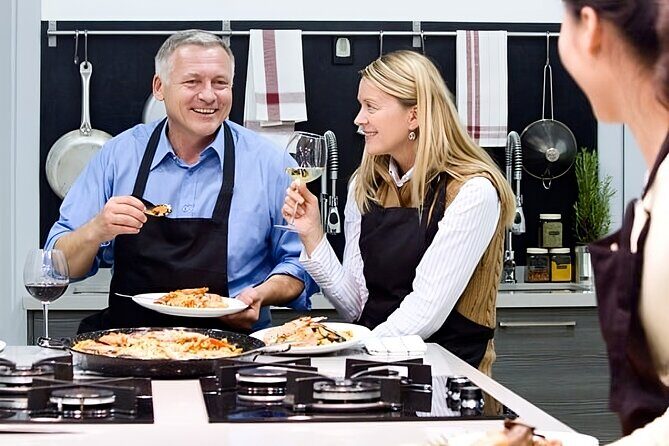
After the market (daytime class), the group heads to the kitchen in the SOHO Art District. The kitchen is described as modern and professional, and the vibe from the class format matches that: it’s designed for real cooking, not just watching someone else do the work.
This part matters for two reasons.
First, paella is not complicated because it’s fancy. It’s complicated because the timing and heat control matter. A proper kitchen layout helps keep the process smooth and lets the instructors circulate.
Second, cooking classes can vary wildly by quality of instruction. Here, the instructors have a track record of being clear and patient, including English-speaking guidance. People have specifically praised instructors like Pepo for being enthusiastic yet able to explain step-by-step without steamrolling slower learners.
When you’re spending real money and real time, the kitchen and teaching style are the difference between a fun evening and a useful skill.
What you actually cook: seafood paella with built-in options
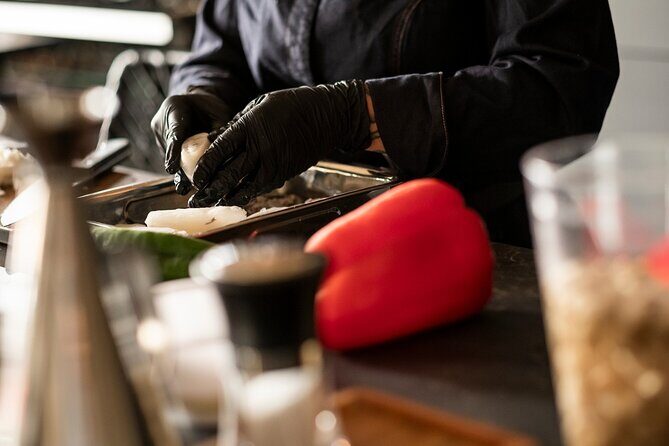
The centerpiece is seafood paella, and that’s the main dish you’ll prepare together. What I like is that the class is flexible about diet preferences, without turning the meal into a completely different event.
Alongside the seafood version, the meal can be adapted into:
- Vegetable paella if you want no seafood
- Meat paella if you don’t eat fish
That means you’re still learning paella technique—using similar cooking steps and building blocks—rather than just being given a bland alternative.
A typical paella class can teach “the idea” of paella. This one aims to teach you how it comes together: ingredient selection from the market, prep you can follow, and the sequence that gets flavors into the dish.
If you’re thinking about bringing family or cooking-hopeful friends, this structure helps. It’s not a one-size-fits-all fish party; it’s paella as a learnable method.
Your meal order: gazpacho, paella, sangria, churros
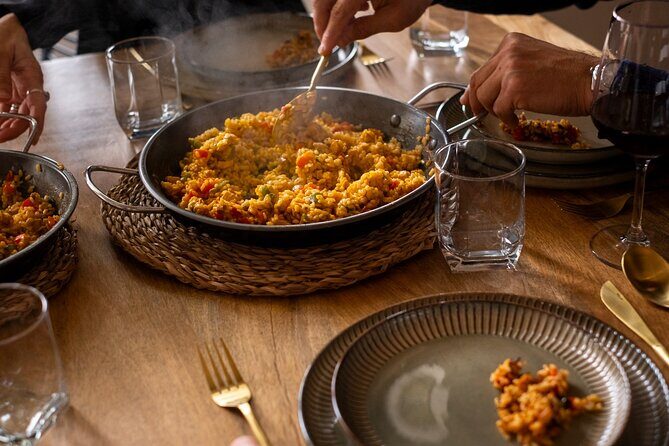
This is a full food experience, not a tiny tasting.
Here’s what the menu is set up to include:
- Starter: gazpacho
- Main: seafood paella (with vegetarian or meat alternatives)
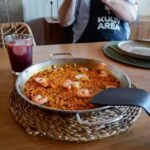
- Drinks: sangria, plus wine and beer during the experience
- Dessert: churros
The ordering is convenient and classic. Cold starter first (gazpacho) helps you settle in. Then you move into paella cooking with sangria and other drinks in the rhythm. Finally, churros wrap it up.
One more small point that matters: you don’t just make food and stare at it. The format includes lunch and snacks, so you’re not hungry while you cook. That sounds basic, but it’s exactly what keeps people smiling during the “work part” of cooking.
Olive oil tasting before you cook your paella
Before the paella work starts, you get a tasting of three Extra Virgin Olive Oils. This is one of those smart “pause and pay attention” moments that makes cooking classes more educational than touristy.
Instead of treating olive oil as a background ingredient, you learn how to notice differences before it hits your food. It also helps you understand why good paella doesn’t taste like random seafood rice. Olive oil is part of the flavor foundation, and this tasting gives your palate a starting point.
This is also one of the most consistently praised parts of the experience. People have highlighted the olive oil tasting as interesting and worth it even if paella isn’t your main cooking goal.
You can also read our reviews of more cooking classes in Malaga
Drinks included: sangria plus wine and beer
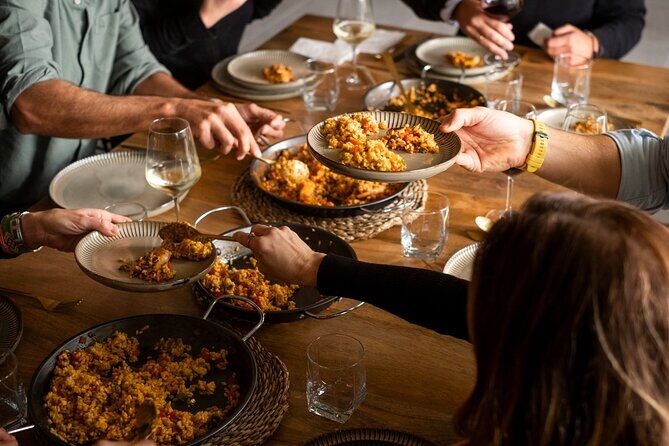
Sangria, wine, and beer are included, along with snacks. That can be a make-or-break detail, depending on how you like to travel.
I think the best way to view it: this is a social cooking experience with food and drink paired to the class flow. One person even pointed out a bottomless wine feeling in the room, which tells you the staff is focused on keeping the experience moving rather than nickel-and-diming the mood.
That said, if you’re planning to walk around town afterward or drive later, treat the drinks seriously. The class runs about 4 hours for the daytime session (and 3 hours for evening and Sunday), so you’ll likely be drinking over a full chunk of time.
English guide experience and how small-group instruction feels
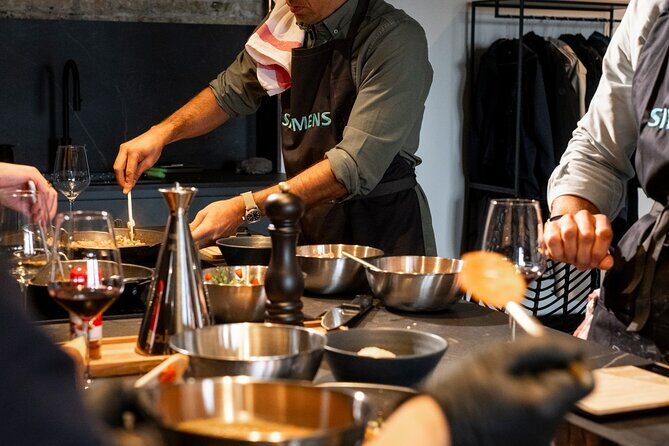
The class is offered with an English guide, and the group size is capped at 14. In plain terms, that means you’re not stuck in the back trying to read a chef’s shoulder.
You’ll hear clear instructions and get direct help from the kitchen staff. Several instructors have been mentioned by name, including Alba and Anais, and the overall message is consistent: they explain the recipes clearly, stay patient, and connect the cooking steps to what the food should taste like.
One review also noted that Pepo was doing their first English cooking class, and still handled it well. That’s a good sign if you care about understanding every step, not just following along.
Practical takeaway: if you want a cooking class that works for both beginners and people with some experience, the small-group setup plus active instruction is exactly what you’re paying for.
Timing and what changes on evenings and Sundays
The tour duration is about 4 hours for the daytime class, and 3 hours for the evening and Sunday class. The key difference is the market stop.
- Daytime Mon–Sat: includes Atarazanas Market visit (unless market is closed for a listed holiday).
- Evening + Sunday: lasts 3 hours, and the market stop is specifically tied to daytime Monday–Saturday.
So when you’re choosing your time slot, decide what you want most:
- If you want the market experience and ingredient shopping context, go daytime.
- If you want the cooking meal only, evening or Sunday may fit better.
Price value: what you get for $84.69
At about $84.69 per person, this is not a bargain cooking class. But the value math is helped by what’s included.
You’re getting:
- Lunch plus snacks
- Wine and beer
- Sangria
- Gazpacho, paella, and churros
- A take-home Kulinarea apron
- Olive oil tasting (three oils)
- Regional wine (served with the food)
- A maximum group size of 14
When you price that in your head, it stops feeling like you’re just paying for stirring a pan. You’re paying for ingredient learning, guided cooking time, and a full meal experience with drinks.
The main reason people keep repeating that it’s worth it is the payoff: you actually cook, eat, and leave with a souvenir apron. That combination is rare in short classes.
Getting there: the address is central, but directions can be tricky
The meeting point is Kulinarea, Avenida de Manuel Agustín Heredia, 24, Distrito Centro, 29001 Málaga. It’s stated to be near public transportation, and the class ends back at the meeting point.
One caution from experience-patterns: one person reported the directions to the meeting place were poor and ended up somewhere unexpected (a lingerie shop) and had to get help from someone nearby to find the correct location. That doesn’t mean the venue is hard to find. It means your best move is to double-check the exact address in your maps app before you leave, and don’t assume “close by” means “same street.”
If you’re arriving late, you can lose the beginning of the class window and that’s exactly when you want to be present for the olive oil tasting and setup.
Who should book this paella class in Malaga?
This class fits best if you:
- Want an authentic Spanish paella cooking lesson with real included food
- Like social cooking with drinks and tasting moments
- Prefer an English guide and small group pacing
- Are traveling with friends or family and want a shared activity that ends with a full meal
It’s a weak fit if you:
- Have celiac disease or need strict avoidance of cross-contamination due to allergies
- Are a vegan, since the format isn’t recommended for that
Also, if your trip schedule revolves around a holiday when Atarazanas Market is closed, plan for the daytime stop might not operate the same way.
The bottom line: should you book this paella cooking class?
I’d book it if you want a structured Malaga food experience that ends with you eating what you made, in a professional kitchen, with English instruction and a market stop. The best part is the full package: olive oil tasting, gazpacho, sangria, paella (with options), churros, and drinks, plus the apron at the end.
I would skip it or pick a different class if your dietary needs are high-risk for cross-contamination, or if you’re traveling specifically for vegan-friendly cooking. Also, if you know you struggle with finding exact addresses, arrive early and use the precise meeting point.
If you’re looking for a memorable half-day (or shorter evening) where you come away with something practical to cook later, this one makes a lot of sense.
FAQ
How long is the paella cooking class?
The daytime class is about 4 hours. The evening and Sunday class lasts 3 hours.
Is the Atarazanas Market visit included?
Yes, the Atarazanas Market visit is included in the daytime class from Monday to Saturday. It is not included in the evening and Sunday class.
What does the class menu include?
The starter is gazpacho, the main is seafood paella (with vegetarian vegetable paella or meat paella options), and dessert is churros. Sangria is included, along with other drinks served during the class.
Are drinks included?
Yes. The experience includes alcoholic beverages such as wine, beer, and sangria, plus snacks.
Does it accommodate vegetarian or non-fish diets?
Yes. The paella can be adapted for vegetarians (vegetable paella) or for those who do not eat fish (meat paella).
Is this class suitable for celiac disease or severe allergies?
No. It is not recommended for celiac disease or for severe allergies that require avoiding cross-contamination.
Is it recommended for vegans?
No. It is not recommended for vegans.
What’s the group size?
The class has a maximum of 14 travelers.