REVIEW · MALAGA
Guided tour of Ronda with an official guide
Book on Viator →Operated by Feel Ronda · Bookable on Viator
Ronda’s cliffs set the mood fast. This official-guided, 2-hour walk strings together the big sights of town, from Alameda del Tajo viewpoints to Puente Nuevo angles, and I love the photo-friendly route that hits the famous bridge from multiple spots.
I also like that it’s a private group (up to 15) with time for questions, including family-friendly storytelling from guides such as Alfredo Carrasco, Sonia, and Milagros. The tradeoff: it’s still a walking tour, it’s not recommended for mobility difficulties, and it does require good weather.
In This Review
- Key highlights worth your time
- Ronda in two hours: what this guided walk really delivers
- Meeting point to end point: easy start, clean finish
- Alameda del Tajo: the park that explains the gorge
- Paseo de Blas Infante: the bullring history in one compact lesson
- New Bridge (Puente Nuevo): the angles that make the bridge work
- Cuenca Gardens and Puente Viejo: terrace views and the Old Bridge’s role
- A palace facade and the Guadalevín water story
- Casa del Rey Moro area and a Madonna filming detail
- Plaza Duquesa de Parcent: where civic life meets church power
- Santa María de la Encarnación: layers of mosque, basilica, Gothic, Renaissance
- Mirador de Aldehuela and El Campillo: finishing with big open views
- Price and value: private, but not private expensive
- What you get from the official guide (and why it changes the tour)
- Weather and walking reality: the main consideration before you book
- Who should book this Ronda walking tour?
- Should you book this tour?
- FAQ
- How long is the Ronda guided tour?
- Is the tour private?
- How big can the group be?
- What language is the tour offered in?
- Where do I start and where does the tour end?
- Is there a ticket to enter the stops?
- Is a mobile ticket used?
- Is the tour suitable for people with mobility difficulties?
- Are service animals allowed?
- Does the tour depend on the weather?
Key highlights worth your time
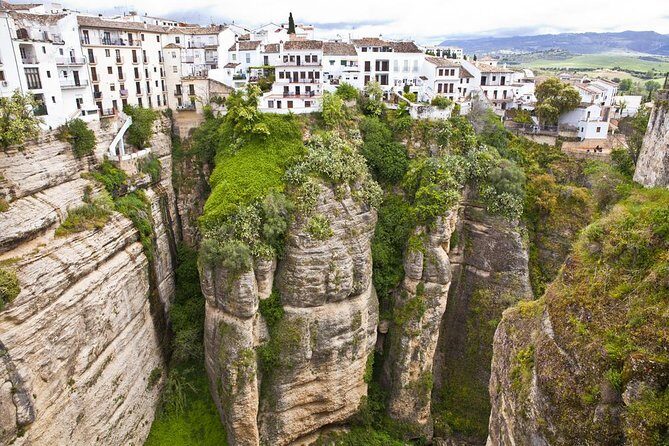
- Puente Nuevo from several angles so you’re not stuck with just the one postcard view
- Alameda del Tajo + Cuenca Gardens for dramatic edges, terrace strolls, and big Tajo views
- Bullring history tied to famous writers through the Ordoñez dynasty
- A siege-era water story connected to a rock-cut staircase and a grotto
- Santa María’s layered building story with Gothic and Renaissance parts over older sites
- Final viewpoints before and after Puente Nuevo, including El Campillo
Ronda in two hours: what this guided walk really delivers
This isn’t a slow, meandering tour. It’s a well-paced walk that hits the places that actually define Ronda: the gorge setting, the bridge that gets the headlines, and the old town’s most important religious and civic landmarks.
For me, the best part is the way the guide keeps you oriented. You stop at viewpoints, then at streets and monuments that explain why the views exist where they do. You’ll cover a lot of ground without feeling rushed, mostly because the “why” comes right when you need it.
You can also read our reviews of more guided tours in Malaga
Meeting point to end point: easy start, clean finish
You begin at Pl. de la Merced, 1, in central Ronda, and the tour ends at Pl. España, 2, right in front of the Parador de Ronda. That’s practical if you want to keep exploring after the tour, since you finish near a major landmark area.
The pacing also helps. Each main stop is brief—think around 10 minutes—so you’re moving through the old and new town pockets in a tight loop. It’s usually a good choice when you have limited time but still want the “must-sees” connected into one story.
Alameda del Tajo: the park that explains the gorge
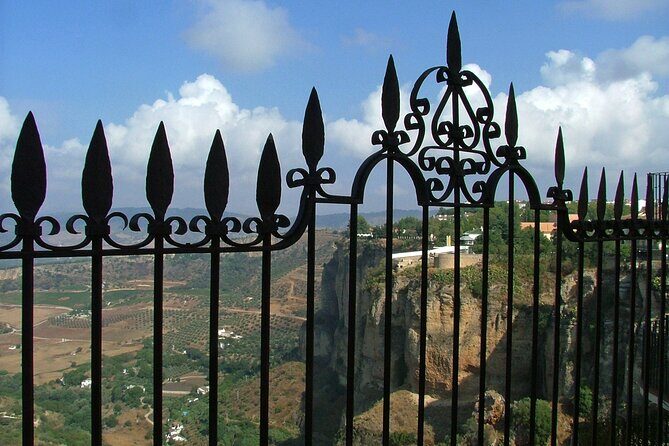
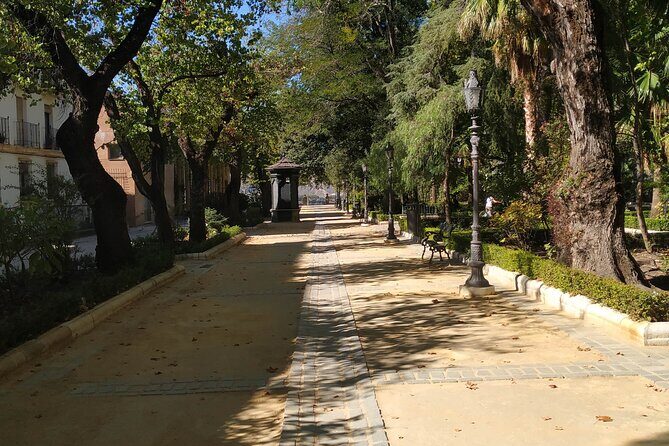
Your first stop is Alameda del Tajo, Ronda’s key viewpoint park. This is where the city’s location stops being trivia and becomes physical—because you can see the depth and the cliffs right in front of you.
You walk through the park and pause at viewpoints designed for looking across the gorge. That matters because Ronda’s big structures—especially the bridge—make more sense once you understand the drop, the edges, and the way the town sits above the ravine.
Practical note: there’s no official admission ticket listed for this stop, so you’re mostly paying for the guide’s explanation and the way they manage timing and photo stops.
Paseo de Blas Infante: the bullring history in one compact lesson
Next comes Paseo de Blas Infante, and you’re close to Ronda’s bullring story. The tour calls out that this is the oldest bullring in the world, and you also get the surrounding history of the square.
What I liked here is how the guide links Ronda to broader cultural history. You learn about the relationship of Orson Welles and Ernest Hemingway with Ronda through the Ordoñez dynasty. That turns a landmark you might otherwise skim right past into something with names you recognize.
If you’re even mildly into history or film/literature trivia, this segment pays off fast. It’s short, but it gives you context before you move on to the bridge.
New Bridge (Puente Nuevo): the angles that make the bridge work
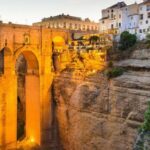
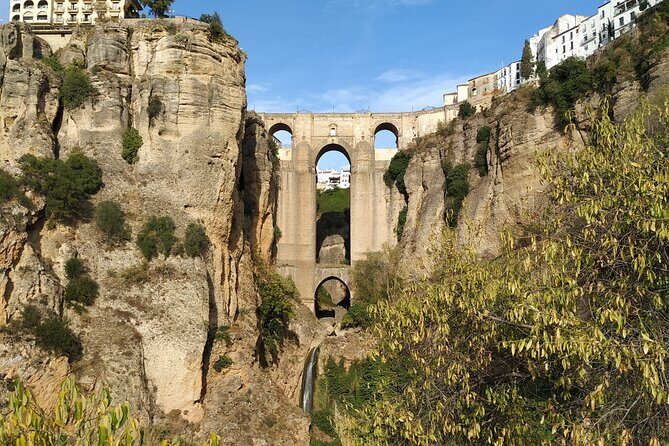
Then you reach the star: Puente Nuevo, built in the 18th century. You won’t just see it once. The tour is set up to view it from multiple angles so you can take the photo everyone wants.
This is one of those sights where the timing of perspective matters. From one spot, you get the sweep of the bridge. From another, you see its relationship to the gorge walls and the approach routes below. The guide’s job is basically to steer you to the right corners so you don’t waste your time hunting.
Also, you’re not dealing with ticketed entry here (the tour lists admission ticket free for the stop). So you’re paying for guidance: where to stand, how to frame it, and what to notice while you’re looking.


Cuenca Gardens and Puente Viejo: terrace views and the Old Bridge’s role
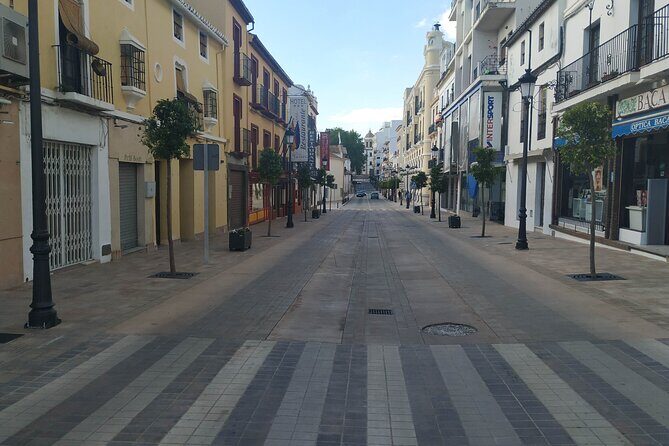
After Puente Nuevo’s main photo moment, you head to Jardines de Cuenca. These are often described as hanging gardens because they sit on ledges above the gorge. The tour also explains the name: Cuenca and Ronda are twinned due to resemblance between the cities.
Here’s what makes this section fun. You go down terraces, and your views keep shifting. You’re not just staring out; you’re moving through the garden structure so the gorge and the bridges appear and disappear in different frames.
The tour also mentions 30 varieties of roses. When they bloom, the area turns noticeably more colorful, and it adds a seasonal charm. Even if you’re not there in bloom, the terraces themselves are the point: they give you that “edge-of-the-world” feeling without needing a long hike.
From the gardens, you arrive at Puente Viejo (Old Bridge). You get a strong perspective that shows the New Bridge and also the Casa del Rey Moro area. You’ll hear the story of the Secret Mine here, which adds a layer of local mystery to a stretch that could otherwise feel purely scenic.
A palace facade and the Guadalevín water story
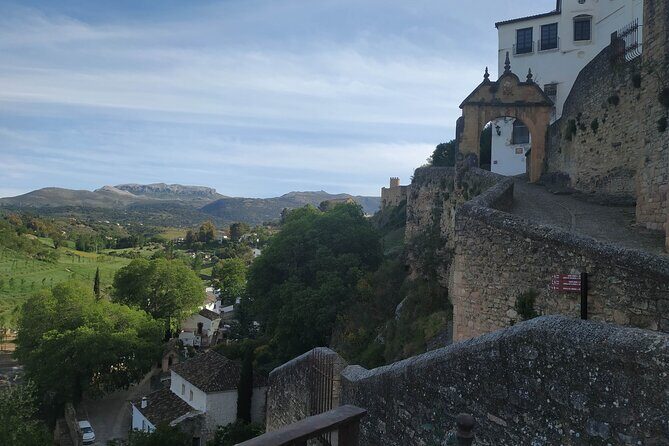
The route then shifts to a rear façade of an 18th-century palace, where the guide explains something surprisingly practical: the start of a staircase excavated inside the rock that leads to the Guadalevín River.
This is one of those Ronda facts that makes you stop thinking of history as costumes and start thinking of it as survival. The tour says this grotto was used during siege periods to supply water to the city. In other words, this wasn’t just architecture for show—it was infrastructure for tough times.
If you like when a destination teaches you how people lived, not just what they built, this is a standout moment. It’s short, but it connects the gorge, the rock, and the city’s survival needs in a way that feels very real.
Casa del Rey Moro area and a Madonna filming detail
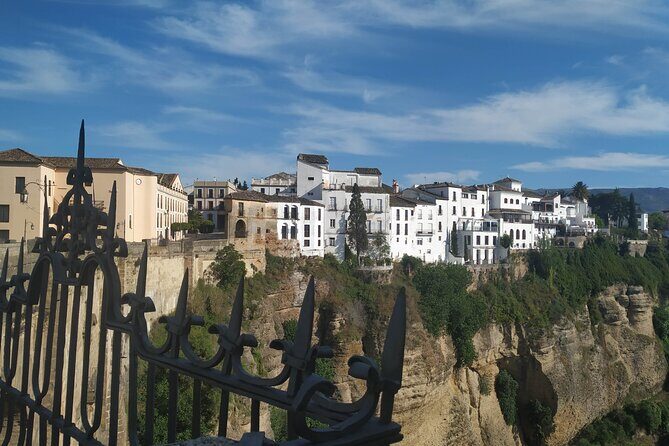
You’ll also get another palace-focused stop where the tour points out that the façade is among the most beautiful. The guide will share secrets tied to what you’re looking at, and the route includes a pop-culture note: Madonna filmed a video clip on these streets.
That kind of fact isn’t there to distract you. It’s there to remind you that Ronda’s streets aren’t frozen in time. They’re lived in, used as settings, and still relevant in modern media—while still holding older stories under the surface.
If you’re traveling with teens or you’ve got film lovers in the group, this is a good moment to spark conversation without needing anyone to be an expert.
Plaza Duquesa de Parcent: where civic life meets church power
Next is Plaza Duquesa de Parcent, described as the most important place in Ronda. This is where you’ll find the Main Church and the Town Hall, plus gardens credited to Forrestier.
This is a good stop to reset after the bridges and gardens. You move from vertigo views into a civic square—still dramatic, but calmer. The gardens help soften the space and make it easier to take in the architecture without constantly looking over a drop.
Santa María de la Encarnación: layers of mosque, basilica, Gothic, Renaissance
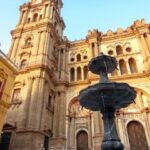
The tour then focuses on the Collegiate Church of Santa María de la Encarnación, and it gives you a clear layered timeline. You learn it was built on the site of an important mosque, which was itself on the area where an early Christian basilica once stood.
Then the tour points out the church’s design mix: it has parts from late Gothic and parts from the Renaissance. On the main façade, the original door is covered by a balcony built in the 18th century.
This stop works especially well because the guide doesn’t treat each era as separate facts. They explain how the location kept getting reused, reshaped, and reinterpreted as different communities arrived. That makes the building feel like a record of changes, not a single-style museum piece.
Mirador de Aldehuela and El Campillo: finishing with big open views
Near the end, you pause at Mirador de Aldehuela, just before crossing Puente Nuevo toward Plaza de España. The guide has you contemplate the bridge’s grandeur from a final viewpoint and look at the route from a distance.
Then you finish with Plaza de María Auxiliadora, known locally as El Campillo. From this viewpoint, the tour highlights spectacular views of the Sierra and the Hoya del Tajo.
This ending is smart. It helps your brain connect the earlier stops into one map: park views, terrace gardens, palace water story, church square, and finally the bridge again—now with a wider sense of how the town is arranged around the gorge.
Price and value: private, but not private expensive
The price is $230.80 per group for up to 15 people, for about 2 hours. That structure matters. You’re not paying a per-person rate, so the value can get surprisingly good if you’re traveling with friends, a family group, or a small group that wants a shared guide experience.
If you book at full group capacity (15 people), the rough math is around $15 per person. If you’re a smaller group, your per-person cost rises, but you still get the benefit of a single private group walk rather than squeezing into a larger crowd tour.
Also, the tour lists each major stop as admission ticket free, so you’re not facing lots of extra entry costs along the way. You’re paying mainly for guide time, storytelling, and the route that links sights together cleanly.
What you get from the official guide (and why it changes the tour)
One theme you’ll notice in the tour’s reputation is that guides are engaging and responsive. People have praised how guides adapt to the group, handle questions well, and keep kids comfortable—examples include guides like Milagros and Carmen.
You also see repeat praise for enthusiasm and local know-how, such as Alfredo Carrasco and Sonia, with guests calling out the guides’ friendliness and their ability to connect Ronda’s history to the buildings they’re standing in front of.
In practical terms, this means you’re not just collecting photos. You’re learning what to notice while you look: why a viewpoint exists, what you should look for on façades, and how Ronda’s layers of history connect to where you’re standing.
If you’re someone who likes to ask questions—about architecture, local legends, or the meaning behind street corners—this type of guided pacing is a strong fit.
Weather and walking reality: the main consideration before you book
The tour requires good weather. If conditions are bad, it may be rescheduled or refunded, so don’t plan it as your one-and-only outdoor option.
And while it’s only about 2 hours, it still involves walking through town and viewpoints, including terrace areas and edges. The tour is not recommended for mobility difficulties, so if walking long distances or uneven terrain is hard for you, you’ll want to think carefully before booking.
Who should book this Ronda walking tour?
This works best if you want:
- A tight introduction to Ronda in a short time
- A route that combines views, bridges, churches, and local stories
- A private group experience up to 15 people
- A guide who explains the “why” behind what you see
It’s also a good fit for families—people have noted guides who are friendly with kids—plus solo travelers who like chatting and learning as they walk.
If you only want to linger in one place (like spending extra time in gardens or photographing the bridge for a long time), you might feel a touch guided by the schedule. But if you want a full, coherent overview, this is the kind of plan that makes day trips work.
Should you book this tour?
If you’re visiting Ronda with limited time, I’d book it. The route hits the hardest-to-miss sights—Puente Nuevo, Cuenca Gardens, Santa María, and the key viewpoints—and it does it in a way that helps everything connect instead of feeling like separate stops.
I’d skip it only if mobility is a concern or you’re arriving with uncertain weather and no flexibility. Otherwise, this is a strong way to get oriented quickly and leave with a real sense of what makes Ronda tick.
FAQ
How long is the Ronda guided tour?
It’s about 2 hours.
Is the tour private?
Yes. It’s a private tour/activity, and only your group participates.
How big can the group be?
Up to 15 people per group.
What language is the tour offered in?
It’s offered in English.
Where do I start and where does the tour end?
It starts at Pl. de la Merced, 1, Ronda, and ends at Pl. España, 2, right in front of the Parador de Ronda.
Is there a ticket to enter the stops?
The listed stops show admission ticket free.
Is a mobile ticket used?
Yes, the tour uses a mobile ticket.
Is the tour suitable for people with mobility difficulties?
It is not recommended for travelers with mobility difficulties.
Are service animals allowed?
Yes, service animals are allowed.
Does the tour depend on the weather?
Yes, it requires good weather. If canceled due to poor weather, you’ll be offered a different date or a full refund.